Language
Content
A spring starts as a coil of wire and becomes a precision component by going through a series of controlled manufacturing steps. The direct answer is that springs are made by feeding wire into a spring forming or coiling machine, winding it around tooling to create the desired radius and pitch, and then applying heat treatment, grinding, finishing, and inspection. Cold winding is the most common method because it is fast and cost effective for wire diameters up to roughly 10 to 12 mm. Larger bars are often hot wound because the steel is too stiff to bend accurately at room temperature.
Although the sequence can vary by spring type, the typical production flow looks like this:
In short, a spring is made by controlled plastic deformation of the wire into an elastic shape, followed by thermal and mechanical treatments that make that shape reliable under repeated load.
The first decision in spring manufacturing is material selection. Most springs are made from spring steel because it offers a high yield strength and good fatigue resistance. The most common carbon grades are similar to SAE 1070 to 1095. Oil-tempered chrome silicon wire is another widely used material for high-stress applications. Corrosion-resistant environments usually lead to stainless steel grades such as 302, 304, or 316. For conductive or low-magnetic designs, beryllium copper and phosphor bronze are selected.
Material condition is as important as composition. Pre-hardened wire is cold wound and then only stress relieved, which keeps production fast. Annealed wire is wound in a softer state and later hardened and tempered. Large wire diameters, typically above 10 to 12 mm, often need hot winding because the material’s stiffness makes room-temperature forming difficult. Using the wrong wire condition can result in split coils, inconsistent diameters, or poor fatigue life.
If you are comparing material options, a detailed guide to selecting spring wire materials can help you balance load capacity, corrosion resistance, and cost. The choice affects not only the spring’s service life but also the machine type, forming speed, and heat treatment cycle.
| Material | Typical Use | Key Characteristic |
|---|---|---|
| High-carbon spring steel (SAE 1070-1095) | General mechanical springs, automotive suspension | High strength, low cost |
| Oil-tempered chrome silicon steel | Valve springs, heavy-duty coil springs | High fatigue resistance |
| Stainless steel 302/304/316 | Medical devices, food equipment, marine hardware | Corrosion resistance |
| Phosphor bronze | Electrical contacts, instrument springs | Conductivity, low magnetism |
| Beryllium copper | Precision connectors, aerospace components | High strength plus conductivity |
| Nickel alloys like Inconel | High-temperature exhaust and engine springs | Retains strength at elevated temperature |
The core process of making a spring is the same regardless of whether the part is a tiny compression spring or a large suspension coil. These steps describe the complete journey from wire to finished spring.
The spring-making process begins on a coiling machine. Wire is pulled from a spool by feed rollers, straightened, and pushed against a mandrel or forming tool. The machine rotates the wire around the tool to create the helical body, and the pitch is controlled by the axial movement of the tool or wire guide. For standard cylindrical springs, a CNC coiling machine is the fastest option. For example, a 3-axis CNC spring coiling machine positions the wire guide, pitch tool, and coil diameter with servo-controlled accuracy. This type is common for compression and extension springs in medium-volume production. More complex shapes require a forming machine with additional axes that can bend the wire in multiple directions without a fixed cam.
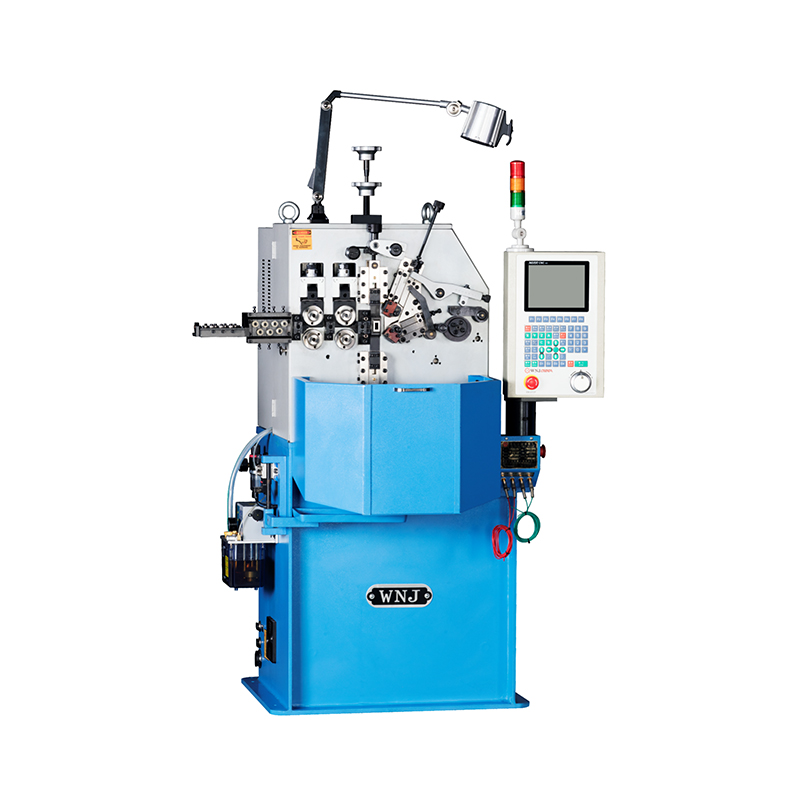 Custom TK-320B 3AXES CNC SPRING COILING MACHINE Factory, Comapny - WNJ MachineZhejiang Omnipotent Spring Machine Co.,ltd ( WNJ Machine ) is a China Wholesale TK-320B 3AXES CNC SPRING COILING MACHINE factory and comp...View Product →
During cold coiling, pre-hardened wire at room temperature is forced around the tool. Because the spring steel resists bending, the machine has to apply high force. In hot coiling, the wire is heated with induction coils before it enters the former. Hot coiling reduces the force needed and avoids cracking in heavy bars, but it adds a heating step and scale removal.
After coiling, the spring is full of internal stress. If it is used without treatment, the spring may take a permanent set or crack under load. Stress relief is done by heating the spring to about 250 to 450 degrees Celsius for 20 to 60 minutes, depending on material and wire diameter. This temperature is below the hardening temperature, so it only reduces residual stress while retaining the mechanical strength of the pre-hardened wire. For springs formed from annealed wire, a full hardening and tempering cycle is needed. The spring is heated to austenitizing temperature, quenched in oil, and then tempered at a lower temperature to adjust hardness and ductility. Both processes are performed in an industrial temper furnace. Many manufacturers use a stainless-series spring temper furnace because it provides even heating, adjustable conveyor speed, and controlled temperature zones. Consistent heat treatment quality is critical: a spring that is under-tempered will be too brittle, while an over-tempered spring loses its load capacity.
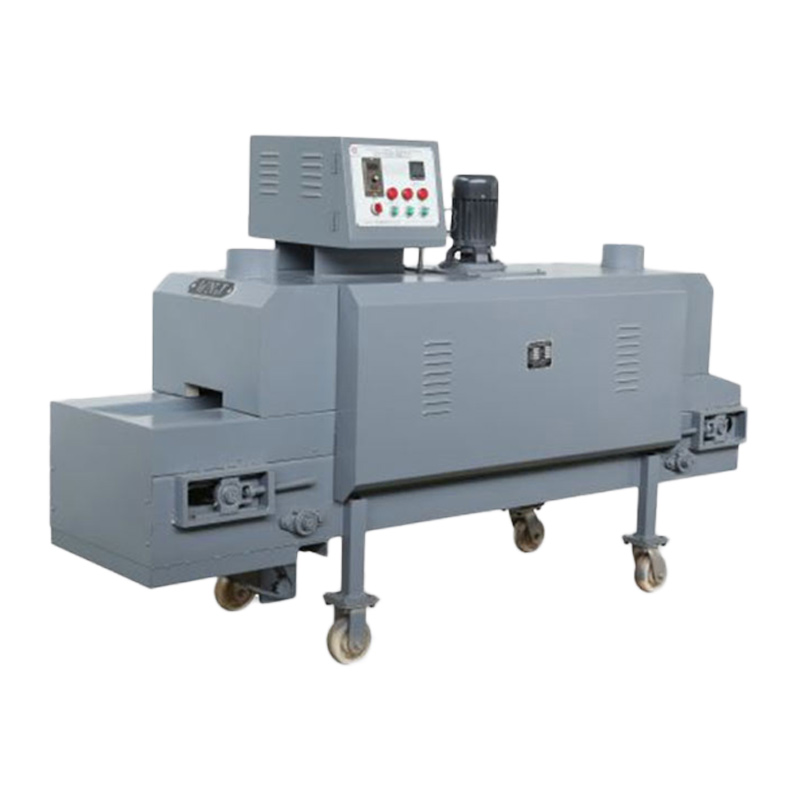 Custom WNJ210 Spring Temper Furnace (Panint Series) Factory, Comapny - WNJ MachiZhejiang Omnipotent Spring Machine Co.,ltd ( WNJ Machine ) is a China Wholesale WNJ210 Spring Temper Furnace (Panint Series) factory and ...View Product →
Compression springs usually need flat, square end faces so the spring can stand evenly in an assembly. The end of the spring is closed during coiling, then the spring is ground on a CNC spring grinding machine. A double-disc grinder processes both ends at the same time, which reduces variation between springs. The grinding operation must remove just enough material to create a flat bearing surface without reducing the wire cross-section too much. Typical end grinding tolerances are controlled to within a few tenths of a millimeter, and many springs are ground to an end squareness of 1 to 3 degrees. For extension and torsion springs, the ends are not ground. Instead, loops, hooks, or legs are formed in a separate operation using bending tools.
Shot peening is a cold working process that hammers the spring surface with small round shot. It creates compressive residual stress in the outer layer, which improves fatigue life significantly. Springs that undergo millions of cycles, such as valve springs, are shot peened after heat treatment and before grinding or coating. Presetting, sometimes called scragging, is another common operation. The spring is compressed to solid height or close to it, so that any plastic deformation happens during manufacturing rather than in service. This helps the spring keep its designed free length under repeated compression.
The final manufacturing step is protecting the surface from corrosion and mechanical damage. Depending on the material and application, the spring can be oil dipped, black oxide coated, zinc plated, powder coated, or painted. Stainless steel and nickel alloy springs can be used without any coating. For automotive springs, powder coating is popular because it provides a thick, durable finish and can be applied in any color. The coating is applied after all other operations so that the grinding and shot peening surfaces are not covered until they are already finished.
Different spring types place different demands on the manufacturing process. Understanding these differences helps when choosing equipment. Springs are used in everything from automotive spring applications to medical-grade spring production, and each environment checks for different failure modes.
Compression springs are open-coil helixes designed to resist pushing forces. They usually have closed, squared ends. The ends may be ground flat for better seating. During coiling, the pitch must be accurately controlled because it determines the spring rate. A small variation in pitch can change the load at a given height. That is why CNC coiling machines with servo pitch adjustment are preferred for compression springs.
Extension springs work in tension. They are wound with coils touching each other and have initial tension that holds the coils together. The ends are formed into hooks, side loops, or special loops. Initial tension is controlled by wire rotation and feed pressure during coiling. The hook-forming operation is often performed as a separate bending step after the body is wound. The wire must be soft enough to allow hook forming without cracking.
Torsion springs store rotational energy. They have a helical body and two legs that extend outward. The legs are made by bending the ends of the wire into specific angles. Forming a torsion spring requires precise control of the leg position and the distance between the legs. This is easier to achieve on multi-axis forming machines that can bend wire in several planes without moving the spring to another workstation.
Not all springs are circular helixes. Many special-purpose springs, including serpentine springs, garter springs, and complex wire forms, are produced on CNC wire bending machines. These machines use multiple axes to bend wire into a two-dimensional or three-dimensional outline. Because there is no coiling mandrel, the programming software has to define every bend point and radius. A 5-axis or 12-axis machine gives the flexibility to make automotive clips, surgical wire forms, and industrial retaining springs.
| Spring Type | Key Difficulty | Common Equipment |
|---|---|---|
| Compression springs | Pitch accuracy, end squareness | CNC coiling machine and spring grinder |
| Extension springs | Initial tension, loop geometry | CNC coiling machine with loop bender |
| Torsion springs | Leg position and angle | Multi-axis forming machine |
| Wire forms | Complex bend sequence | CNC wire bending machine |
The equipment line for spring production is usually arranged around the forming step. A complete line can include a wire feeder, coiling or forming machine, grinding machine, temper furnace, and surface finishing unit. Understanding what each machine does is important for selecting the right combination.
These machines are made for producing helical springs from wire. They control the feed length, coil diameter, and pitch with servo motors. A 3-axis configuration is suitable for standard compression and extension springs. The wire guide moves radially to control diameter, the pitch tool moves axially to control gap, and the feed rolls advance the wire. The result is a reproducible spring body with consistent load characteristics.
Forming machines use multiple tool axes instead of a single mandrel, allowing the wire to be bent in different directions. A 5-axis forming machine is widely used for complex compression, tension, and torsion springs that need more than simple coiling. The machine can produce different spring types without changing a dedicated cam. For example, a 5-axis CNC spring forming machine can create various special-shaped springs from one setup. This is useful for automotive parts, electrical components, and custom prototypes.
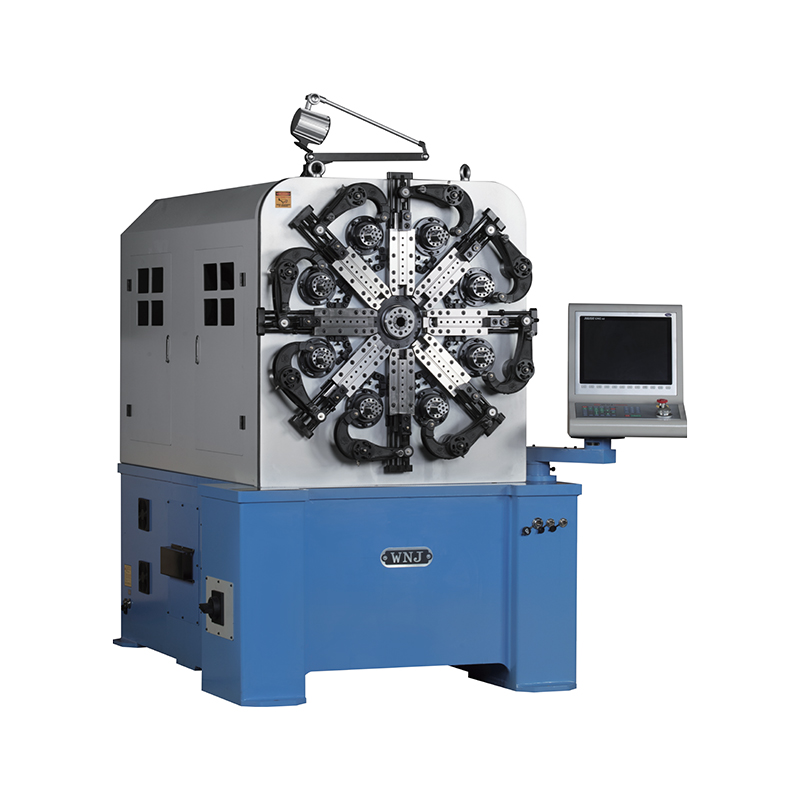 Custom CNC-635Z 5AXES CNC SPRING FORMING MACHINE Factory, Comapny - WNJ MachineZhejiang Omnipotent Spring Machine Co.,ltd ( WNJ Machine ) is a China Wholesale CNC-635Z 5AXES CNC SPRING FORMING MACHINE factory and com...View Product →
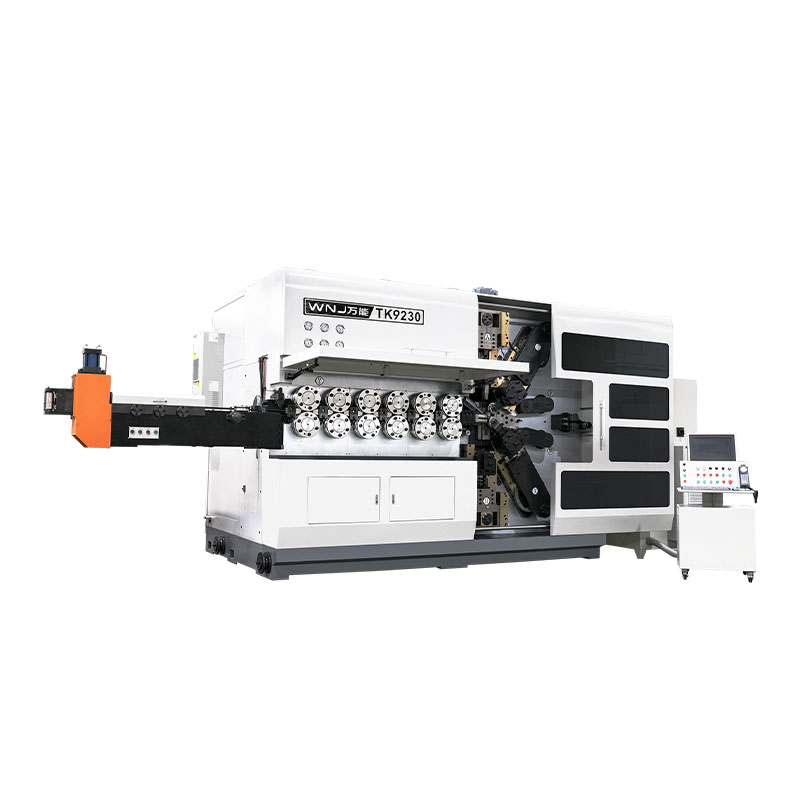
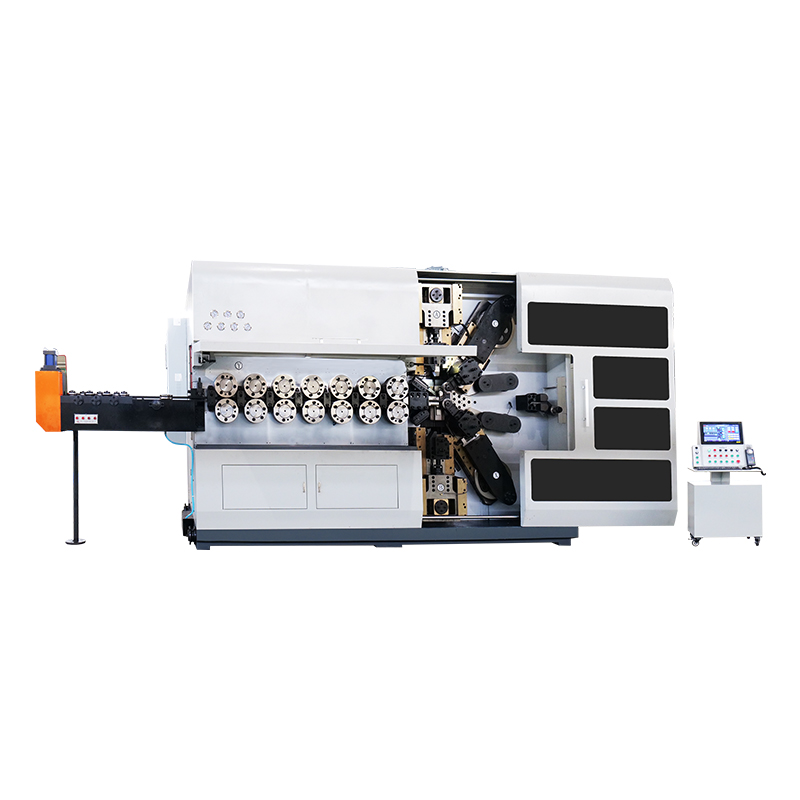
Camless machines use servo-driven axes for every motion. They offer high flexibility and quick changeover. A 12-axis camless machine can perform up-down and left-right bending, feed control, and pitch adjustment in a single cycle. These machines are preferred when the product mix changes frequently because new part shapes can be loaded as programs rather than mechanical cams.
Grinding machines remove material from the end faces of compression springs. A basic batch grinder is enough for low precision, but high-volume production uses automatic CNC grinders with ceramic or diamond wheels. Temper furnaces complete the heat treatment cycle. They can be conveyor fed or batch type, with electric or gas heating. A stainless-series temper furnace is often used when the spring material is corrosion resistant or the product requires exact temperature reliability.
Although they are not covered by every guide, a wire straightener and a decoiler improve the accuracy of the whole line. Wire with coil curvature cannot be formed accurately unless it is straightened before entering the feed rolls. Many CNC spring machines include a straightener, but a separate wire feeding rack may be used for heavy coils and high-speed production.
| Machine Type | Axis Count | Best Suited For |
|---|---|---|
| 3-axis coiling machine | 3 | Standard compression and extension springs |
| 5-axis forming machine | 5 | Complex springs and special wire shapes |
| 12-axis camless machine | 12 | Frequent changeover and complex 3D forms |
| Spring grinding machine | Two spindles | Squared ends on compression springs |
| Temper furnace | Not applicable | Stress relief and hardening process |
The right spring machine depends on the spring’s dimensions, the production volume, and the level of automation required. A manufacturer producing one million identical compression springs per day needs a different setup than a job shop making custom springs in small batches.
A spring that has been designed for 60,000 load cycles will still fail early if the machine produces inconsistent free length. Therefore, the quality of the coiling machine often defines the quality of the finished spring.
Quality control in spring manufacturing is about dimensional accuracy and mechanical performance. The most common checks are free length, outside diameter, number of active coils, spring rate, and load at a specified height. In batch production, typical free length tolerances are plus or minus 1% to 2% of nominal, while spring rate tolerance is often plus or minus 5% to 10%. For precision springs, these tolerances may be tighter.
If the end faces of a compression spring are not parallel to the spring axis, the spring will bow when compressed and reduce its service life. That is why end grinding is inspected on every batch. Load testing is carried out with a calibrated spring tester, and surface defects are detected with eddy current inspection or magnetic particle methods for high-stress parts.
| Inspection Item | Purpose | Typical Method |
|---|---|---|
| Free length | Confirm the spring height at rest | Vernier caliper or automated vision system |
| Spring rate | Verify the force-deflection relationship | Spring testing machine |
| Outside diameter | Check fit with the bore or rod | Micrometer or laser gauge |
| End squareness | Avoid camber and uneven load | Squareness gauge |
The first step is selecting the correct wire material and feeding it into a spring coiling or forming machine. The machine pulls the wire, straightens it, and bends it around a forming tool to create the helical shape.
Coiling introduces internal stress that can cause cracking or permanent set. Stress relief from a temper furnace removes that internal stress while preserving the wire’s strength. For annealed wires, a full hardening and tempering cycle turns the raw wire into a durable spring material.
The main types are CNC spring coiling machines for standard helical springs, CNC spring forming machines for complex shapes, camless machines for flexible changeover, spring grinding machines for end processing, and temper furnaces for heat treatment.
Yes, a multi-axis CNC forming machine can produce compression, extension, and torsion springs by changing the program and tooling. A standard 3-axis coiler is more limited and works best for compression and extension springs with simple geometry.
The pitch is controlled by the axial movement of the pitch tool after the wire makes one coil. On a CNC coiling machine, this movement is servo-controlled, so the pitch can be adjusted precisely and repeated for every spring in the batch.
Spring manufacturing is a mix of material knowledge and precision machinery. A spring fails when the material, forming process, or heat treatment is wrong. Choosing equipment that matches the wire size, spring geometry, and production volume is the most practical way to keep springs consistent. A good production line combining coiling, forming, grinding, and tempering equipment ensures the finished spring meets its load and fatigue requirements.
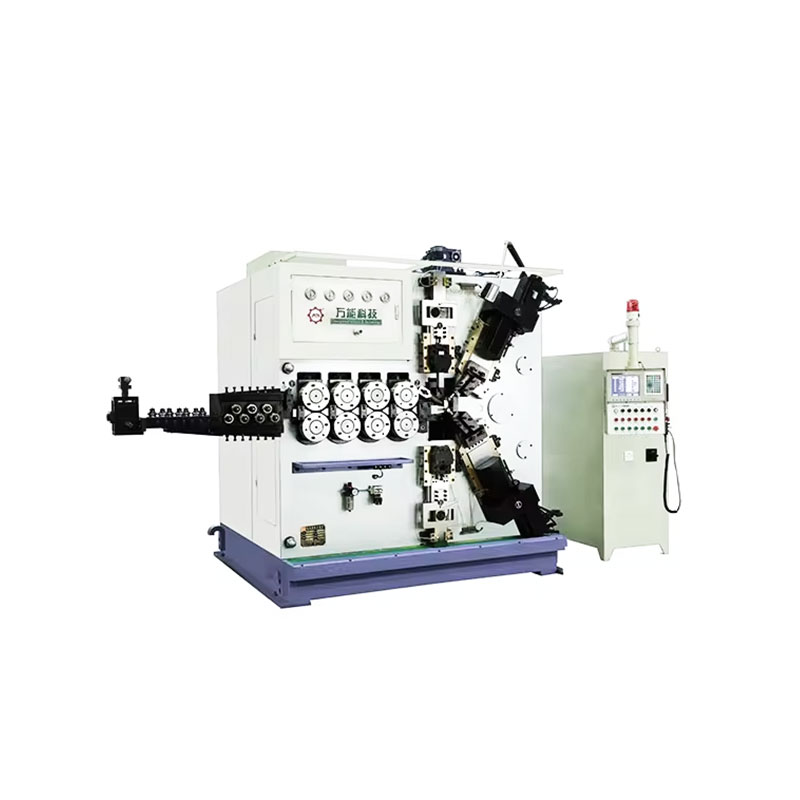
TK-6160 TK-6160 CNC SPRING ROLLING MACHINE...
See Details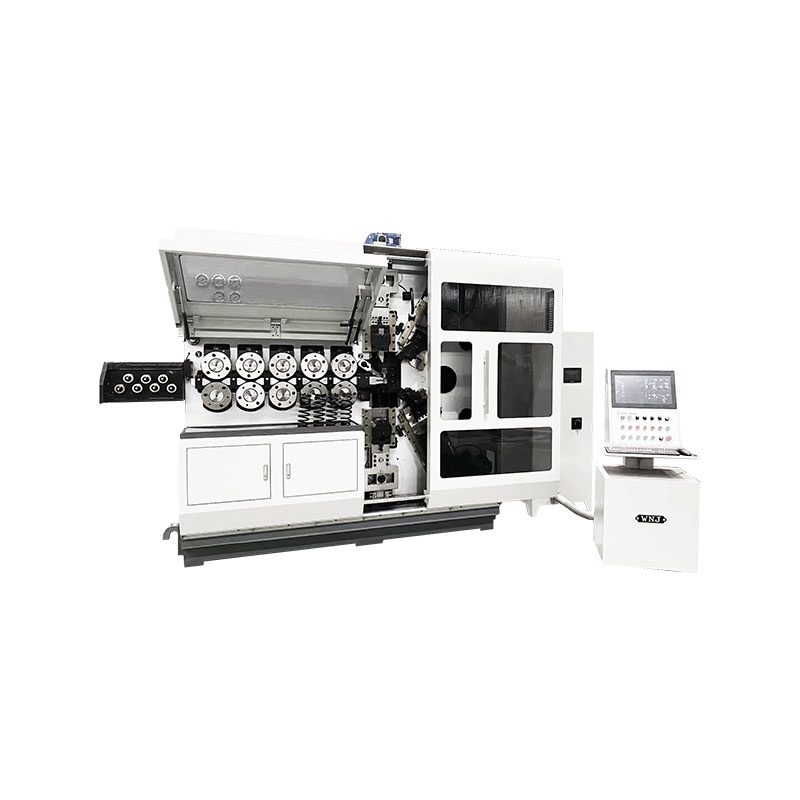
TK-6120 TK-6120 CNC SPRING ROLLING MACHINE...
See Details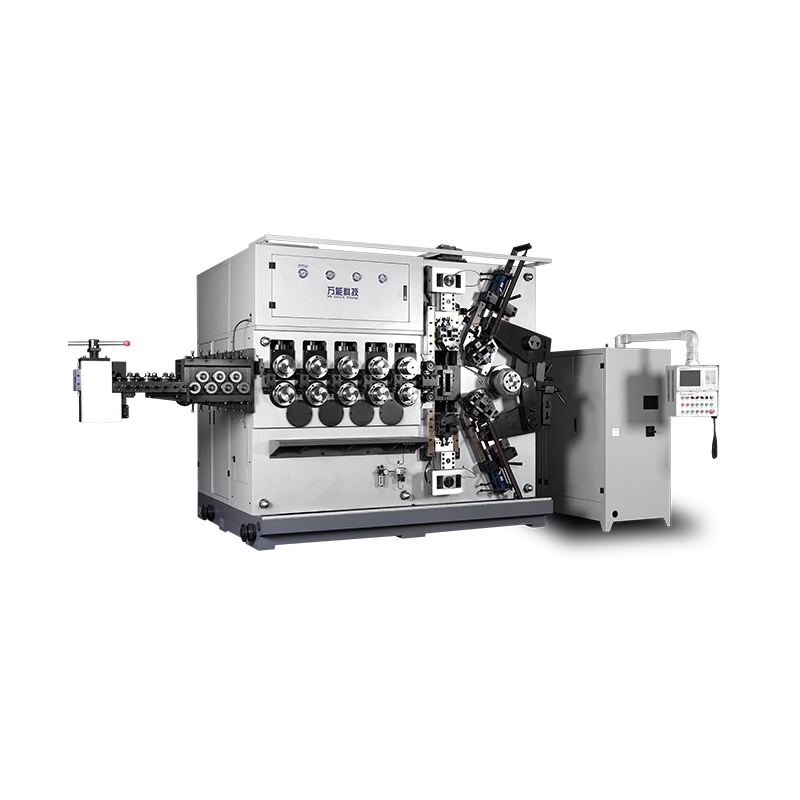
TK-5200 TK-5200 5AXES CNC SPRING COILING MACHINE...
See Details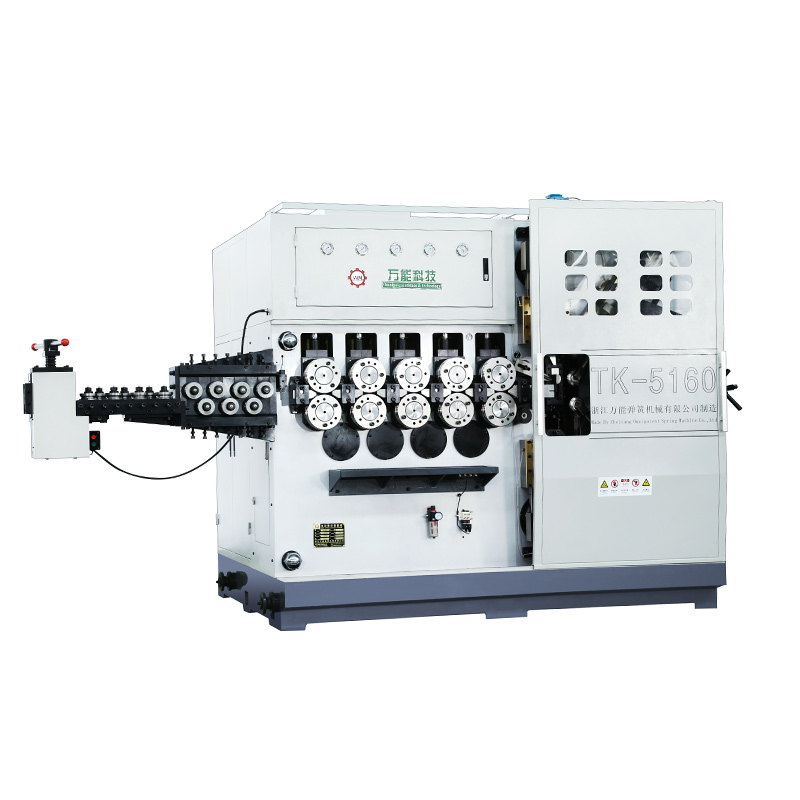
TK-5160 TK-5160 5AXES CNC SPRING COILING MACHINE...
See Details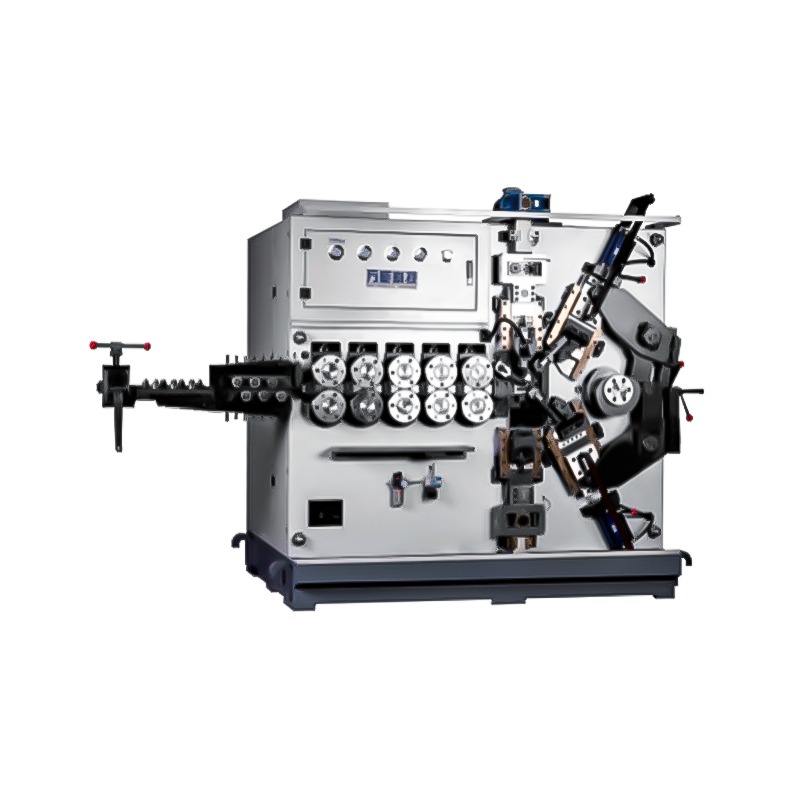
TK-5120 TK-5120 5AXES CNC SPRING COILING MACHINE...
See Details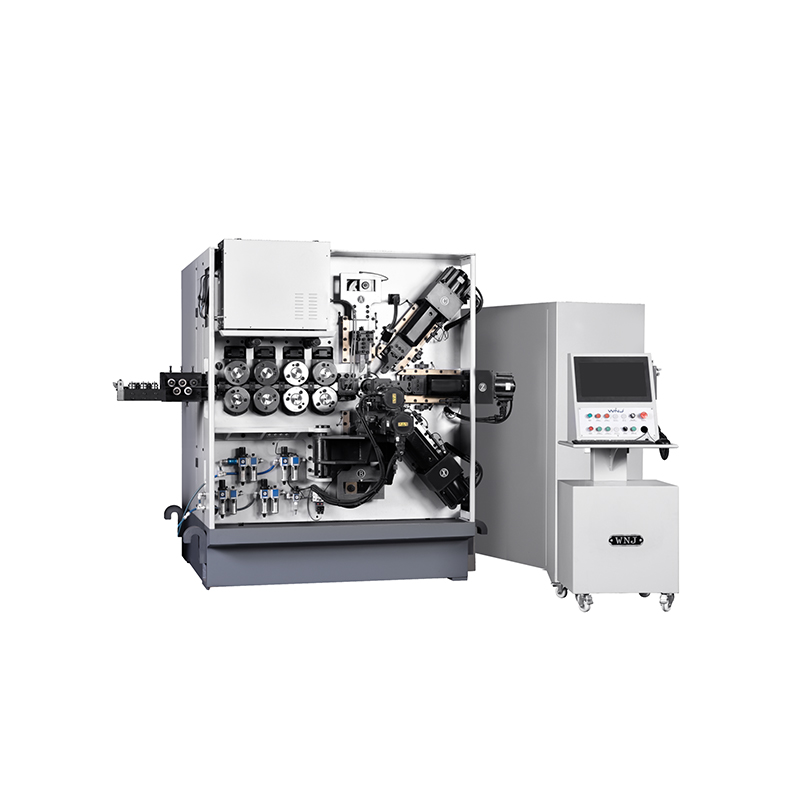
TK TK 10AXES CNC SPRING SCROLL MACHINE...
See Details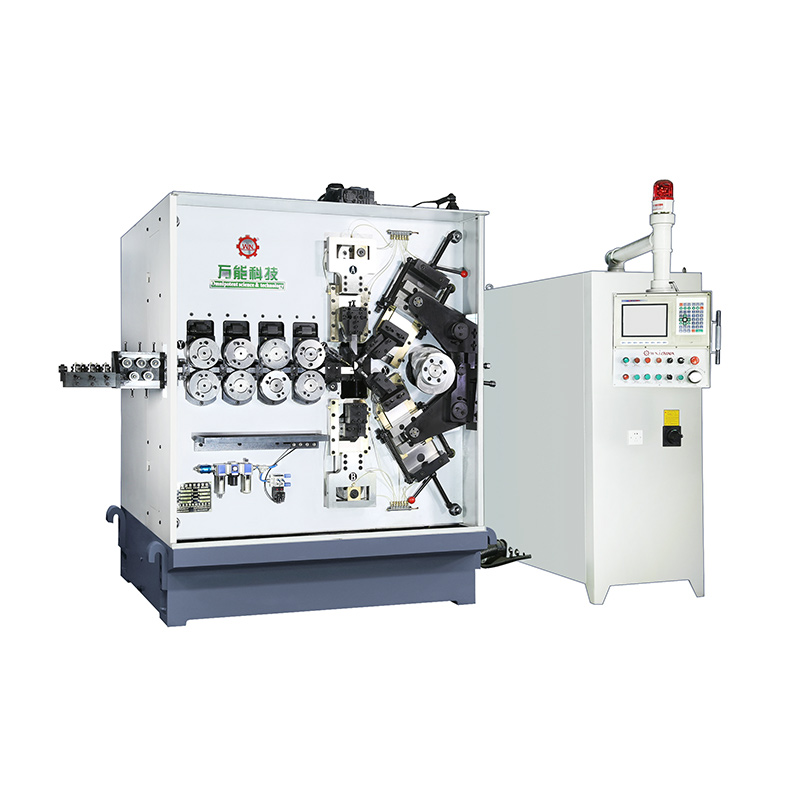
TK-580B、 TK-590 TK-580B、 TK-590 5AXES CNC SPRING COILING MACHINE...
See Details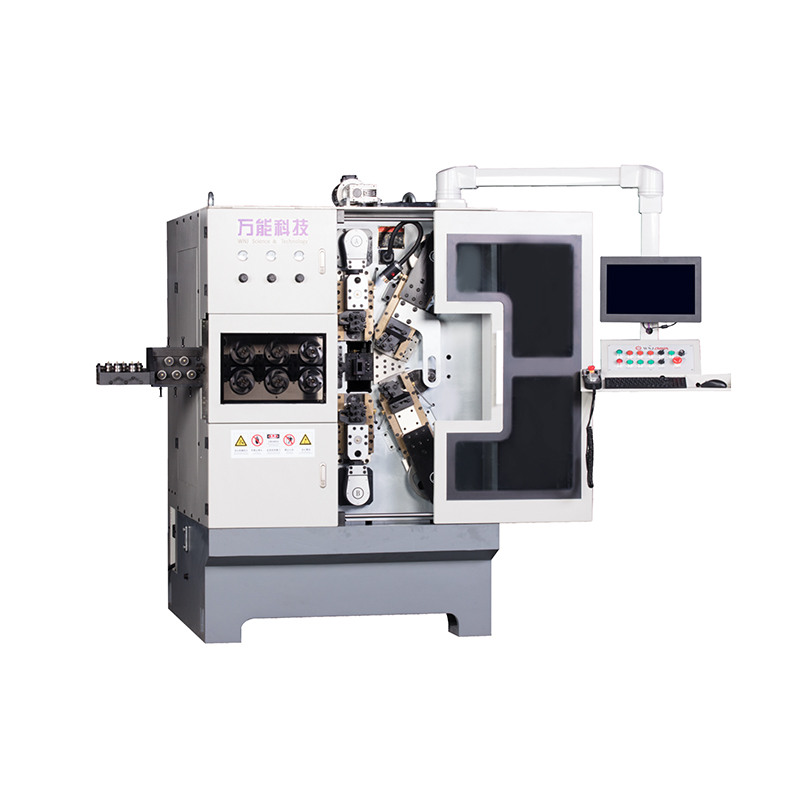
TK-760TK-760 6-7AXES CNC SPRING COILING MACHINE...
See DetailsMobile QR Code

 中文简体
中文简体 English
 русский
 Español