Language
Content
A bending machine is a production tool that reshapes wire, rod, tube, or flat metal into predetermined angles and curves using mechanical force, CNC servo control, or a combination of both. In spring and wire-component manufacturing, the practical definition is more demanding: the equipment must feed, straighten, bend, and cut material in one continuous cycle while maintaining dimensional tolerances in the range of ±0.1 mm.
The direct answer to the most common purchasing question is this: choose a CNC wire bending machine when your parts contain more than two bends, when batch sizes change frequently, or when customers demand documented program repeatability. Choose a manual or hydraulic bender only for high-volume, single-shape production with generous tolerances.
Every bending machine fits into one of three control families, and the difference matters more for operating economics than for the purchase price.
| Type | Control Method | Typical Diameter Range | Best For |
|---|---|---|---|
| Manual / Mechanical | Operator + template | 0.5 - 3 mm wire | Prototypes, repair parts |
| Hydraulic | Cylinders + dies | 3 - 50 mm tube, rebar | Pipe bending, construction |
| CNC Servo | Programmed servo motors | 0.3 - 12 mm wire | Springs, clips, brackets, complex forms |
A CNC wire bending machine turns a 3D part drawing into a sequence of coordinated servo movements. Five sub-systems work together in every cycle:
This architecture is what allows one machine to produce a seat-recliner spring, a surgical wire form, and a furniture clip in the same shift. A model like the ZW480 4-Axis CNC Spring Wire Bending Machine pairs independent feed control with a two-directional bending arm, letting operators complete luggage springs, seat springs, and medical wire forms in one pass without secondary operations.
If you need the full mechanical sequence, our guide on how a bending machine works step by step explains the role of each roller and mandrel in detail.
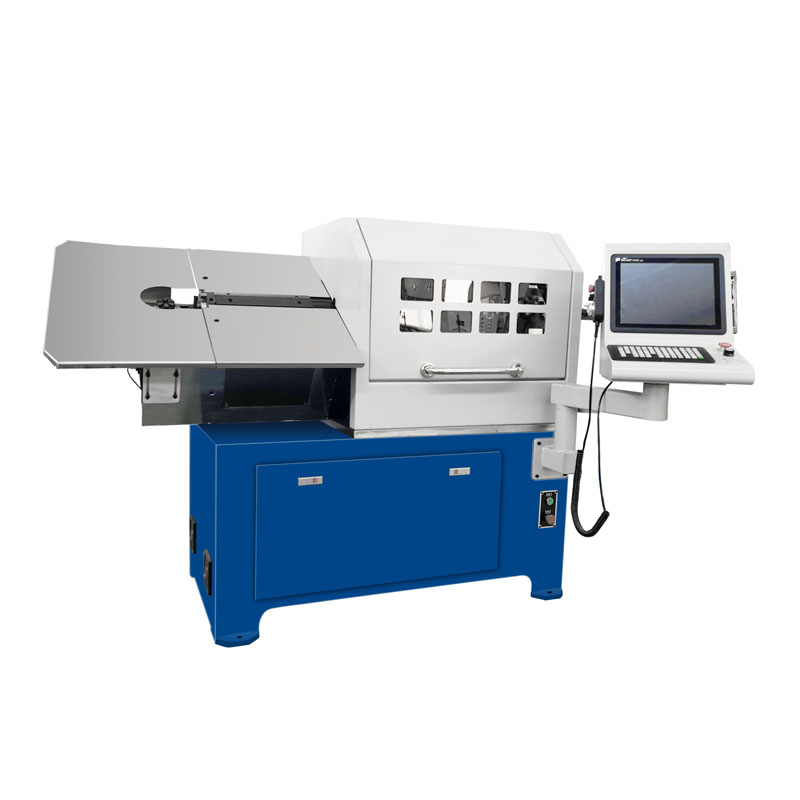 ZW-480 4-Axis CNC Spring Wire Bending MachineWith four or seven axes linkage and servo wire feeding, this machine offers high precision and stability for wire forming. Compare its specs against your cycle time and tolerance requirements.View Product →
Before comparing quotes, place every candidate machine against the framework below. These six specifications have the largest influence on whether a machine can produce your parts within the required cycle time and tolerance.
| Specification | What It Tells You | Practical Impact |
|---|---|---|
| Axis count | Number of servo-controlled movements | More axes permit more complex forms but raise the price |
| Wire diameter range | Minimum and maximum wire sizes the feed system accepts | Wire outside the range causes feed jams and inaccurate bends |
| Maximum feed speed | Usually 30 - 100 m/min | Directly determines cycle time for long parts |
| Bending arm rotation | Bending range in degrees | Defines whether undercuts and reverse bends are possible |
| Program storage | Number of part programs in memory | Larger storage shortens changeover in job-shop production |
| Repeatability | Deviation between consecutive parts | Tighter repeatability reduces scrap in high-volume runs |
For a contract shop running automotive and furniture wire between 1.0 mm and 4.5 mm, a 4-axis machine with an 80 m/min feed speed covers most standard parts. For tighter tolerances in aerospace or medical components, choose a 5-axis or higher machine with a camless forming system, because the extra axis carries the tool around undercuts instead of forcing the part to be repositioned.
Bending machines produce the holding, clamping, and force-transmitting wire forms that complement coil springs. Demand overlaps strongly with spring production across these industries:
In automotive manufacturing, a modern passenger car contains roughly 60 to 120 spring elements depending on the model, plus dozens of formed-wire clips and brackets that do not technically classify as springs (industry estimate). Contract manufacturers who want to capture this work typically run a machine like the ZW880 Spring Bending Machine, because its extended diameter range covers structural brackets and frame hangers while preserving the precision needed for seat springs.
For production planning ideas specific to the sector, read our automotive and mobility application notes.
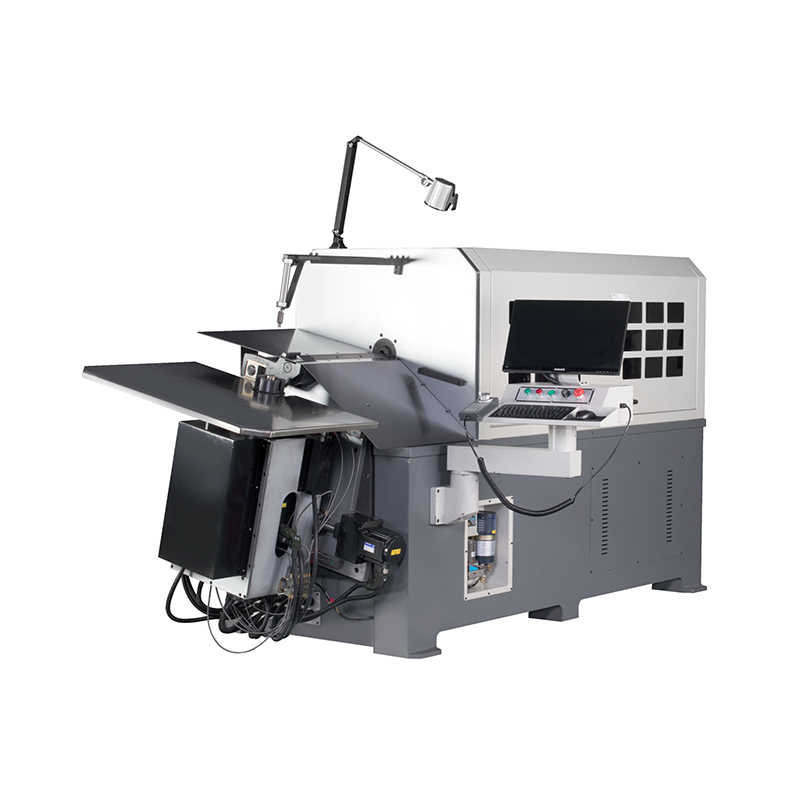 ZW-880 8-Axis CNC Spring Wire Bending MachineFeaturing eight axes for complex bending and a rotary wire feed for stability, this machine suits demanding applications. Evaluate its axes and feed capability to avoid common buying mistakes.View Product →
Work through five steps in this order, and you will avoid the two most common buying mistakes: buying too many axes and under-specifying the wire feed.
The most common mistake is underestimating the wire feed. The feeder accounts for about 30 percent of all wear-related machine events, so a workshop that plans to run stainless or oil-tempered spring wire should insist on hardened feed rollers and an automatic lubrication system as standard equipment.
A bending machine is only as productive as its maintenance schedule. Three routines separate well-run shops from the rest:
Budget roughly 2 to 3 percent of the machine value per year for consumables. Shear blades and bending mandrels are the parts that fail first, and lead times commonly run from two to four weeks. A spare set pays for itself the first time a blade chips.
A spring coiling machine wraps wire around a mandrel in a helical path to produce coils with controlled pitch, diameter, and number of active coils. A bending machine forms open wire shapes such as clips, brackets, hooks, and rings by creating angles in one or multiple planes. Most spring plants run both: the coiler for round springs and the bending machine for the accompanying wire forms.
Yes, within the rated diameter and tensile range. Common materials include spring steel, stainless steel, music wire, brass, aluminum, and coated wire. Each material uses different feed roller pressure and bending speed, and those values are stored together with the part program.
Two-dimensional forms and simple hooks need 3 axes. Parts with bends on different planes need at least 4 axes. Undercut shapes such as double torsion springs or multi-turn retaining rings typically require 5 to 12 axes.
Look for an emergency stop at the control panel and at the wire feed area, a transparent interlocking guard over the bending zone, and a servo torque limit that halts the axis if the wire jams. These features are standard on high-quality CNC machines and strongly recommended for any workshop.
With a CNC wire bending machine, an operator can produce simple parts after one to three days of training. Programming complex 3D parts normally takes one to two weeks of practice. Vendors that provide on-site training reduce this learning curve significantly.
Yes. Bending machines can be synchronized with coil straighteners, cut-to-length units, and upstream coiling machines through the PLC interface, creating a fully automated cell. The wire feed and cutter signals are the two main synchronization points.
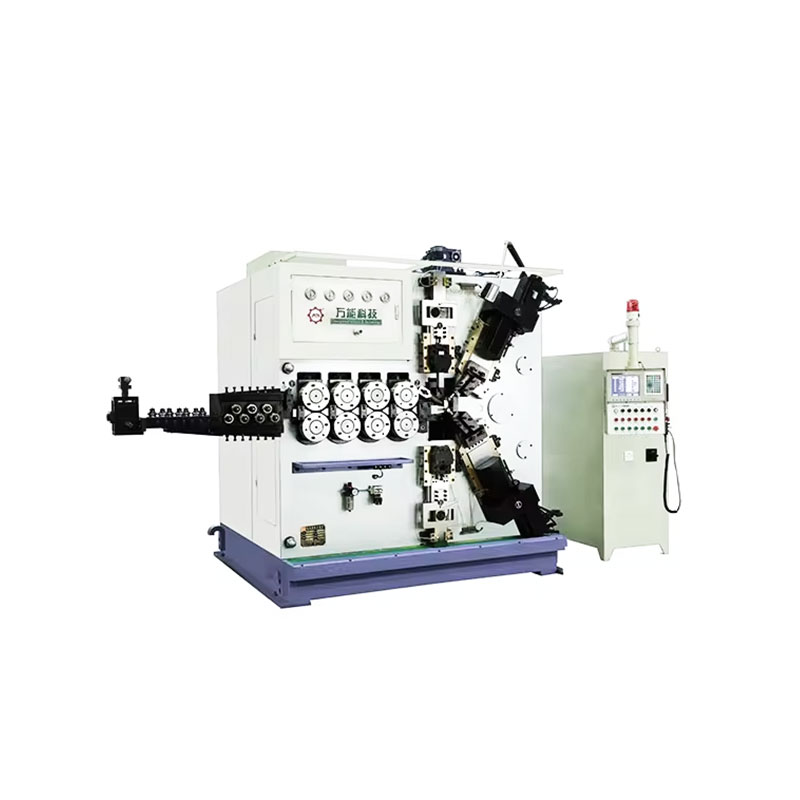
TK-6160 TK-6160 CNC SPRING ROLLING MACHINE...
See Details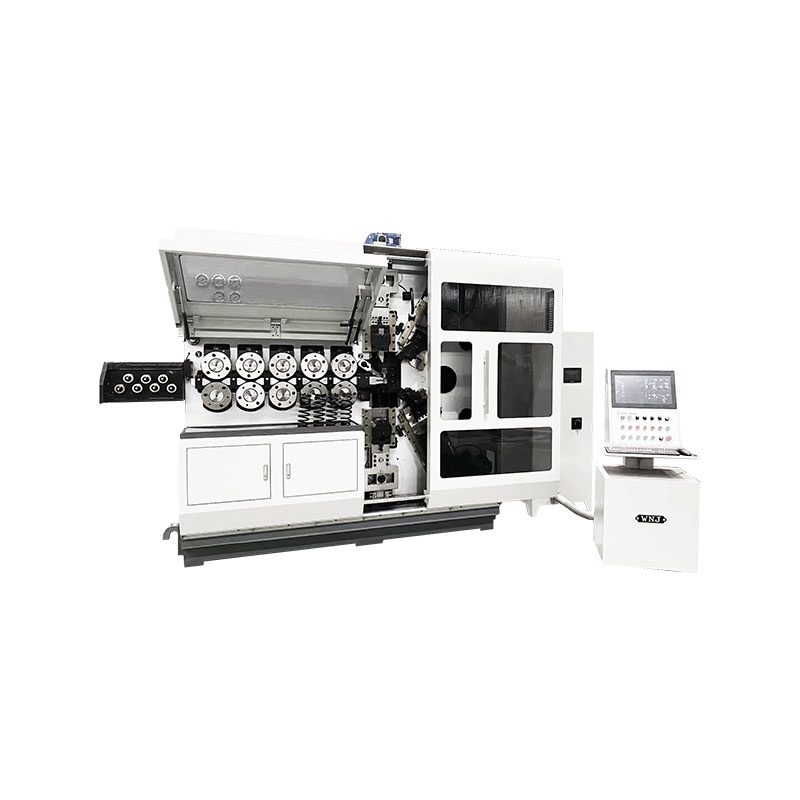
TK-6120 TK-6120 CNC SPRING ROLLING MACHINE...
See Details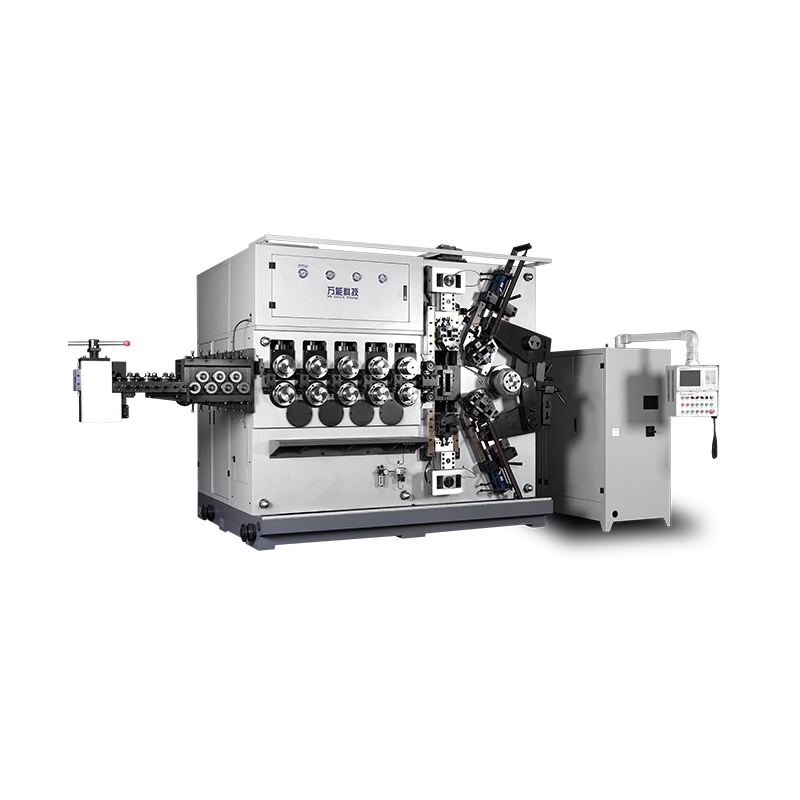
TK-5200 TK-5200 5AXES CNC SPRING COILING MACHINE...
See Details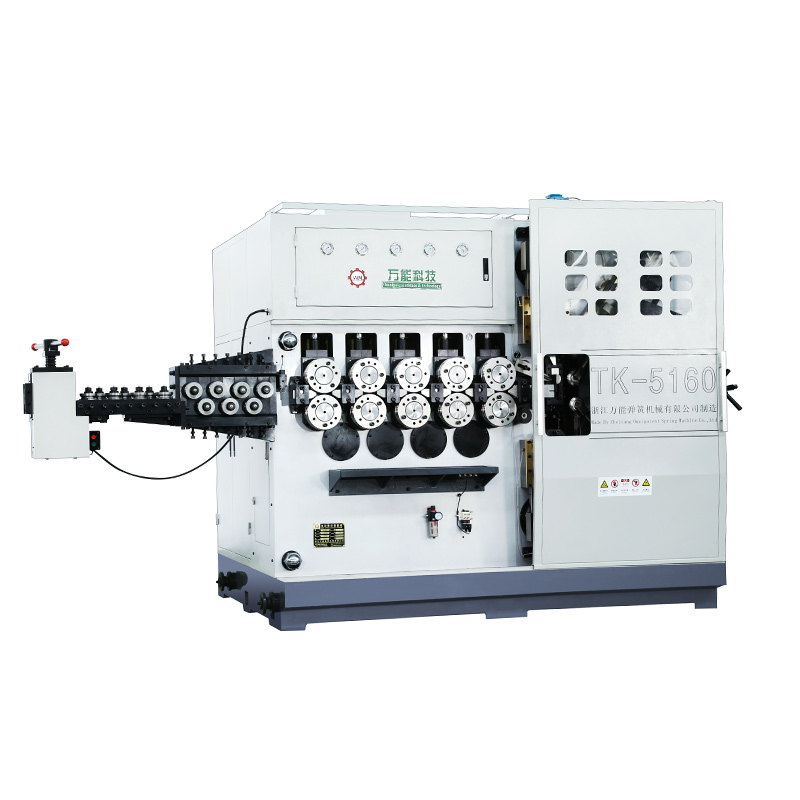
TK-5160 TK-5160 5AXES CNC SPRING COILING MACHINE...
See Details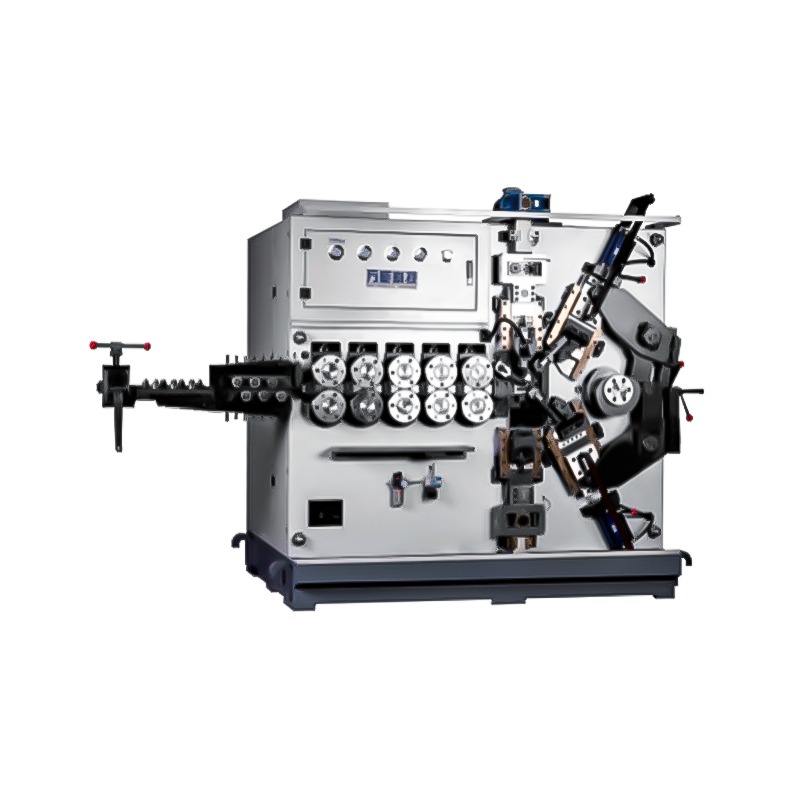
TK-5120 TK-5120 5AXES CNC SPRING COILING MACHINE...
See Details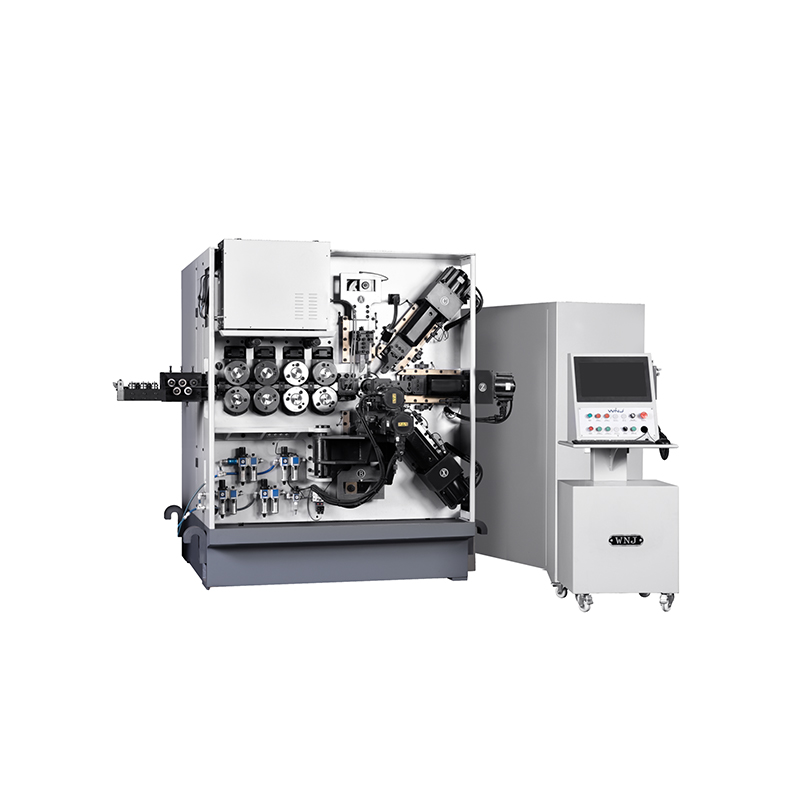
TK TK 10AXES CNC SPRING SCROLL MACHINE...
See Details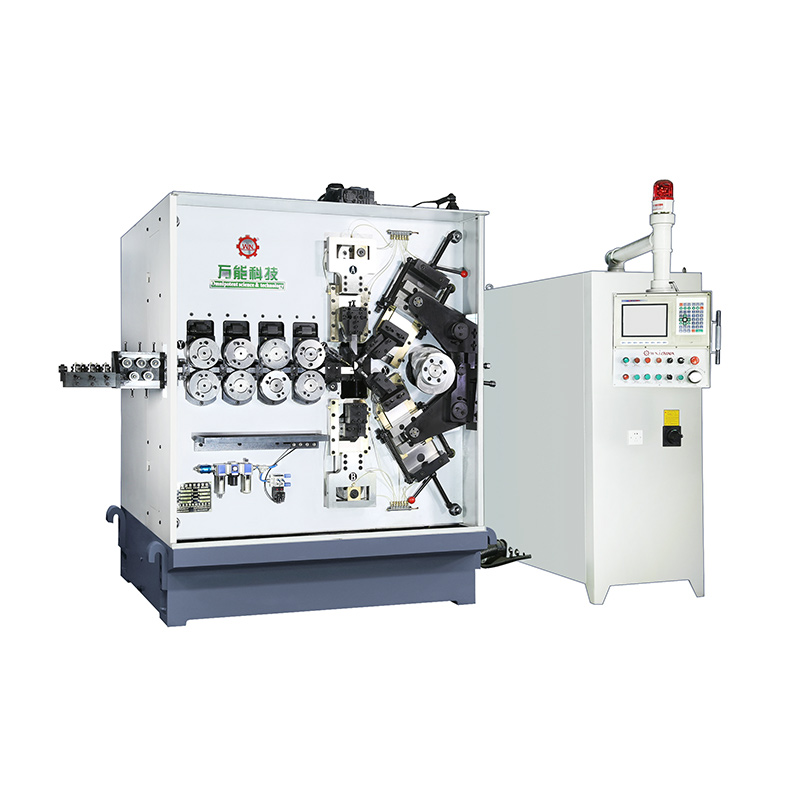
TK-580B、 TK-590 TK-580B、 TK-590 5AXES CNC SPRING COILING MACHINE...
See Details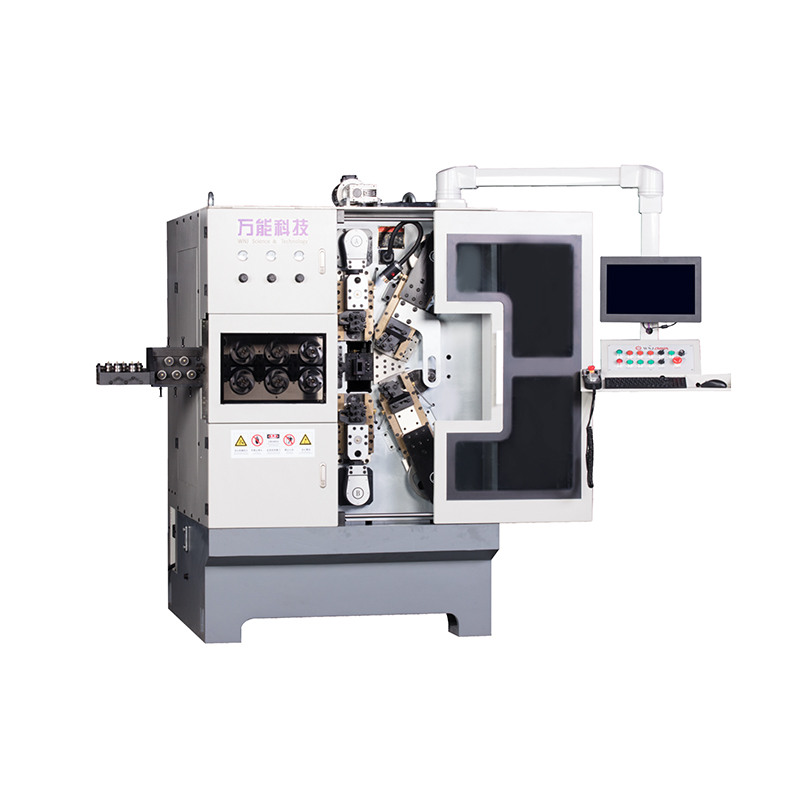
TK-760TK-760 6-7AXES CNC SPRING COILING MACHINE...
See DetailsMobile QR Code

 中文简体
中文简体 English
 русский
 Español