Language
Content
A torsional spring is a coiled mechanical element that stores and releases rotational energy through angular deflection. You will find it inside car door latches, garage door hinges, camera shutters, and electrical switchgear. The force that holds a mouse trap closed is torque from torsion. Despite being a small component, its production demands a level of precision that conventional hand-forming methods cannot deliver reliably.
The direct conclusion is simple: if your manufacturing goal is consistent load accuracy, tight angular tolerance, and volume output above a few thousand pieces per day, a CNC spring forming machine is not a luxury but a requirement. This article explains what torsional springs actually are, where they are used, how they are produced on modern CNC equipment, and what to consider when purchasing a machine for making them.
A torsional spring works on the principle of torque. When a load is applied to one leg of the spring, the wire body twists around its own axis, generating a counterforce. Because the wire is coiled, the amount of angular deflection is directly proportional to the applied moment within the elastic range.
Two engineering indexes determine performance. The spring index (mean diameter divided by wire diameter) should stay in the 4:1 to 16:1 range. Below 4:1, stress concentration rises significantly. Above 16:1, the spring loses stability under load. The winding direction (left-hand or right-hand) also matters because it determines whether the torque direction aligns with the intended application.
Torsional springs appear in nearly every mechanical assembly that needs a return force or a reliable clamping action. The following table lists the most common sectors and the typical functions torsion springs perform in each.
| Industry | Application | Typical Torque |
|---|---|---|
| Automotive | Door latch, window regulator, accelerator return | 0.2–12 N·m |
| Electrical | Circuit breaker, relay contact, switch spring | 0.05–2 N·m |
| Medical | Surgical clamp, pill dispenser, medical pump | 0.01–0.5 N·m |
In the automotive sector alone, a mid-size vehicle can carry more than 90 torsional spring units across its door systems, seat adjusters, pedal returns, and emergency brake mechanisms. This scale explains why spring manufacturers need equipment that can hold angular tolerance within ±2 degrees while running at speeds around 60 to 120 pieces per minute. Manufacturers serving this market should evaluate their forming equipment against not only single-part accuracy but also throughput stability. For a full equipment configuration guide, review our automotive industry solutions.
Producing a torsion spring requires controlled wire feeding, coiling, bending, leg forming, and cutting. Three machine families dominate this space:
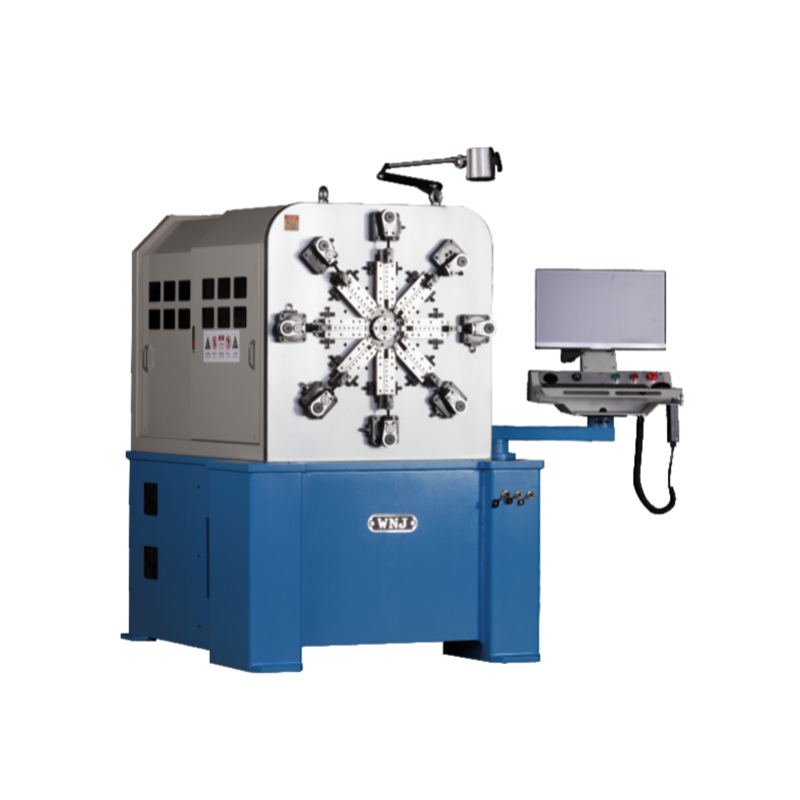 12-Axis Camless CNC Spring Machine for Complex Torsion SpringsThis 12-axis camless machine enables independent servo control for intricate leg bends, reducing setup time significantly. It suits mixed production batches requiring high flexibility and precise forming.View Product →
A 12-axis camless machine offers the highest flexibility for torsion spring manufacturing. Because each servo axis moves independently, the machine can produce complex leg bends that would normally require multiple dies. For manufacturers running mixed production batches, the programming approach reduces setup time from hours to minutes.
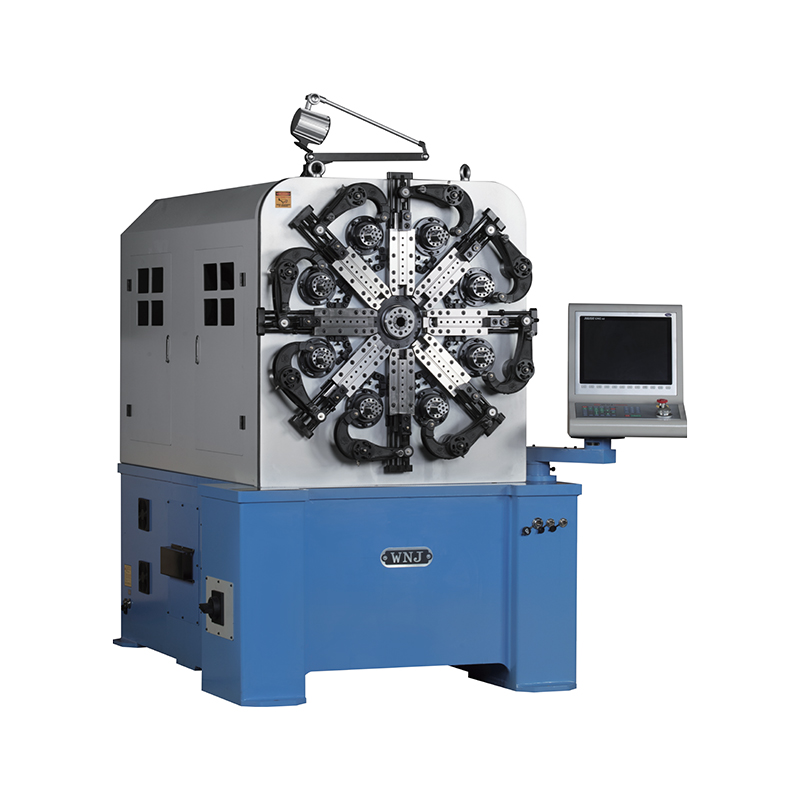 5-Axis CNC Spring Forming Machine for Standard Torsion SpringsA cost-effective five-axis forming machine offering excellent angular precision on standard torsion springs. It balances capital investment and maintenance overhead, making it an ideal middle-ground solution.View Product →
Five-axis forming machines provide a cost-effective middle ground. They deliver excellent angular precision on standard torsion springs while keeping capital investment and maintenance overhead lower than a 12-axis system.
Spring design is an iterative process where geometry and material interact. Here are the parameters that affect both performance and manufacturability.
One practical rule from manufacturing experience: if the total tolerance band on the spring's free angle is under ±3°, the production equipment must have at least 5-axis CNC control. A 3-axis machine will struggle to hold that tolerance consistently across a full day shift because it relies on mechanical stops for several forming motions.
Choosing the right forming machine depends on five factors: spring complexity, required angular accuracy, daily production volume, changeover frequency, and budget. The table below summarizes the tradeoffs across common machine configurations.
| Configuration | Axis Count | Angular Accuracy | Changeover Time | Best For |
|---|---|---|---|---|
| Traditional cam type | 3–5 | ±0.15 mm | 3–6 hours | High-volume simple springs |
| 5-axis CNC forming | 5 | ±0.05 mm | 30–60 minutes | Mid-volume mixed batches |
| 10/12-axis camless | 10–12 | ±0.02 mm | 15–30 minutes | Complex torsion springs |
For a workshop that produces 5,000 to 20,000 torsion springs per batch with designs changing three times a week, a 5-axis CNC forming machine delivers the best return on investment. A 12-axis camless machine pays off when spring geometry is highly complex—for example, springs with three or more bends in one leg—or when angular tolerance is tighter than ±2 degrees.
CNC torsion spring machines are precision electromechanical systems. Regular maintenance directly influences dimensional consistency and equipment life. Here is a practical framework based on three levels of frequency.
A torsional spring supplies rotational force, called torque. It drives return motions in door latches, controls engagement in clutch mechanisms, and holds switch contacts under defined pressure. Any mechanism requiring angular deflection to generate a restoring moment can use a torsion spring.
Torsion springs are produced on CNC spring forming machines or camless spring machines. The forming machine feeds wire through straightening rollers, coils it around a mandrel or with servo-driven quills, and then bends the legs to the required angular position. For detailed working principles, visit our article on torsion spring machine working principles.
Music wire is the best choice for miniature precision springs because it provides maximum tensile strength. Stainless steel 304 is preferred when corrosion resistance outweighs load capacity. For industrial torsion springs with moderate cost constraints, 65Mn spring steel performs well and is widely supported in existing forming tools.
In theory, a camless machine with enough axes can form compression, torsion, extension, and wire bending products. In practice, production efficiency and tooling geometry limit this flexibility. A machine optimized for torsion spring leg forming can produce standard compression springs, but it will not match the productivity of a dedicated coiling machine on long production runs.
Torsional spring manufacturing is a trade-off between geometry complexity, angular accuracy, and production cost. For simple springs in high volumes, a traditional cam machine remains workable. For mixed-batch, complex torsion springs requiring shift-after-shift consistency, a CNC camless forming machine is the definitive choice.
The most important purchasing decision is not the number of axes but the fit between machine capabilities and your product roadmap. If precision torsion springs are becoming a larger share of your catalogue, a 5-axis or 12-axis CNC forming machine will quickly recover its cost through reduced changeover time and lower scrap rates.
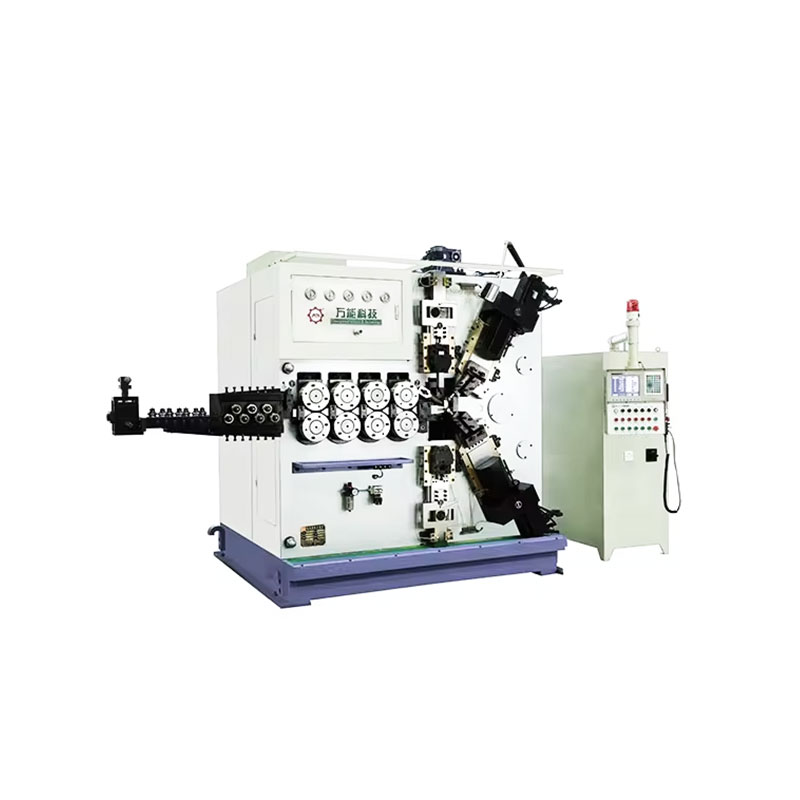
TK-6160 TK-6160 CNC SPRING ROLLING MACHINE...
See Details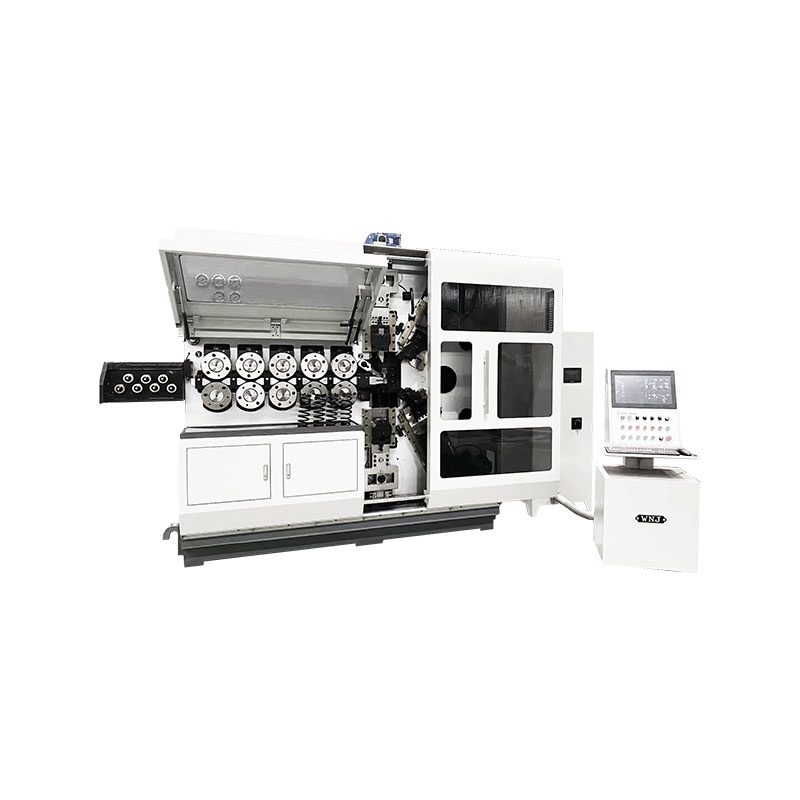
TK-6120 TK-6120 CNC SPRING ROLLING MACHINE...
See Details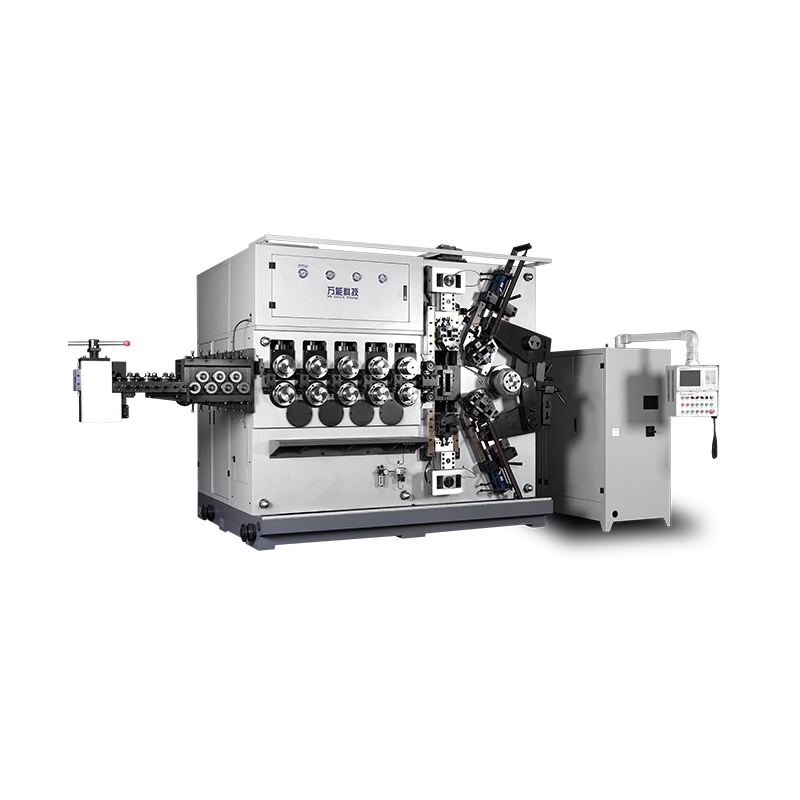
TK-5200 TK-5200 5AXES CNC SPRING COILING MACHINE...
See Details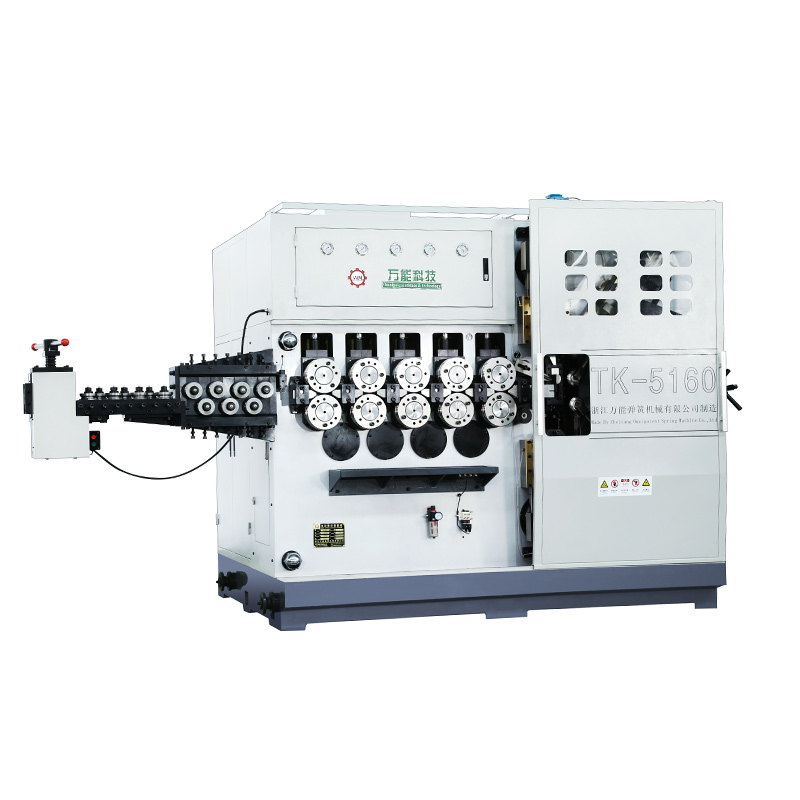
TK-5160 TK-5160 5AXES CNC SPRING COILING MACHINE...
See Details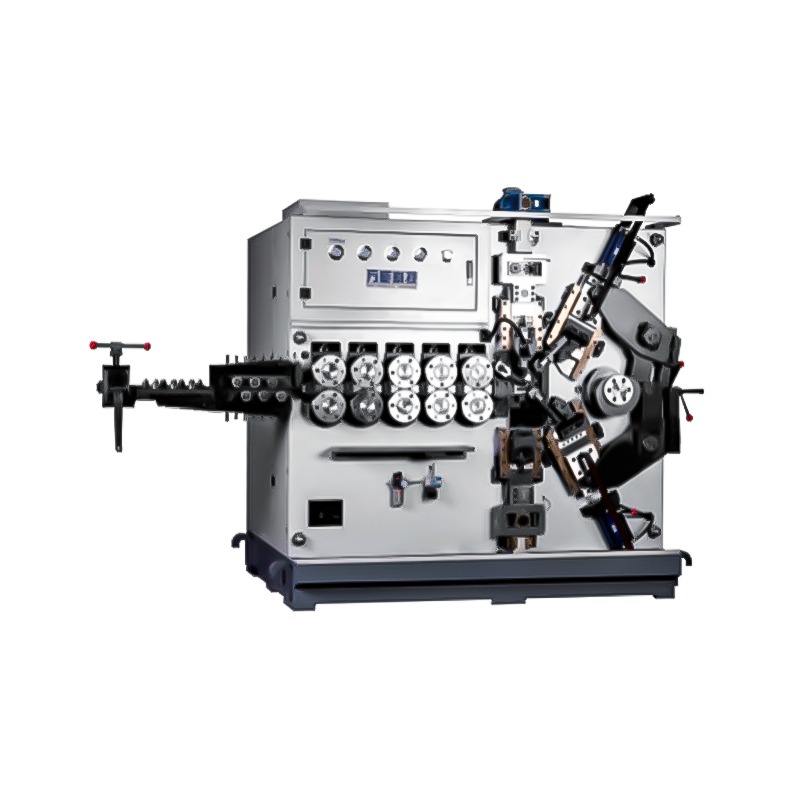
TK-5120 TK-5120 5AXES CNC SPRING COILING MACHINE...
See Details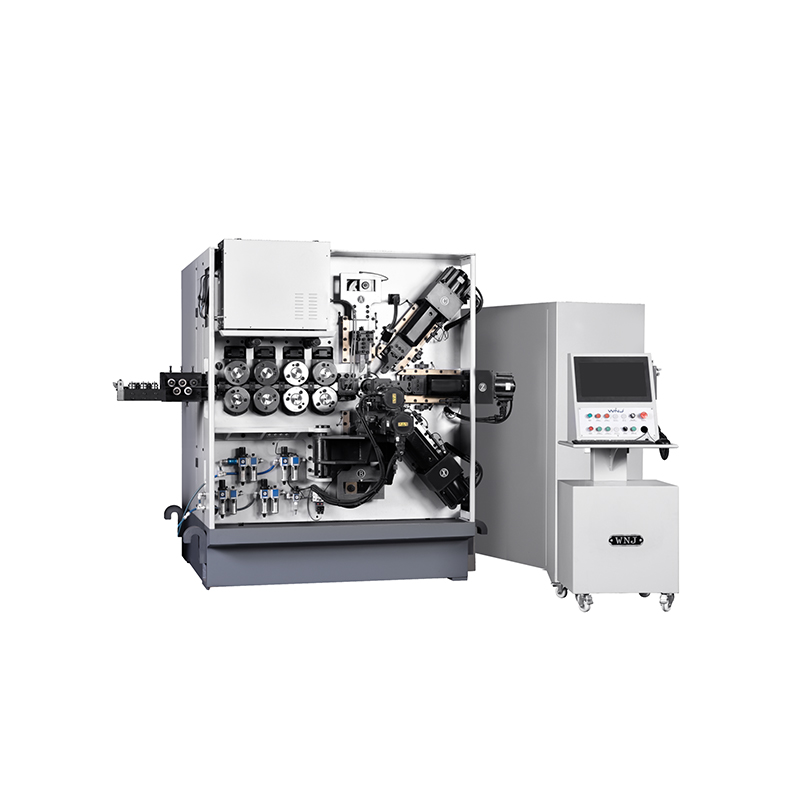
TK TK 10AXES CNC SPRING SCROLL MACHINE...
See Details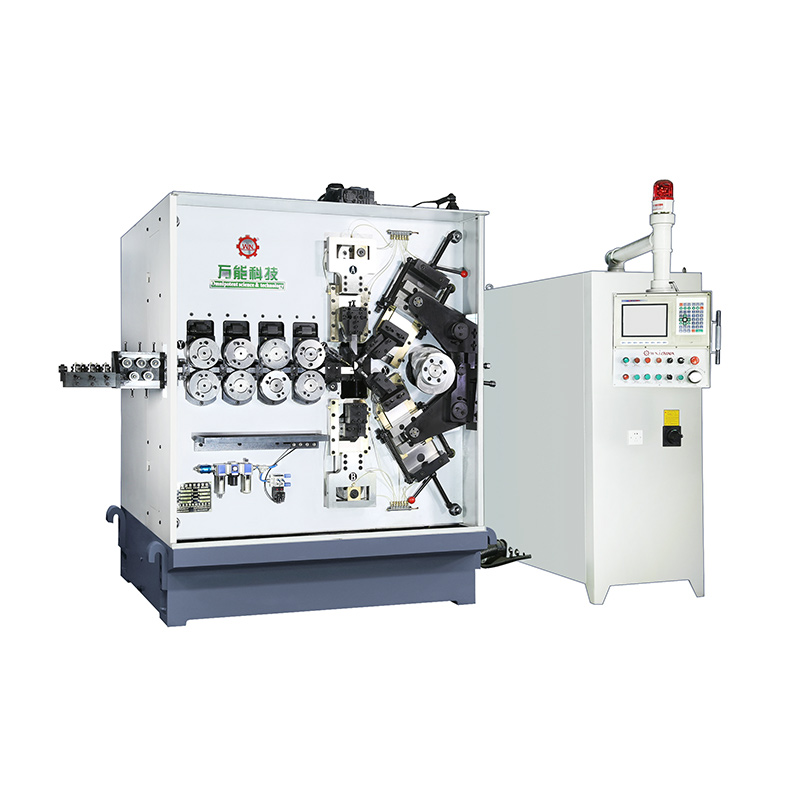
TK-580B、 TK-590 TK-580B、 TK-590 5AXES CNC SPRING COILING MACHINE...
See Details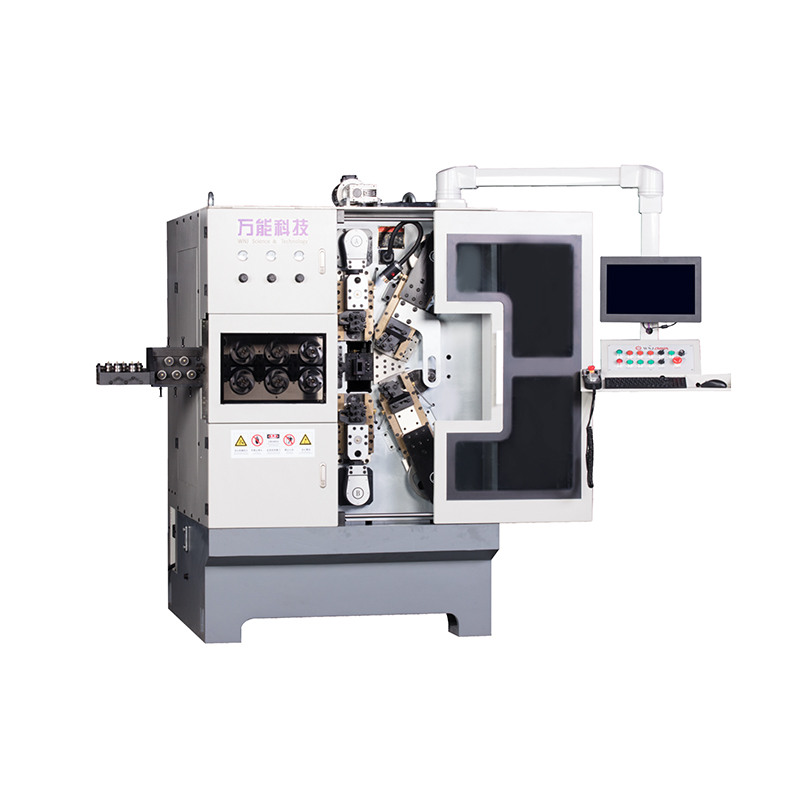
TK-760TK-760 6-7AXES CNC SPRING COILING MACHINE...
See DetailsMobile QR Code

 中文简体
中文简体 English
 русский
 Español