Language

Content
A compression spring buckles when its axis bows sideways instead of staying in line with the load. Nothing is cracked, the wire is not undersized, and the rate measured on a short sample was correct. The spring has simply become unstable, and once it bows, every number on the drawing stops meaning what it meant.
Here is the short answer before the detail. Spring buckling is a stability problem, not a strength problem. Three variables decide most of it: the slenderness ratio (free length divided by mean coil diameter), the way the two ends sit against their seats, and how much travel the spring is asked to absorb. Manufacturing control then decides whether a spring that is stable on paper stays stable in the bin.
A coil spring under axial load behaves partly like a column and partly like a flexible shaft. The helix carries the load mainly in torsion, but it also has a bending stiffness, and that bending stiffness falls as the spring compresses. Once the applied load develops even a small lateral component, through an off-centre seat, a bowed wire, or a slightly tapered end, the lateral deflection grows faster than the axial deflection. That is the moment the spring stops being a spring and starts being an unstable strut.
In production, buckling rarely appears as a dramatic sideways snap. It shows up as a spring that rubs its bore, wears a bright polish band along one side of the coils, loses free length, or delivers a load at 80 percent deflection that is measurably lower than the rate calculation predicted.
Spring design practice worldwide works from two dimensionless numbers. The first is Lf/D, free length divided by mean coil diameter. The second is deflection divided by free length, written as a fraction of Lf. Standard buckling curves plot one against the other, and every point above the curve means the spring is expected to bow.
A widely used screening rule from spring design literature is that a compression spring with Lf/D below about 2.6 will not buckle, regardless of how far it is compressed. Between roughly 2.6 and 4 the risk depends on travel and end conditions, and above 4 the spring should be treated as a guided component from the start of the design, not as an afterthought.
End conditions matter because they change the effective length of the equivalent column. In the classical Euler relationship the critical load varies with one divided by the square of the effective length factor K, so improving K from 1.0 to 0.5 does not double the buckling threshold, it quadruples it.
| End condition in the assembly | Effective length factor K | Relative buckling resistance | What it looks like in real hardware |
|---|---|---|---|
| Closed and ground ends on flat parallel plates | 0.5 | Highest | Machined pockets, flat retainers, ground end faces |
| Closed ends, parallel but not ground | 0.7 | Moderate to high | As-coiled ends on flat washers or stamped seats |
| One end free to tilt | 1.0 | Low | Spherical seat, curved retainer, conical pocket |
| Seated in a worn, tapered or oversized pocket | 2.0 | Very low | Reworked housings, cast seats, recycled fixtures |
A design chart describes the average spring. Buckling complaints always come from the tail of the distribution, where three or four small deviations line up in the same direction. In practice, the following variation sources cause most of the complaints we see on the shop floor and in customer audits.
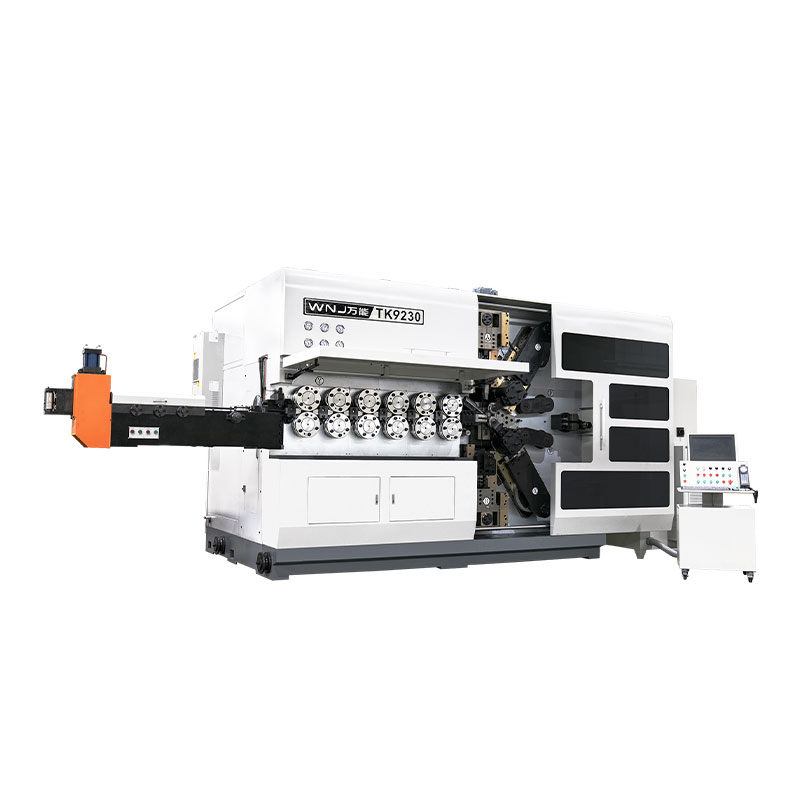
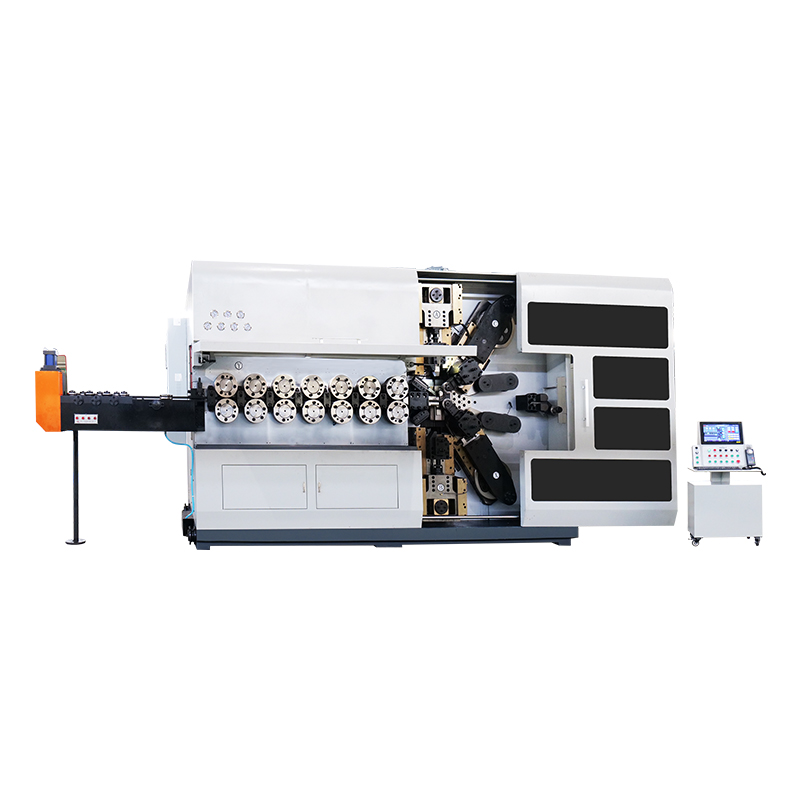
Servo-controlled coiling addresses this directly. Programmable pitch, closed-loop outside diameter correction and consistent wire feed pressure hold free length, pitch and diameter inside a tight band, which is the cheapest way to move a whole production run away from the buckling curve.
 TK-335 3AXES CNC SPRING COILING MACHINETK-335 3AXES CNC SPRING COILING MACHINEView Product →
On equipment of this class, wire feed, pitch and diameter correction are handled by the control system rather than by mechanical cams, so a change of wire lot does not automatically mean a change of spring geometry. For a spring that is only marginally stable, that repeatability is often the difference between a passing and a failing first article.
The arithmetic here is blunt and worth doing before changing any wire size. A three degree tilt on an end face of a spring with a 100 mm free length puts the far end about 5.2 mm off axis, because three degrees has a tangent of roughly 0.052. That much eccentricity is enough to push a borderline spring over the buckling curve on the first compression stroke.
Good grinding practice aims for a flat contact face across at least three quarters of the wire diameter, with the two end faces parallel to within a small fraction of the wire diameter. The grinding operation also has to avoid overheating the wire ends: grinding burn, visible as a straw or blue temper colour, leaves a locally softer hinge at the end of the spring, exactly where the column load is introduced.
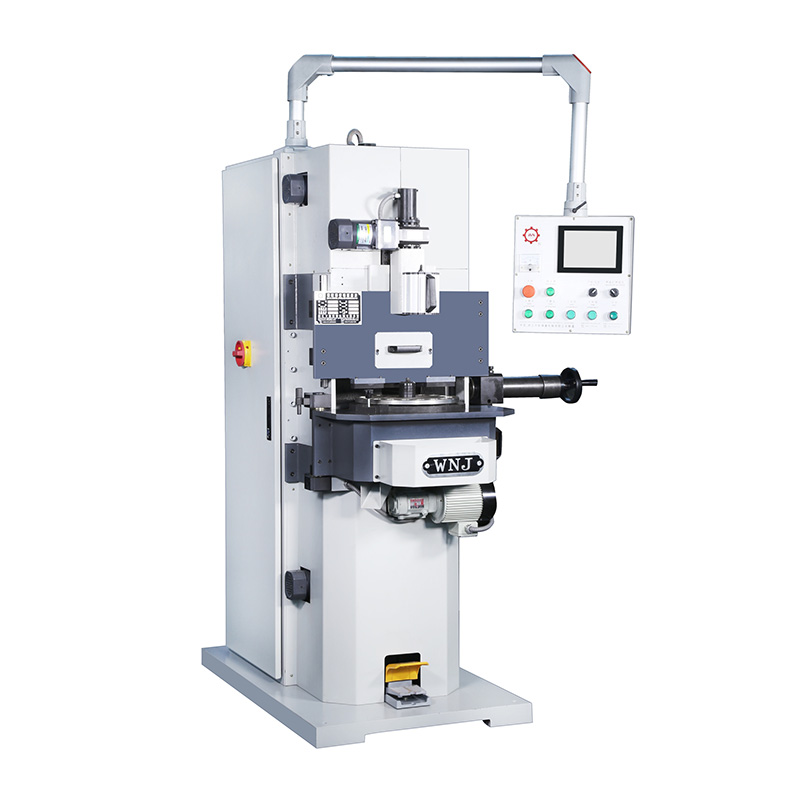 CNC Spring Grinding Machine ManufacturerWNM2.5 WNM CNC SPRING END GRINDING MACHINEView Product →
Automatic end grinders with controlled feed rate and grinding pressure remove the operator variable. Where an end face is ground unevenly, no amount of downstream inspection will recover the lost squareness, and the spring will keep being rejected for a symptom that looks like a design problem.
Cold-wound compression springs carry heavy residual stresses from the coiling operation. Without a stress relief cycle, those stresses relax slowly under load, and the spring loses both free length and straightness. Cold-wound carbon steel springs are typically stress relieved somewhere in the region of 200 to 300 C for 30 to 60 minutes, with the exact window depending on wire grade and the stress level the design allows.
The furnace detail that matters for buckling is uniformity, not peak temperature. If one side of the load sits in a cooler zone, one side of the coil relieves less stress than the other, and the spring leaves the furnace already bowed. A working-zone uniformity within a few degrees Celsius is what separates a furnace that supports straight springs from one that quietly generates scrap.
Hot-wound springs go through a different route, with an austenitising, quenching and tempering sequence at much higher temperatures. Here an uneven quench produces a bow that no amount of end grinding can correct, because the curvature runs through the whole body of the spring rather than sitting at the ends.
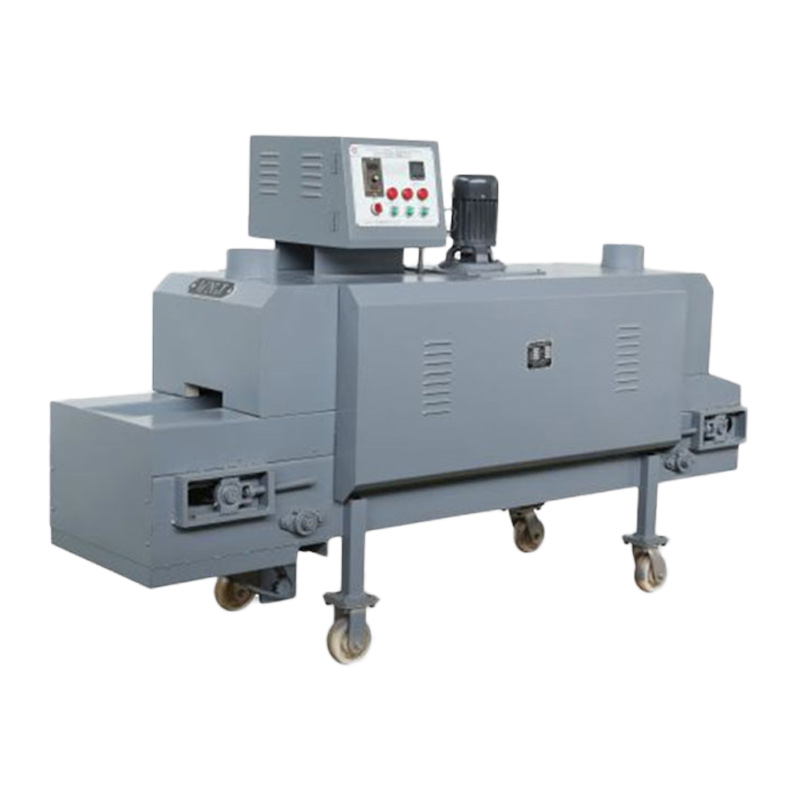 WNJ210 Spring Temper Furnace (Panint Series)Panint Series WNJ SPRING TEMPER FURNACEView Product →
Whatever furnace design is used, the practical test is simple: run a batch, let it cool in a straight rack, and measure the axis bow on a surface plate. If the bow correlates with position in the furnace rather than with position in the coil, the heat treatment is the problem, not the coiling machine.
When a spring is already buckling in the field, these are the levers that actually change the outcome, roughly in order of how much they cost to implement.
Buckling leaves evidence long before it becomes a complaint. A basic incoming inspection routine will catch most of it.
Buckling is rarely a single-part problem. It is a system problem, and the industries with the least tolerance for lateral movement in an assembly feel it first.
In vehicle suspension and seat applications, a spring that bows inside its seat changes the wheel rate, wears the seat insulator and produces noise that customers report immediately. In automotive spring manufacturing, coil diameter consistency and end squareness are treated as functional requirements for exactly this reason. Valve train springs operate in tight bores where any lateral contact turns into wear on the retainer and the head. Aerospace and medical assemblies often use long, slender springs in confined bores, so designers build in a guide from the first sketch rather than waiting for a test failure. Telecom and connector springs are short enough that buckling is rarely an issue, but the same pitch and end quality controls that prevent buckling also protect contact force consistency.
The commercial point is simple. A buckling failure is usually found at assembly or after delivery, which means rework, sorting and a design review. All three cost far more than the run of coil wire that would have removed the condition at the machine.
A widely used screening value is an Lf over D ratio of about 2.6. Below that, buckling is not treated as a practical concern. Above roughly 4, the spring should be guided or the design should be reworked. Between those two figures, the answer depends on how much of the free length you use and on the end conditions.
No. The buckling threshold is usually reached at 60 to 80 percent of the calculated critical deflection, and the spring can sit in a bowed condition across the second half of its stroke. That is why a spring can pass a single-point load test at working height and still fail in service.
Ground ends reduce eccentricity and move the effective length factor toward 0.5, which can raise the threshold substantially. They do not replace a guide on a genuinely slender spring. Grinding fixes the load introduction; it cannot change the fact that the spring itself is too long relative to its diameter.
Almost never. Buckling depends on geometry and on the elastic modulus, and the modulus of every common spring steel is within a few percent of 200 to 210 GPa. A higher grade raises the stress the wire can survive, which is a fatigue and set question, not a stability question.
It does, and the effect is measurable. A cold-wound spring that is not properly stress relieved will relax unevenly under load, and the relaxation tends to be on the side of the coil carrying the highest residual stress. The result is a bow that grows over the first few hundred cycles.
It is the most reliable single measure, but it brings its own problems: friction, wear debris, and a clearance that must be tight enough to work yet loose enough to avoid seizing. Where a guide is impossible, nested springs or a shorter, stiffer design with reduced travel usually gives a better overall result.
Buckling is a static lateral instability driven by load and slenderness. Surging is a dynamic phenomenon driven by excitation frequency, and a short, squat spring can surge violently while never coming close to buckling. The fixes are unrelated, which is why the diagnosis has to come before the corrective action.
Spring buckling is predictable, and that is the good news. Work out the slenderness ratio, decide the effective end condition, plot the operating point against the industry buckling curve, then go and check whether the process can actually hold the geometry the calculation assumed. In most cases the fix is a shorter spring, a ground end, a properly sized guide, or a coiling and heat treatment process that holds straightness batch after batch.
Run the numbers first, inspect the seats second, and only then change the spring. That order saves the most time and the most wire.
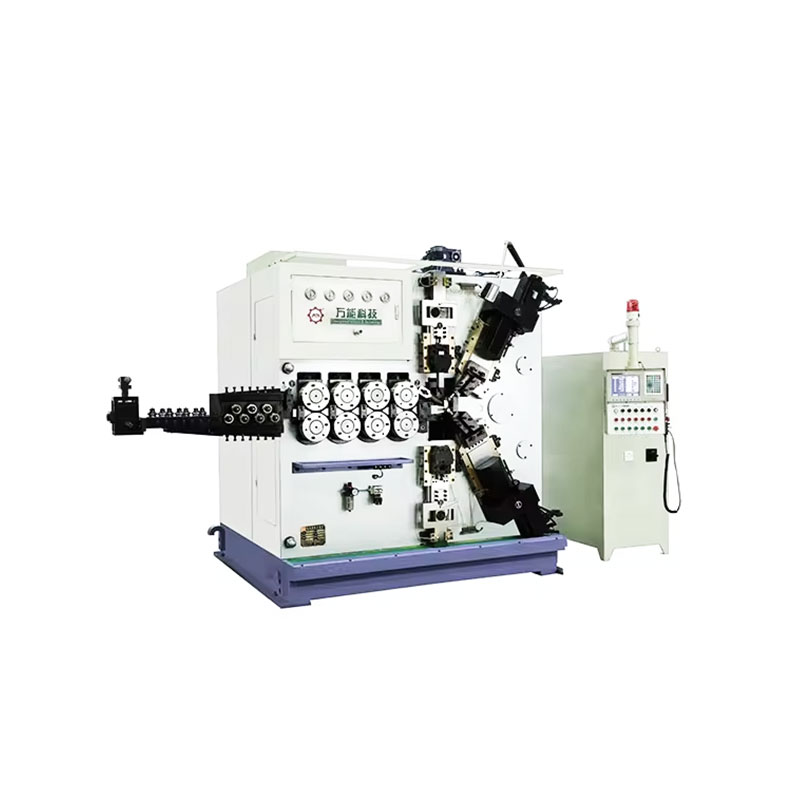
TK-6160 TK-6160 CNC SPRING ROLLING MACHINE...
See Details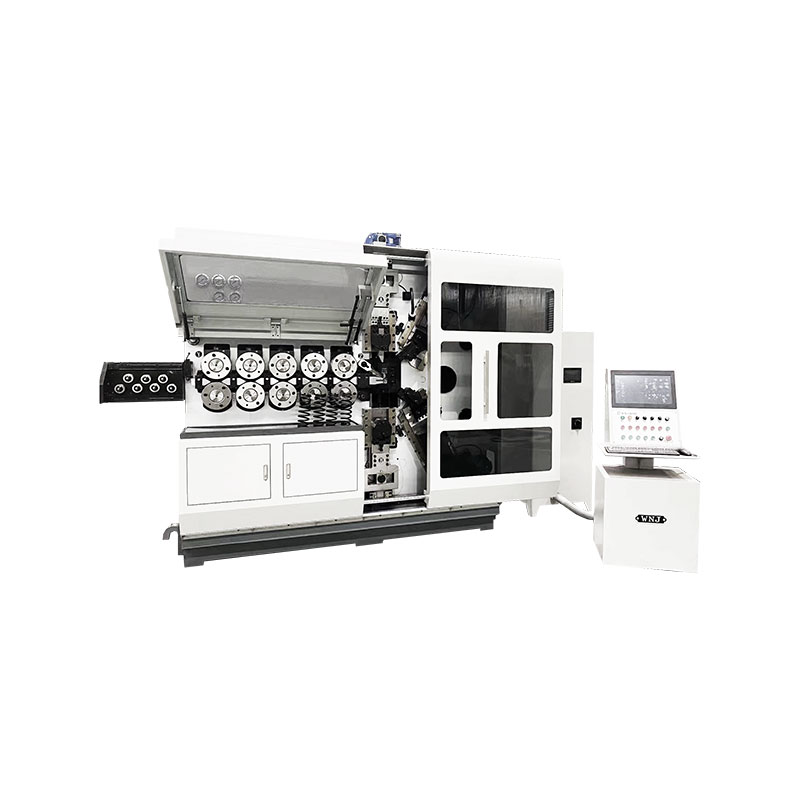
TK-6120 TK-6120 CNC SPRING ROLLING MACHINE...
See Details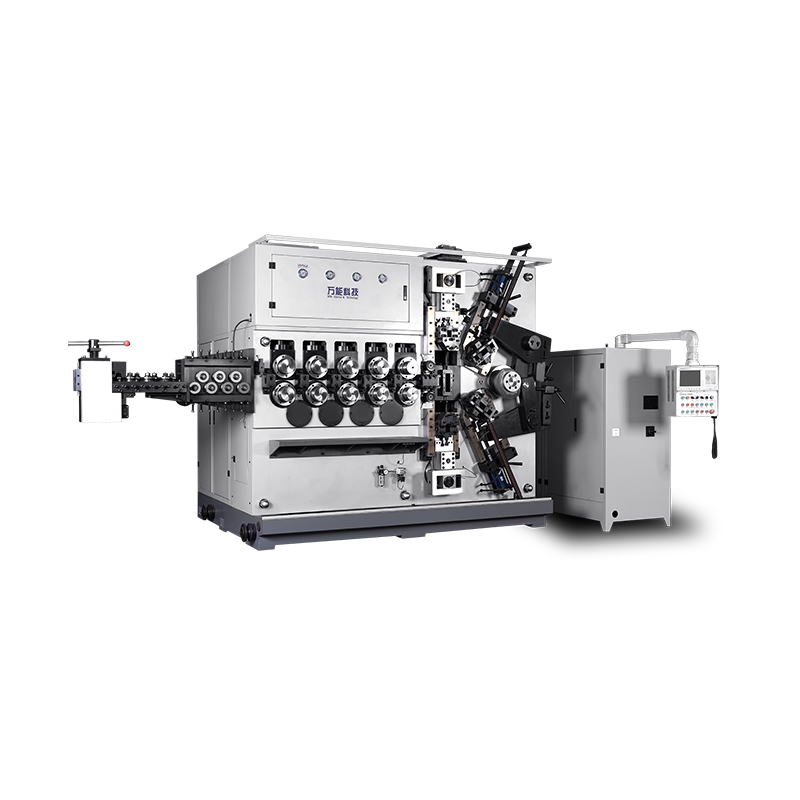
TK-5200 TK-5200 5AXES CNC SPRING COILING MACHINE...
See Details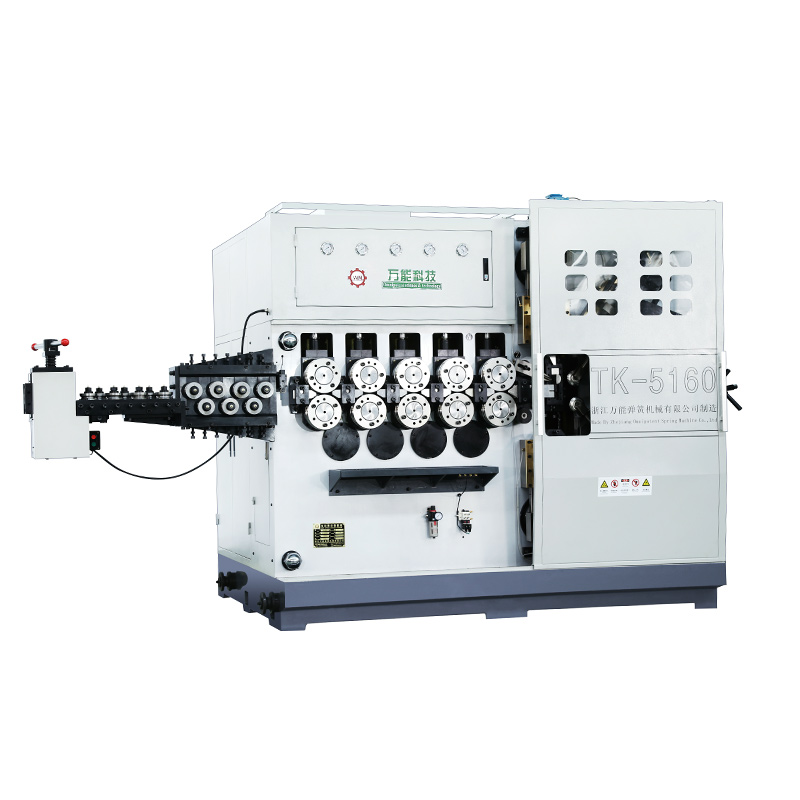
TK-5160 TK-5160 5AXES CNC SPRING COILING MACHINE...
See Details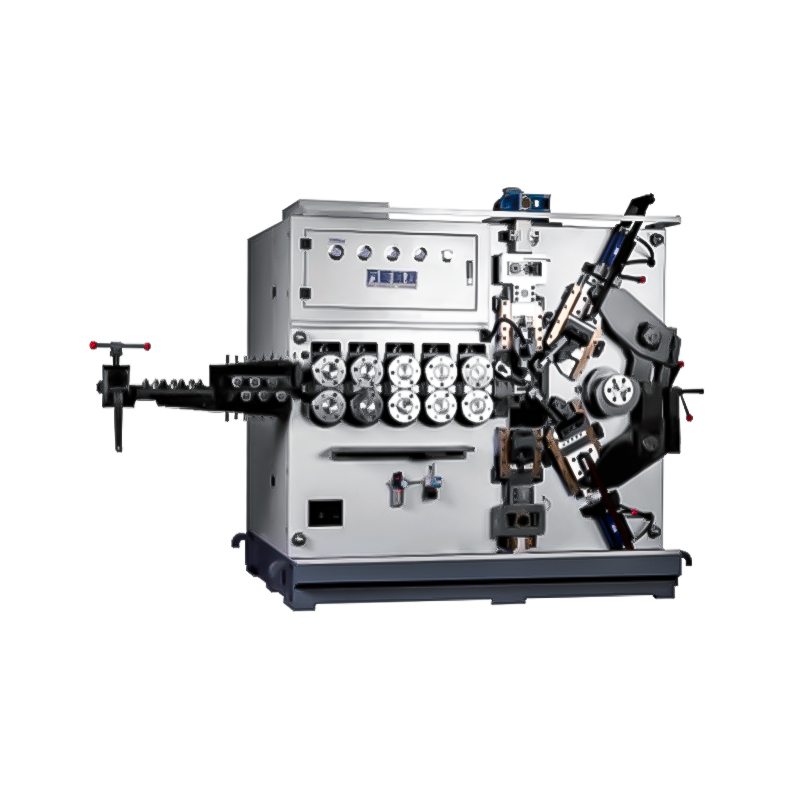
TK-5120 TK-5120 5AXES CNC SPRING COILING MACHINE...
See Details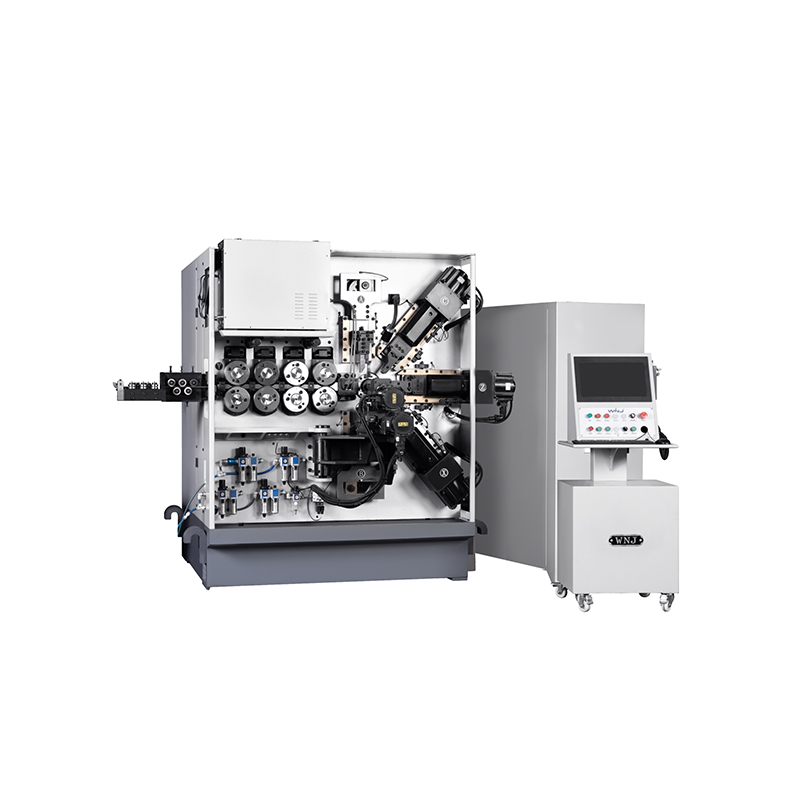
TK TK 10AXES CNC SPRING SCROLL MACHINE...
See Details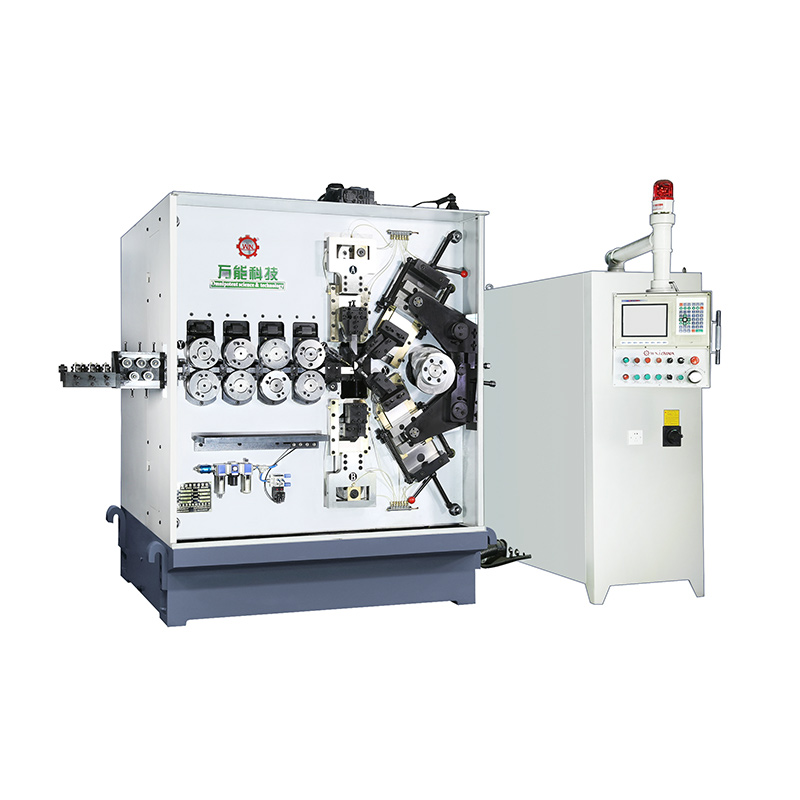
TK-580B、 TK-590 TK-580B、 TK-590 5AXES CNC SPRING COILING MACHINE...
See Details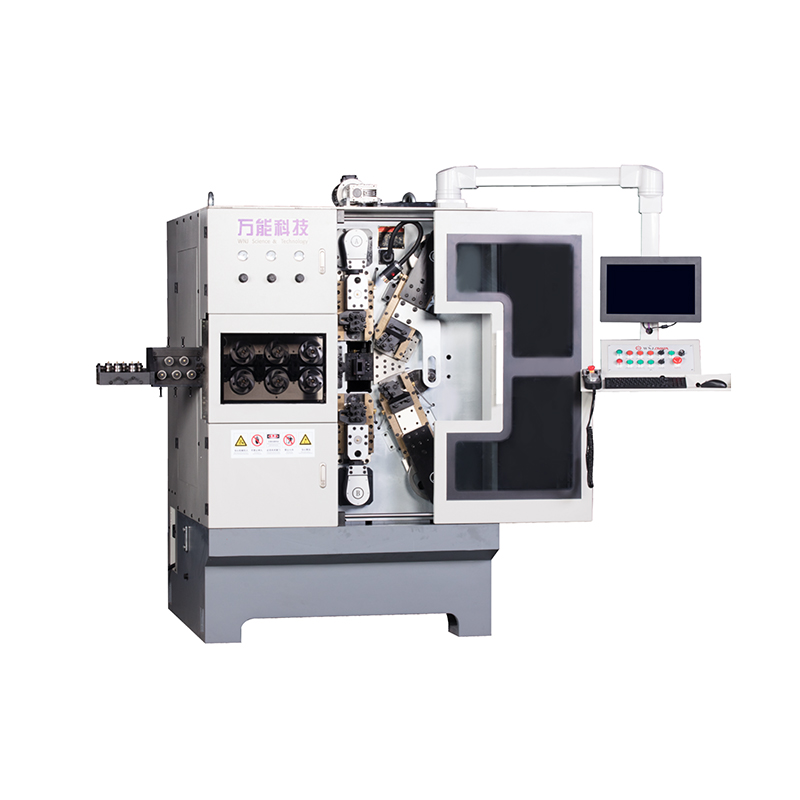
TK-760TK-760 6-7AXES CNC SPRING COILING MACHINE...
See DetailsMobile QR Code

 中文简体
 English
 русский
 Español