Language

Content
A 1.2 mm music wire arrives at a spring shop on a 300 kg spool. Twenty minutes of machine time later it leaves as a 25 mm free-length compression spring that will hold a car seat latch open for the life of the vehicle. In between, that wire passes through seven controlled operations, and it takes only one of them running slightly off to turn a perfectly good design into a batch of parts that fail load testing.
Here is the direct answer: a spring is made by verifying the wire, feeding it to a coiling or forming machine, bending it into a helix or a custom shape, cutting it to length, grinding the ends flat when the design requires it, relieving internal stress in a tempering furnace, blasting the surface with steel shot to raise fatigue life, applying a protective finish, and then testing load, length and squareness against the drawing. Cold coiling handles almost every spring produced in volume today. Hot coiling is reserved for heavy wire that would crack if it were bent at room temperature.
The rest of this article walks through each stage, the numbers that actually matter at each one, and the points where production problems usually begin. If you want the machine-level version of the story first, this walkthrough of how springs are manufactured covers the equipment side in detail.
Almost every spring, whether it is a 0.3 mm micro spring for a connector or a 20 mm suspension spring, moves through the same seven stages. The sequence below is the one you will see on the floor of most production shops.
| Stage | What happens | Control point | Symptom if it drifts |
|---|---|---|---|
| 1. Wire verification | Diameter, grade and coating checked against the print | Wire diameter, often held to plus or minus 0.02 mm on small sizes | Load and rate shift before any other visible defect appears |
| 2. Coiling or forming | Wire is fed and bent into a helix or a complex three-dimensional form | Feed length, pitch, index position | Free length drift, uneven coil spacing, out-of-round diameter |
| 3. Cutting | The formed part is severed to the required number of coils | Cut length and burr height | Solid height out of specification, sharp edges that damage mating parts |
| 4. End grinding | Flat bearing surfaces ground on both ends of a compression spring | Squareness and remaining end coil thickness | The spring leans when compressed and each part loads differently |
| 5. Stress relief | Parts soak at a controlled temperature in a tempering furnace | Temperature uniformity and soak time | Cracking, load loss, dimensional movement weeks after delivery |
| 6. Shot peening and presetting | Surface blasted with steel shot, then compressed to solid height | Shot coverage, intensity, preset load | Short fatigue life, springs that lose length in service |
| 7. Testing and finishing | Load, length and squareness measured; protective coating applied | Sampling frequency per the inspection plan | Non-conforming batches reach the customer |
The single biggest decision in spring production happens before the machine is switched on. Wire grade sets the achievable tensile strength, the fatigue behaviour, the corrosion resistance and the temperature ceiling of the finished part.
Published wire datasheets commonly place music wire in the 2000 to 3000 MPa tensile range for diameters under roughly 3 mm, with the ceiling falling as diameter grows. That is the reason a 0.5 mm spring can carry a surprising load while a 5 mm spring of the same material needs far more cross-section for the same rate.
Diameter tolerance is the quiet killer at this stage. If incoming wire varies by 0.03 mm when the drawing assumes 0.01 mm, the spring rate changes by roughly six percent before a single part is made, because rate scales with the fourth power of wire diameter. Every other control on the shop floor is downstream of that number.
Coiling is where the wire becomes a spring. Wire is pulled from a de-reeler, straightened through rollers, fed by a servo-controlled pair of feed rollers, and pushed against coiling points that bend it into a helix as it rotates. The pitch tool then separates the coils to the required spacing.
Three variables dominate quality at this stage:
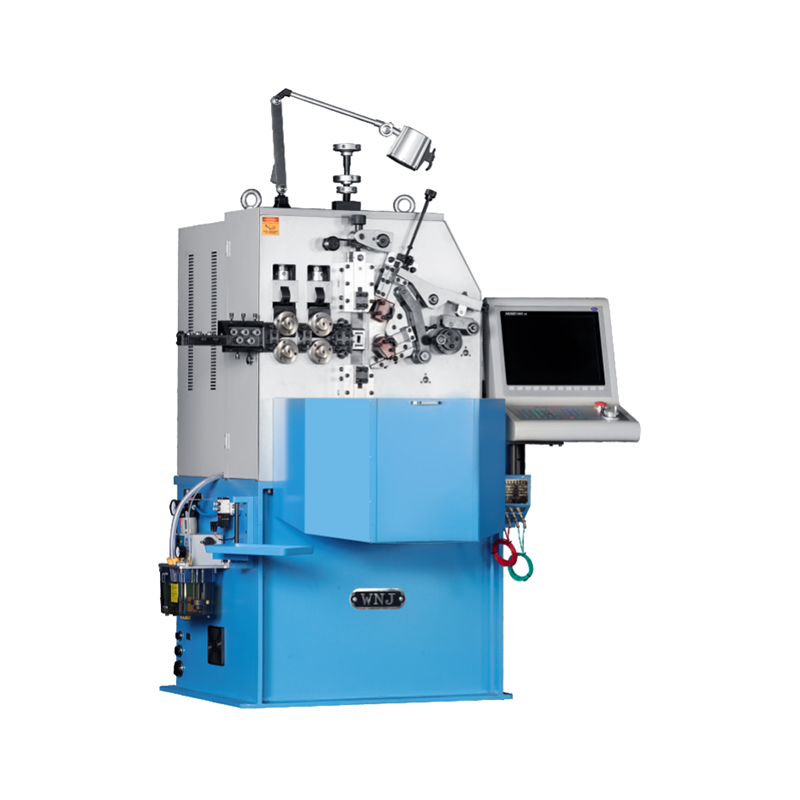 TK-335 3AXES CNC SPRING COILING MACHINETK-335 3AXES CNC SPRING COILING MACHINEView Product →
A three-axis CNC coiler such as the TK-335 handles the bread-and-butter work: straight compression springs and simple extension springs in small to medium wire sizes. When the geometry becomes asymmetric, when several bends have to happen in one cycle, or when the part has legs and hooks, the job moves to a multi-axis forming machine or a camless platform where each axis can be programmed independently. Small compression springs can come off a modern coiler at well over one hundred pieces per minute; larger parts with multiple bends drop to a handful per minute, and that difference alone often decides whether a job is profitable.
Machine rigidity matters more than peak speed. Vibration during coiling shows up as inconsistent inner diameter, which then shows up as inconsistent load. That is why balance and frame stiffness are checked long before a machine is pushed to its rated output.
Not every spring is a simple helix. Torsion springs need straight legs at a defined angle. Extension springs need hooks or loops at both ends. Wire forms used as clips, retainers and contacts may have no helical section at all.
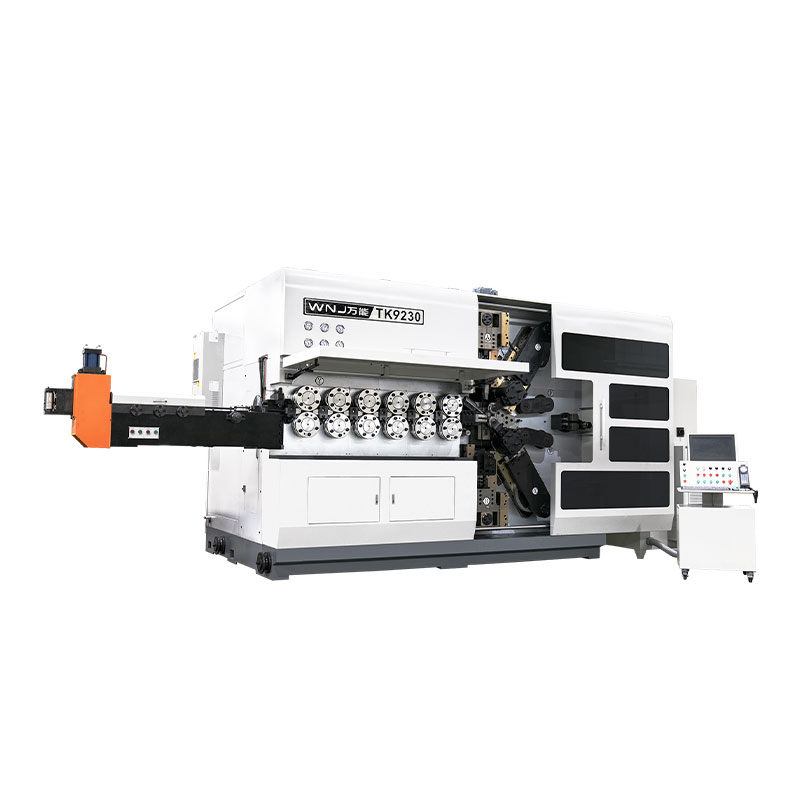
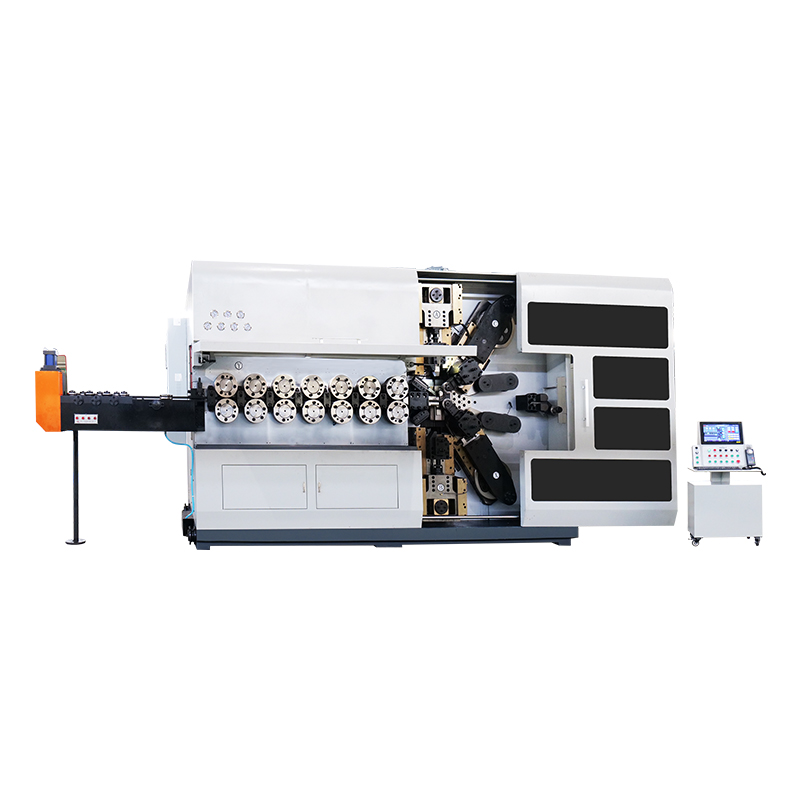
This is where axis count starts to pay for itself. A four-axis wire bending machine can produce two-dimensional bends quickly and repeatably; when the part needs bends in more than one plane, machines with eight or more axes and independent servo slides become necessary because the wire has to be rotated and indexed between bends.
Two practical details decide whether this stage runs well. First, bend radius must respect the material: a bend tighter than roughly two wire diameters risks surface cracking in high-tensile wire. Second, springback has to be compensated in the program, because every material returns slightly after the tool releases it, and the amount changes from heat to heat.
A compression spring that stands on a rounded end coil touches its seat on a single point. Under load, it tilts. If the application has a long guide rod, that tilt turns into side load and wear. Grinding solves it by cutting a flat bearing surface on each end.
A closed and ground end typically removes between half and three-quarters of a coil from each end. The two numbers that matter on the inspection sheet are the end coil thickness left after grinding and the squareness of the ground faces relative to the spring axis, frequently held within one to two degrees for precision work.
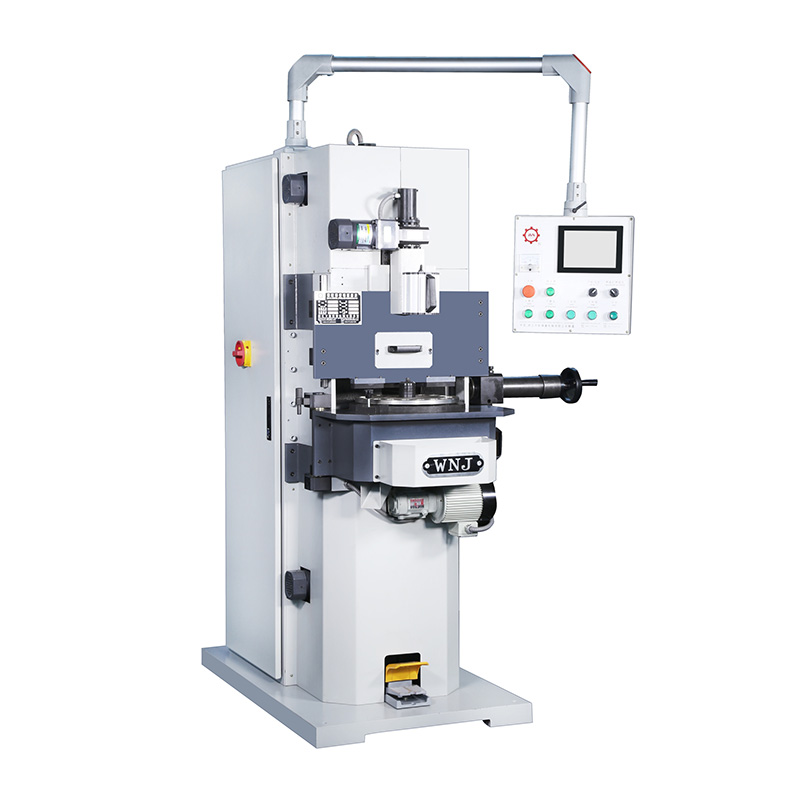 CNC Spring Grinding Machine ManufacturerWNM2.5 WNM CNC SPRING END GRINDING MACHINEView Product →
CNC grinding changes this from an operator skill into a controlled process. The wheel head position, downfeed rate and dwell can be programmed and adjusted automatically as the wheel wears, which is what keeps part number five thousand as square as part number five. Coolant flow and wheel dressing intervals should be on a written schedule, because a glazed wheel burns the end coils instead of cutting them, and burnt coils fail fatigue testing long before they fail a load check.
Not every compression spring needs grinding. Springs with a large index ratio, low duty cycles, or open ends used in non-critical positions often run perfectly well unground. Grinding adds cost, so it belongs on the drawing only when the application needs a flat seat.
Cold coiling forces the wire past its yield point, which leaves residual stress locked into the material. Left alone, that stress makes springs lose length, lose load, and eventually crack. Heat treatment releases it.
For cold-wound springs, stress relief usually sits somewhere between 200 and 300 degrees Celsius, with soak times measured in tens of minutes rather than hours. Oil-tempered and chrome-silicon springs move to higher tempering temperatures, often in the 400 to 500 degree range, where the balance between hardness and ductility is set. The exact recipe depends on the material specification and on what the spring has already been through, so the drawing or the material datasheet governs.
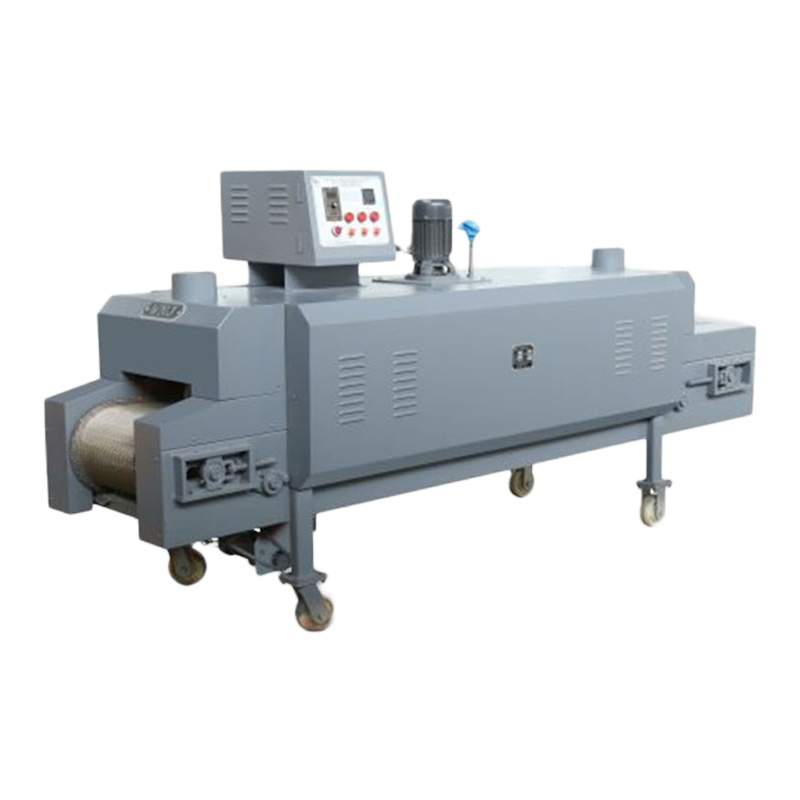 WNJ315 Spring Temper Furnace (Panint Series)Panint Series WNJ SPRING TEMPER FURNACEView Product →
Furnace selection matters as much as the recipe. A conveyor-type tempering furnace moves parts through zones held at controlled temperature, which gives every spring in the batch the same thermal history. Batch ovens suit larger or slower-moving work. Mobile tempering units are used where a spring is too long or too heavy to feed through a conveyor system.
The number to watch is temperature uniformity across the working zone. If one corner of the chamber runs twenty degrees hot, springs passing through that corner come out at a different hardness, and the difference shows up months later as a scattered fatigue failure rate that nobody can explain from the incoming inspection records.
Three finishing operations separate a spring that works from a spring that lasts.
Steel shot fired at the surface creates a layer of compressive residual stress. Fatigue cracks start at the surface and grow under tension, so a surface that is already in compression resists crack initiation. Peening coverage is usually specified as a percentage and intensity as an Almen value; both are process parameters, not opinions.
Also called scragging, presetting compresses the finished spring to solid height once or several times. This deliberately yields the most highly stressed coils and redistributes the stress, which stabilises free length and improves the spring's ability to hold load over millions of cycles. Springs intended for suspension, valve train or safety-critical work are rarely shipped without it.
Zinc plating, black oxide, electrophoretic coating, powder coating and passivation are the common choices. Stainless springs often need only passivation to restore the oxide layer after forming. Plating adds thickness, so any tight bore or guide clearance should be checked after coating rather than before, and hydrogen embrittlement risk means high-strength springs usually go through a de-embrittlement bake after electroplating.
A finished spring is measured against the drawing, and the drawing usually lists more than one number. A complete inspection typically covers:
For critical applications, fatigue cycling and salt spray testing are added. These are slower and more expensive, so they are normally run on samples rather than every batch, which is why sampling plans and statistical process control matter: they catch a drift in the process before a bad batch is finished, not after.
Tolerance is where cost lives. Every tightening of a dimension either forces a slower process, more inspection, or a higher scrap rate, and all three show up in the price per piece. The table below gives the ranges commonly quoted in spring design handbooks and supplier datasheets. The governing number is always the drawing, not the table.
| Parameter | Standard commercial | Precision | Cost impact |
|---|---|---|---|
| Free length | Plus or minus 1.0 mm | Plus or minus 0.25 mm | Moderate; sorting or extra gauging |
| Outside diameter | Plus or minus 0.15 mm | Plus or minus 0.05 mm | High; requires tighter wire and slower coiling |
| Load at test height | Plus or minus 10 percent | Plus or minus 5 percent | High; 100 percent load testing often needed |
| Squareness | Within 3 degrees | Within 1 degree | Moderate; extra grinding passes |
| Wire diameter | Plus or minus 0.02 mm | Plus or minus 0.01 mm | Low at the spring shop; the wire mill carries it |
Cold coiling is the norm. Wire is bent at room temperature at high speed, then stress relieved. It covers the great majority of springs made today, from micro springs for connectors to automotive suspension springs of moderate section.
Hot coiling takes over when cold bending would crack the wire. The bar is heated to forging range, coiled on a mandrel, then quenched and tempered. This route is slower, needs more space and more energy, and it is used for heavy suspension springs, large industrial springs and any geometry where the required strain exceeds what the material will tolerate cold.
The dividing line depends on material and diameter rather than a fixed number, but as a rule of thumb, the larger and more highly alloyed the wire, the sooner the process shifts toward hot forming. Getting this decision wrong is expensive: the cracked end coils appear on the fatigue test rather than on the coiling machine.
Mechanical cam machines were fast and simple, and they dominated spring production for decades. Their weakness was changeover: each spring geometry needed a set of cams, and building a new cam set took hours of toolroom time. On a job that runs for a month, that cost disappears. On a job that runs for four hours, it dominates.
CNC machines move the geometry into software. A program can be recalled, adjusted and stored, and a camless platform allows each axis to be positioned independently, which is what makes complex wire forms practical to produce in small batches. For automotive and mobility work, where a single platform may carry dozens of spring variants with different rates and lengths, that flexibility is the difference between holding a schedule and missing it. The application pages for automotive and mobility springs show how broadly the same equipment family is applied across those variants.
The trade-off is skills. A CNC program that nobody understands is worse than a cam set, because it can be changed by anyone with a password. Shops that get the most from CNC equipment pair it with written setup sheets, tool lists and machine logs, so that a program and its proven parameters travel together.
After watching enough batches fail, the causes tend to cluster into a short list.
None of these are dramatic. That is exactly why they are dangerous. They produce springs that pass a casual visual check and fail after ten thousand cycles in the field, which is the most expensive kind of defect a supplier can ship.
Companies bring spring production in-house for three reasons: lead time, design iteration speed and cost at volume. Whether it works depends on a few honest questions asked before any machine is ordered.
A machine that can produce the part is not the same as a machine that can produce the part every day for a decade. Training, spare parts availability and process documentation decide the second question, and they should be part of the purchase decision rather than an afterthought.
The coiling cycle itself takes seconds. A small compression spring can be formed in well under a second; a large multi-bend wire form may take thirty seconds or more. The full production lead time is dominated by setup, heat treatment batches and inspection, which is why a 5,000-piece order and a 500,000-piece order often share the same delivery window.
No. Springs are formed from wire or bar by cold or hot deformation. There is no casting or molding step in the process. The shape comes from bending the material, not from filling a cavity.
Music wire to ASTM A228 is the most widely used material for small, high-strength springs because it offers high tensile strength, good fatigue performance and consistent supply. Stainless grades take over where corrosion resistance is the priority, and chrome-silicon dominates high-fatigue applications such as suspension.
It can, but the spring will be less stable. Stress relief after cold coiling reduces residual stress, improves fatigue life and prevents load loss over time. Skipping it may look acceptable on a load test at day one and fail on a fatigue test at month six.
Coiling specifically produces a helix. Forming is the broader term for bending wire into any shape, including helices, hooks, legs, loops and flat wire forms. A coiling machine is a specialised forming machine; a multi-axis forming machine can do both jobs.
No. Grinding is needed when the spring must stand square under load, when the seat is flat, or when side load must be avoided. Springs with a large index ratio, low cycle counts or non-critical positioning often run unground, which removes a process step and reduces cost.
Presetting compresses a finished spring to solid height so that the most highly stressed coils yield slightly and redistribute their stress. The result is a spring that holds its free length and load far more consistently, which is why the operation is standard for suspension, valve train and safety-related springs.
Ask for the inspection data: load at test height, free length, solid height, squareness and diameter, plus the sampling plan that produced those numbers. A supplier who cannot show the data is asking you to trust the process instead of the measurement, and those are not the same thing.
No single platform covers everything. A three-axis coiler is efficient for simple compression springs. Multi-axis forming machines handle torsion springs and wire forms. Camless machines win on small batches with frequent changeovers. Most serious shops run more than one platform and route work between them.
Material grade, wire diameter, the number of secondary operations, the tolerance band, and the inspection level. A spring with ground ends, shot peening, presetting and a plus or minus 5 percent load tolerance can cost several times more than the same geometry with commercial tolerances and no finishing steps.
A spring is made by verifying the wire, coiling or forming it into shape, cutting it to length, grinding the ends when the design calls for flat seats, relieving stress in a tempering furnace, shot peening and presetting to build fatigue resistance, coating it for its environment, and measuring the result against the drawing.
Wire grade and diameter set the ceiling on what the finished part can do. Coiling and grinding determine whether that ceiling is reached consistently. Heat treatment decides whether the spring still performs after a million cycles. Inspection is what proves it happened.
Every one of those stages is a machine decision as much as a metallurgical one, which is why the equipment on the floor and the parameters in its programs ultimately decide what leaves the loading dock.
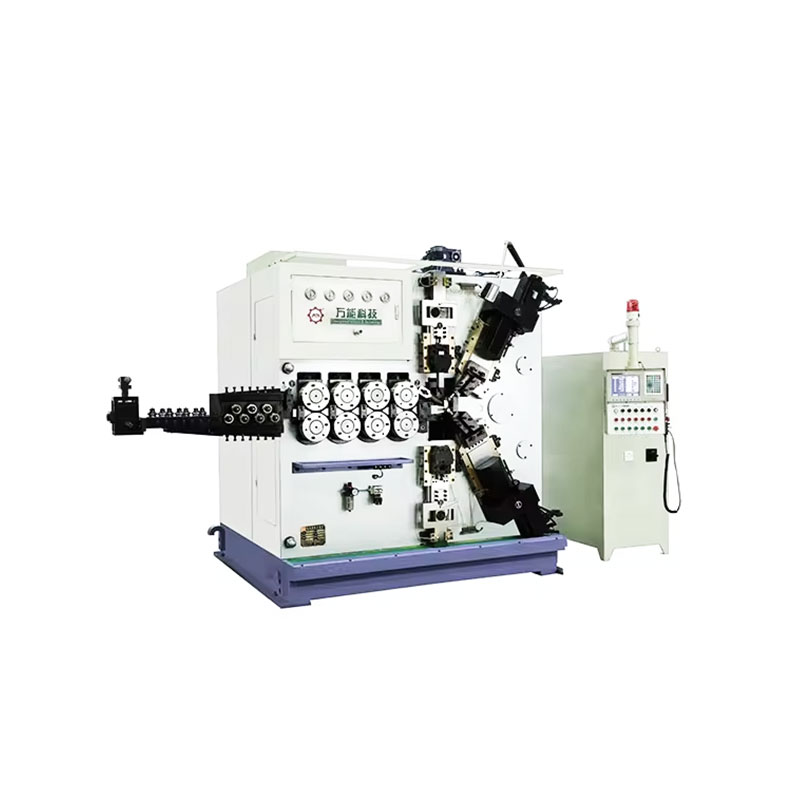
TK-6160 TK-6160 CNC SPRING ROLLING MACHINE...
See Details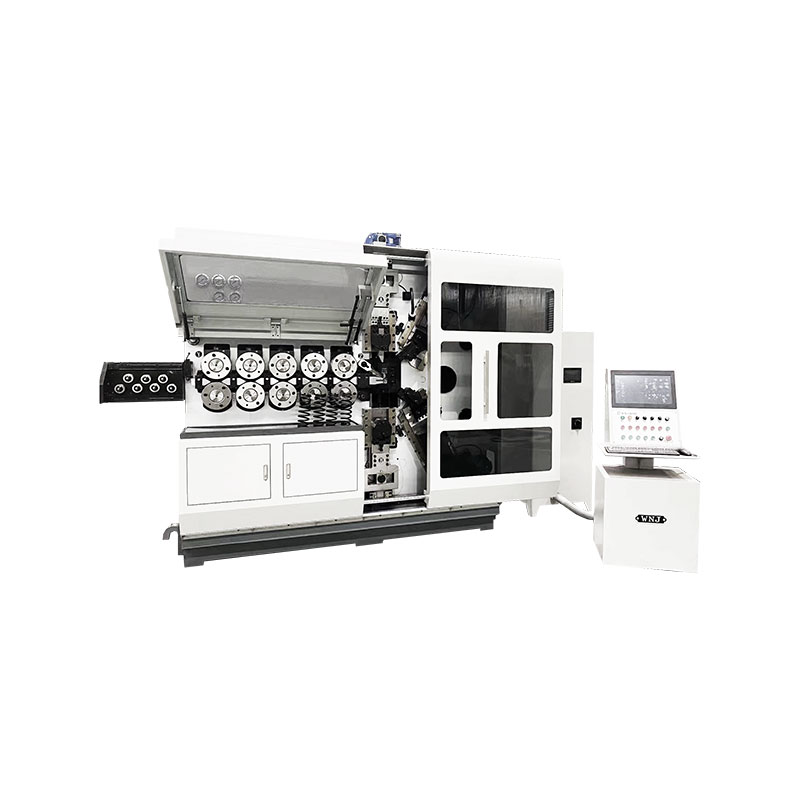
TK-6120 TK-6120 CNC SPRING ROLLING MACHINE...
See Details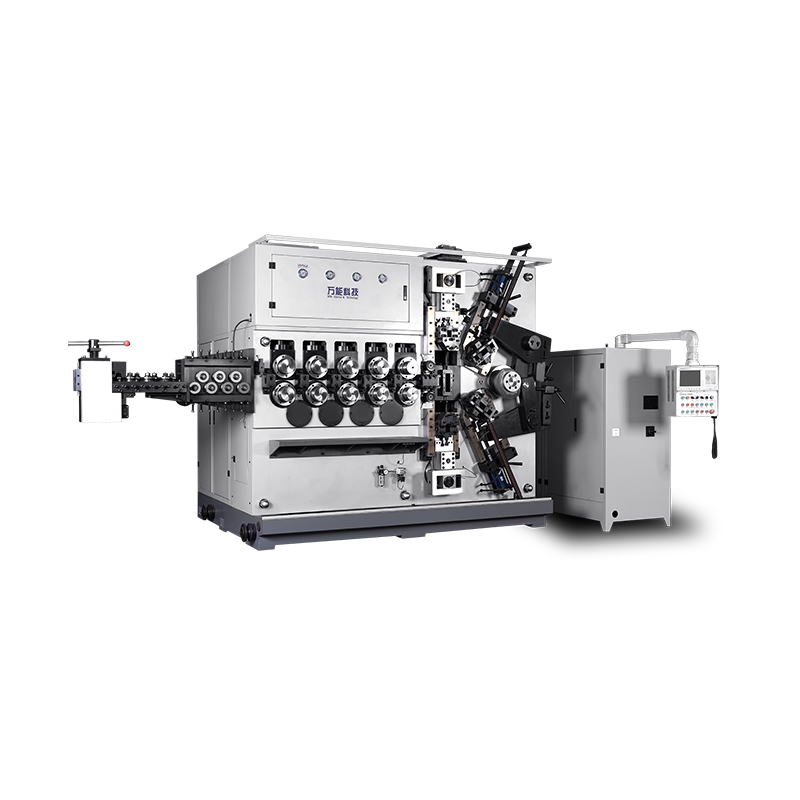
TK-5200 TK-5200 5AXES CNC SPRING COILING MACHINE...
See Details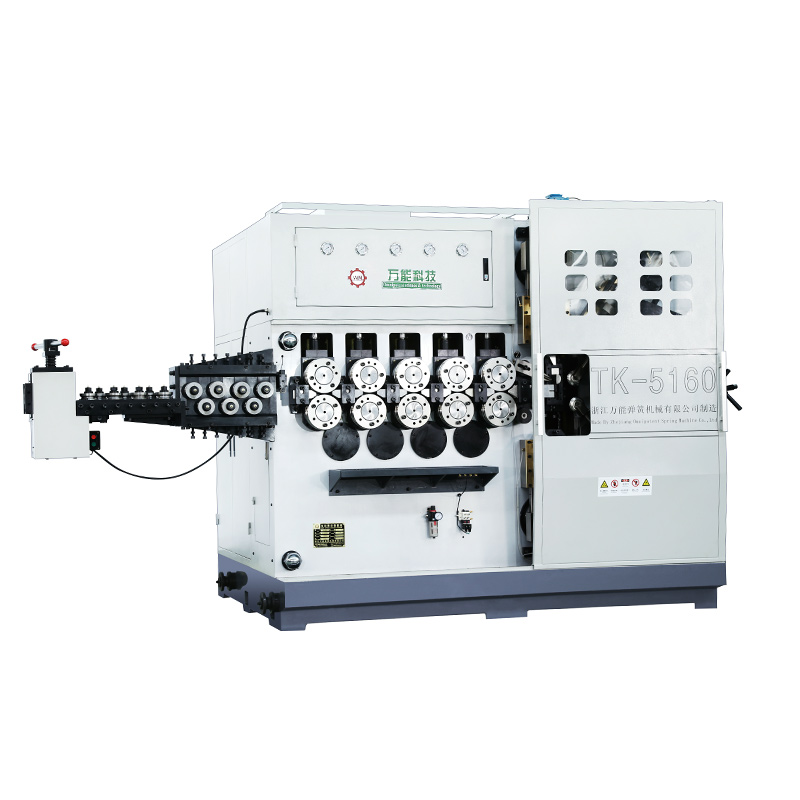
TK-5160 TK-5160 5AXES CNC SPRING COILING MACHINE...
See Details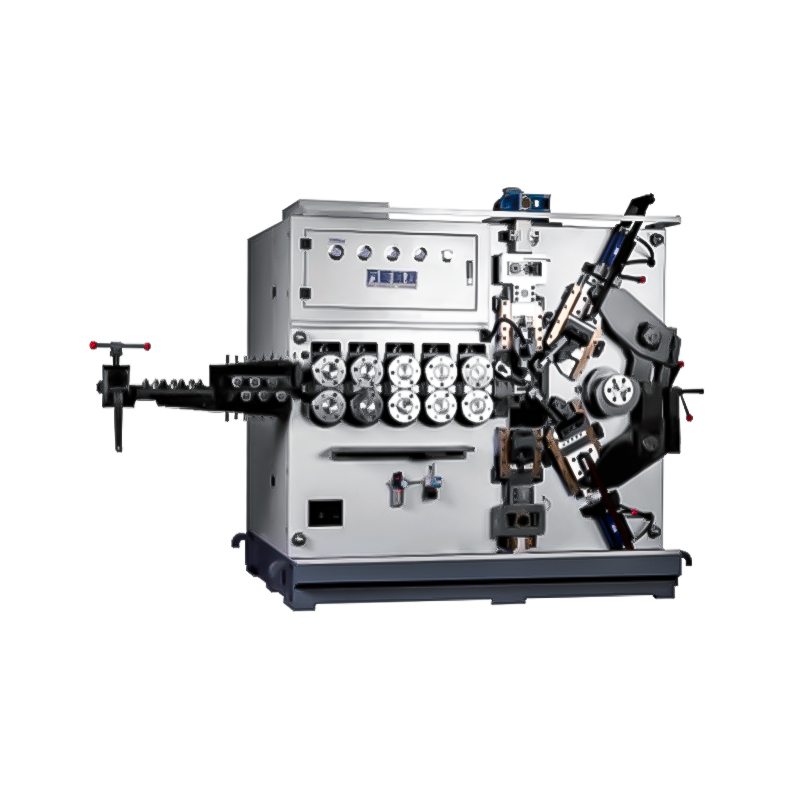
TK-5120 TK-5120 5AXES CNC SPRING COILING MACHINE...
See Details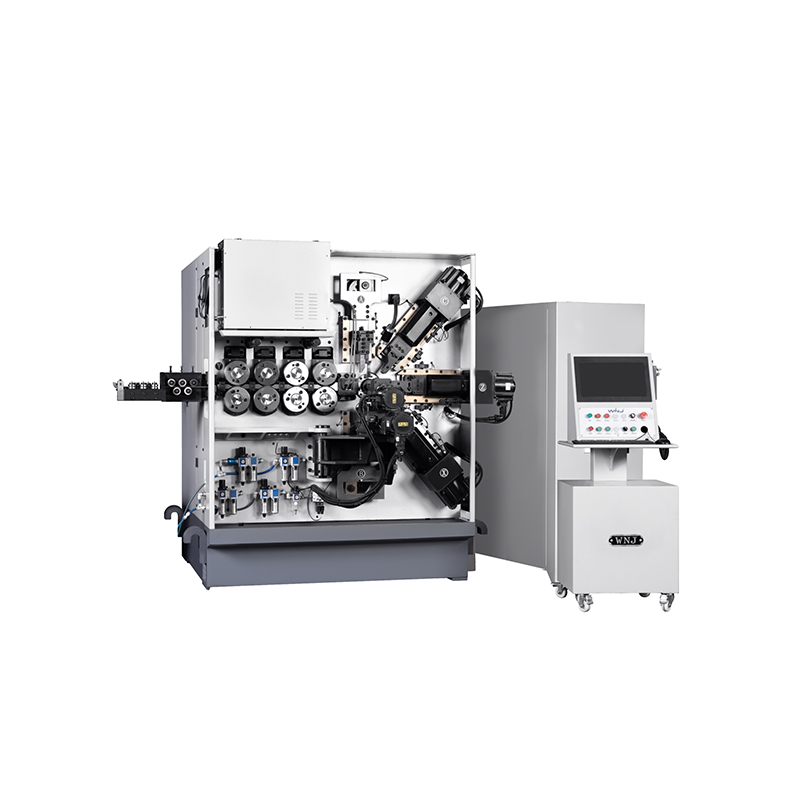
TK TK 10AXES CNC SPRING SCROLL MACHINE...
See Details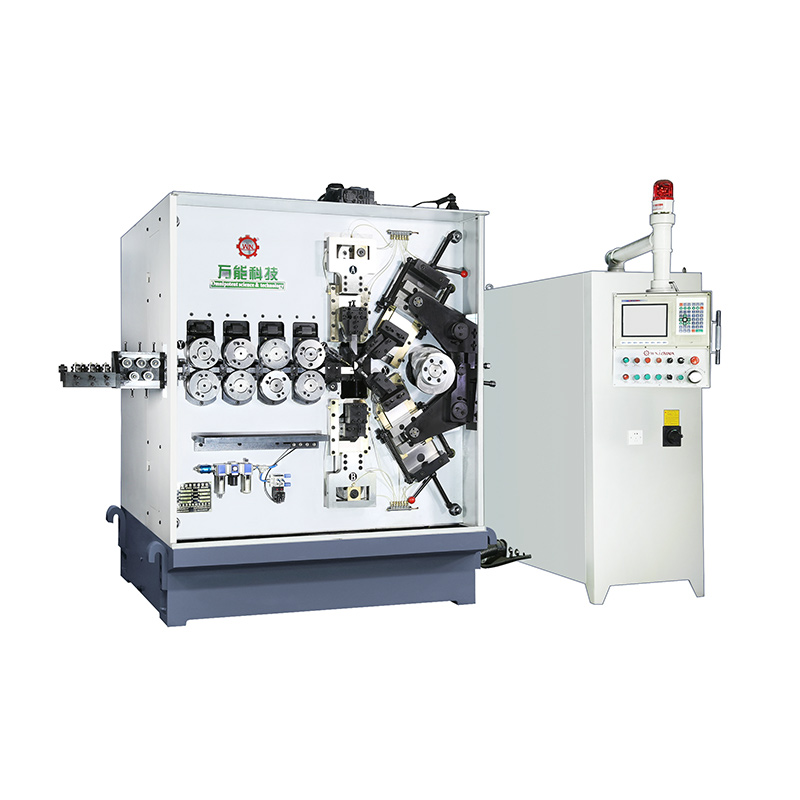
TK-580B、 TK-590 TK-580B、 TK-590 5AXES CNC SPRING COILING MACHINE...
See Details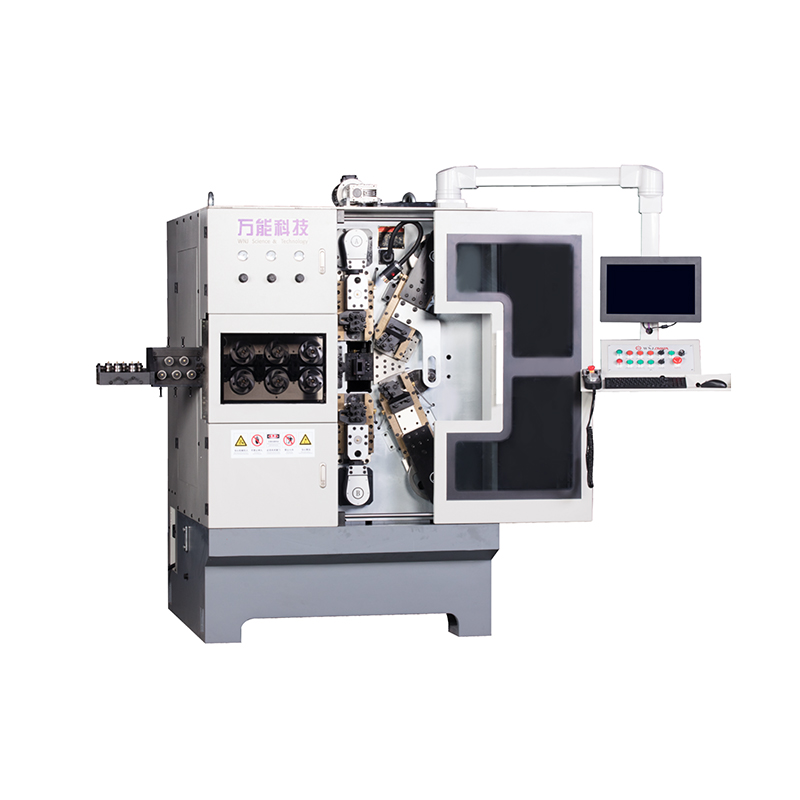
TK-760TK-760 6-7AXES CNC SPRING COILING MACHINE...
See DetailsMobile QR Code

 中文简体
 English
 русский
 Español