Language

Content
A CNC spring coiling machine is the single most important investment for a spring manufacturer that wants to stay competitive. Unlike mechanical coiling machines that rely on cams and limit switches, a CNC spring coiling machine controls wire feed, coiling point position, pitch movement, and cutting action through synchronized servo axes. The result is repeatable coil geometry, faster setup changes, and much lower scrap rates. If your production plan includes compression springs, extension springs, or torsion springs with tolerances tighter than 0.05 mm, then a modern CNC coiling machine is not optional; it is the baseline. This guide explains how these machines work, what the axis numbers actually mean, which specifications you should compare, and how to match a machine to your real production conditions.
The working principle breaks down into five stages: wire straightening, wire feeding, coiling, pitch control, and cutting. The wire is pulled from a spool or a powered wire feeding rack, passes through a set of straightening rollers that remove cast and curvature, and then enters the feed rollers. The feed rollers push the wire against a coiling point or around a mandrel. As the wire advances, the outer diameter of the spring is determined by the position of the coiling point. A servo-driven pitch tool moves perpendicular to the wire path and creates the gap between adjacent coils. When the programmed number of coils is reached, a cutting blade separates the spring from the incoming wire, and the control system immediately starts the next cycle.
What makes the CNC version fundamentally different from a mechanical machine is that every forming parameter is a programmable numeric value. On a mechanical coiler, you change the outer diameter by manually loosening a locknut and moving a cam. On a CNC machine, you enter the outer diameter in the control screen and the servo axis positions itself automatically. According to production data published in the spring machinery industry, this shift reduces setup time for a typical compression spring from roughly 40 to 60 minutes on a mechanical machine to about 5 to 10 minutes on a well-programmed CNC model. The table below compares the two machine types across the factors that matter most on the shop floor.
| Comparison Item | Mechanical Coiling Machine | CNC Spring Coiling Machine |
|---|---|---|
| Setup time per spring type | 30 to 60 minutes | 5 to 10 minutes |
| Dimensional repeatability | Depends on operator skill | Consistent within 0.01 to 0.03 mm |
| Tooling changes | Multiple cams and physical stops | Program change plus a few tool positions |
| Ability to produce complex shapes | Very limited | Multi-axis forming of hooks, pigtails, and bends |
| Data recording and quality tracing | Not available | Built into the control system |
The number of axes on a CNC spring coiling machine determines how many independent movements can be performed simultaneously. A 3-axis machine typically controls wire feed, coiling point or main cam, and pitch. This configuration covers the majority of standard compression and extension springs. A 5-axis machine adds tool axes that allow more complex forming operations such as bending pigtail ends, producing variable pitch sections, and forming close-tolerance torsion spring legs. A 6-axis or 7-axis machine, such as the TK-760 class, provides even more forming freedom and can handle wire diameters at the heavier end of the scale.
Higher-axis machines also matter when you produce different spring families on the same machine. For example, a manufacturer making both automotive suspension springs and small precision extension springs needs extra axes to handle different tooling setups without physically rebuilding the forming area. The practical rule is simple: do not buy more axes than your product mix requires, because each additional axis adds cost and programming complexity. However, if you have a job shop that runs a wide variety of orders, a 5-axis or higher machine avoids the bottleneck of frequent tool changes.
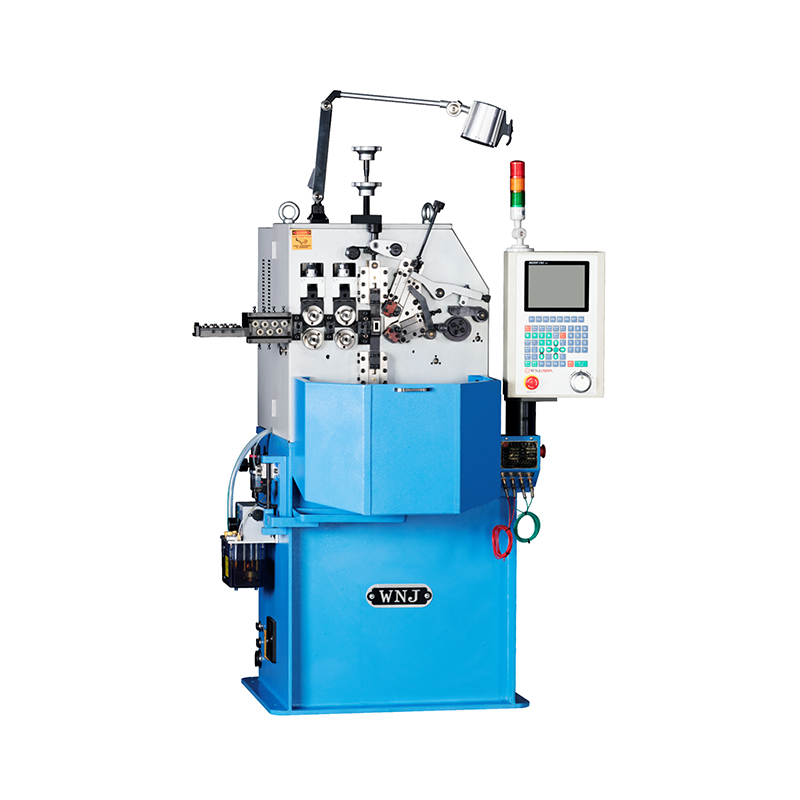 TK-320B 3-Axis CNC Spring Coiling Machine for 3.0 mm WireThis 3-axis machine covers the popular 0.5–3.0 mm wire range with independent pitch control, dual-language interface, and manual sample making, suitable for mid-capacity production without overspending on extra axes.View Product →
Buyers often focus on price and brand, but the real selection criteria are technical. The five specifications that determine whether a machine fits your production are wire diameter range, maximum spring outer diameter, feed speed, number of axes, and control system capability. Wire diameter range is the first filter: a machine rated for 0.5 to 3.0 mm wire cannot economically produce a 6 mm wire spring. Model numbers in most manufacturers' lineups give a quick indication of capacity. A TK-320 model, for instance, is built around the 3.0 mm wire class, while a TK-760 model targets heavier wire in the 6.0 to 7.0 mm range.
| Specification | Typical Range | Why It Matters |
|---|---|---|
| Wire diameter | 0.3 mm up to 6.0 mm or more | Determines what spring sizes you can produce at all |
| Maximum spring outer diameter | 10 mm to 80 mm depending on model | Limits the physical forming space inside the machine |
| Feed speed | 30 to 120 m/min | Directly affects cycle time and output per shift |
| Number of axes | 3 to 12 axes | Defines geometric forming freedom and flexibility |
| Control system type | Industrial PC with servo drivers | Affects programming ease, memory, and diagnostic capability |
Do not overlook the control system. A machine with high mechanical accuracy but a poorly designed control interface will cost you hours of programming time. Look for a control system that supports graphic spring parameter input, real-time monitoring of each servo axis, storing of many program recipes, and standard USB or network data transfer. These features directly reduce changeover time and make it realistic for one operator to supervise four to six machines.
 TK-335 3-Axis CNC Spring Coiling Machine with Easy ControlOffering the same 3-axis configuration as the TK-320B but designed for efficient programming, this model supports fast changeovers through graphic parameter input and multi-machine supervision, ideal for shops needing simplified operation.View Product →
A CNC spring coiling machine does not work alone. The wire feeding system is the heart of consistency. If the wire feed slips or vibrates, the spring pitch and outer diameter fluctuate even on a perfectly tuned machine. Serious manufacturers supply reinforced feed rollers, a wire straightener, and optionally a powered wire feeding rack that actively feeds the wire into the machine under low tension. A wire feeding rack such as the SLB-2800 type improves stability especially when using heavy coils of wire, because it prevents the wire from tangling and reduces the load on the main feed rollers.
Cutting quality is the second most common source of defects. A servo shear device gives a cleaner cut and better spring end quality than a mechanical cutting cam, because the cutting speed and timing are programmable. For springs that require closed and ground ends, the coiler output must feed smoothly into a spring grinder; for extension springs with hooks, you need the forming tools and a wire bending capability that comes with a 5-axis or higher configuration. Plan the full process line first, then choose the coiling machine that matches it.
Precision is usually quoted in two ways: positioning resolution and repeatability. Positioning resolution refers to the minimum programmable movement of each servo axis, often 0.01 mm or better on modern Chinese and European machines. Repeatability refers to how consistently the machine returns to the same position over many cycles. For spring production, repeatability is the more important number because spring specifications like free length and outer diameter are directly produced by axis positions. A well-maintained CNC spring coiling machine can hold spring free length within 0.1 mm and outer diameter within 0.03 mm on a stable production run.
The practical implication is that you should define your tolerance requirements before you request a quotation. If your springs are for automotive seats or medical devices, the tolerance class is tighter and the machine needs a more rigid frame, better guide rails, and higher-grade servo motors. If your springs are for general hardware, then a standard 3-axis machine is likely enough. Asking several suppliers to confirm their machine can hold the required tolerance on a test spring is the best way to eliminate risk, and any reliable manufacturer will accept a sample test order.
The business case for replacing an old mechanical coiler with a CNC spring coiling machine is usually based on three numbers: cycle time, scrap rate, and labor cost. A CNC machine can run at higher feed speed because servo control keeps the wire move stable, especially when forming small compression springs. Typical cycle times drop by 15 to 30 percent compared with a mechanical machine on the same spring design, and scrap from dimension drift is practically eliminated.
Labor savings come from multi-machine operation and fast changeover. A production manager running four mechanical machines needs one operator per machine for most of the shift. The same operator can manage five or six CNC machines, because programming changes are done at the control panel and monitoring is rarely continuous. Add the reduction in tooling cost, since CNC machines need fewer physical cams, and the payback period is commonly between 18 and 30 months for a small-to-medium spring factory. A detailed shop-floor comparison of machine productivity appears in our operational assessment of CNC versus traditional spring production methods on the company news page, which documents real production examples.
CNC spring coiling machines are reliable, but their accuracy depends on a few maintenance disciplines. The critical checkpoints are the feed rollers, the guide rails, the lubrication system, the servo motors, and the electrical cabinet. Feed rollers wear over time and should be inspected every month for flat spots and groove wear. Guide rails need clean lubrication to maintain axis positioning accuracy. The control system should be backed up regularly so that program recipes and calibration parameters are not lost.
Skipping these steps does not break the machine immediately, but it gradually erodes dimensional stability. The most common field repair issues on CNC coilers, such as inconsistent pitch or fluctuating outer diameter, are most often traced to worn feed rollers or a loose guide rail rather than to the electronic control system. Good maintenance is therefore a direct investment in output quality.
CNC spring coiling machines feed nearly every engineered product that uses a spring. The three largest application blocks by volume are automotive and mobility components, electrical engineering, and medical devices. In the automotive sector, suspension springs, valve springs, brake return springs, and seat springs are produced in very large batches, which makes the changeover speed and multi-axis capacity of CNC coilers especially valuable. The mobility and automotive application segment also demands tight traceability, and CNC machines can log production parameters per batch, which supports quality documentation. Electrical engineering applications require small precision springs for switches, connectors, and relays, where the wire diameter is usually below 1.0 mm and clean cutting is essential.
Medical device springs go even further in precision, often demanding burr-free ends and exact mechanical properties. In these applications, a 5-axis or 6/7-axis machine gives the tool movement needed to produce complex end hooks without secondary operations. The aerospace and telecommunications sectors have similar requirements but with smaller batch sizes and more exotic wire materials. For a detailed look at how spring machinery serves vehicle production lines, see our application overview for the mobility and automotive industry. A machine with heavier wire capacity, such as the TK-760 6/7-axis coiler, covers the wider diameter spread typical of industrial equipment suppliers.
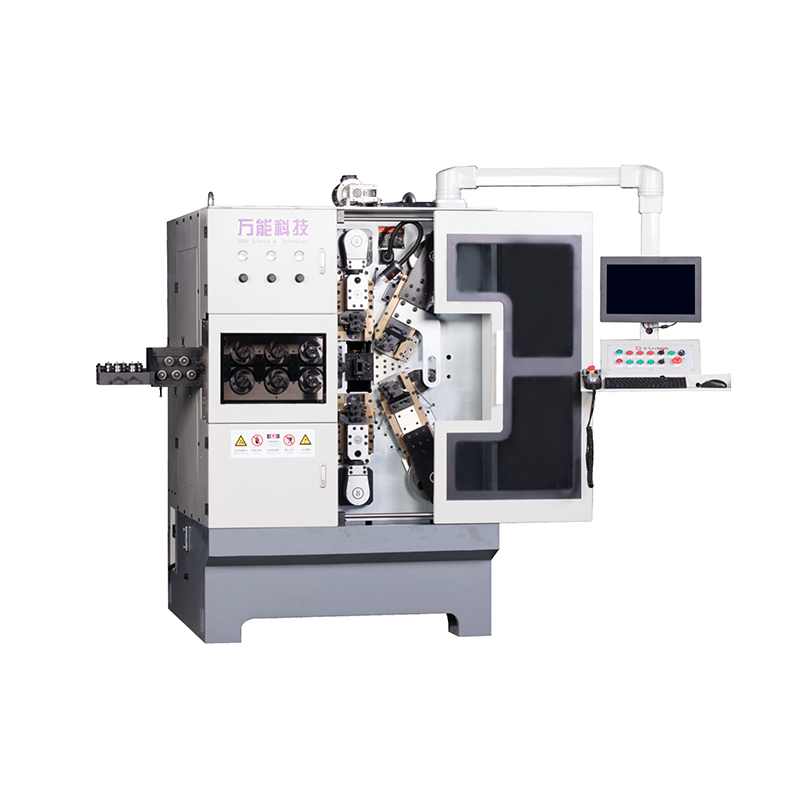 TK-760 6/7-Axis CNC Spring Coiling Machine for Heavy WireWith 6 or 7 axes covering 6.0–7.0 mm wire, this machine handles complex end hooks and various cut types, making it essential for medical, aerospace, and industrial springs requiring precision and versatility.View Product →
Even with a good CNC spring coiling machine, quality problems can appear when the machine, tooling, or wire conditions change. Solving them requires a systematic check order: first verify the wire quality, then inspect the mechanical setup, and finally review the program parameters. The table below lists the most frequently reported problems and the standard corrective approach used by service engineers.
| Defect | Most Likely Cause | Corrective Action |
|---|---|---|
| Outer diameter too large or too small | Coiling point worn or misaligned | Reinstall coiling point and confirm diameter on a test spring |
| Pitch varies along the spring | Feed roller slip or pitch tool wear | Replace feed rollers, check pitch tool contact surface |
| Wire breaks frequently | Incorrect straightener setting or material hardness | Reduce straightener pressure, confirm wire tensile strength |
| Cut end is bent or torn | Cutting blade dull or shear timing wrong | Sharpen or replace blade, adjust shear axis timing |
| First pieces after setup are out of tolerance | Program not optimized for wire springback | Adjust compensation values in the control system |
The core difference is how motion is generated and controlled. A mechanical machine uses cams, gears, and limit switches, so changing a spring design means changing physical cams and stops. A CNC machine uses servo motors for each axis, and every motion is defined by numeric program values. This gives simpler changeover, higher repeatability, and the ability to make complex spring forms that a mechanical machine cannot.
For straight compression springs with flat closed ends and no special pigtail bends, a 3-axis machine is the economic choice. Choose 5 axes if you need to make springs with precision end hooks, variable coil spacing, or more complex cut-and-form sequences. Choose 6 to 7 axes when the product mix is wide and you want maximum tool positioning flexibility on heavier wire.
The machine can process whatever wire can be coiled and cut with the available tooling. Typical materials include oil-tempered spring steel, hard drawn carbon steel wire, stainless steel wire, phosphor bronze, beryllium copper, and music wire. The main limits are the wire diameter range of the machine and the hardness of the material. Some high-strength alloy wires require carbide feed rollers and tooling to achieve a reasonable tool life.
For a design that uses the same wire diameter and similar tooling positions, the changeover is just a matter of loading the saved program and positioning two or three tools; this takes 5 to 15 minutes. If the wire diameter changes or different tooling is required, allow 20 to 40 minutes depending on the machine access. This is still significantly faster than a mechanical machine where new cams have to be mounted and aligned.
Yes, with the correct tooling set and enough axes. Compression springs need a coiling point, center pin or arbor, and pitch tool. Extension springs need additional tools to form the end hooks, which is why a 5-axis machine is generally recommended. Torsion springs with straight legs need leg-bending tools. A single 5-axis or 6/7-axis machine can cover all three spring families if the wire diameter range matches your parts.
Keep the feed rollers clean and properly pressed, confirm that the wire straightener is set for the actual wire diameter, and use a properly tensioned wire feeding rack to prevent wire from pulling unevenly. Also check the feed roller groove periodically; a worn groove changes the effective feed diameter and causes length errors. Monitoring the first piece of each shift against the programmed length catches drift before it becomes scrap.
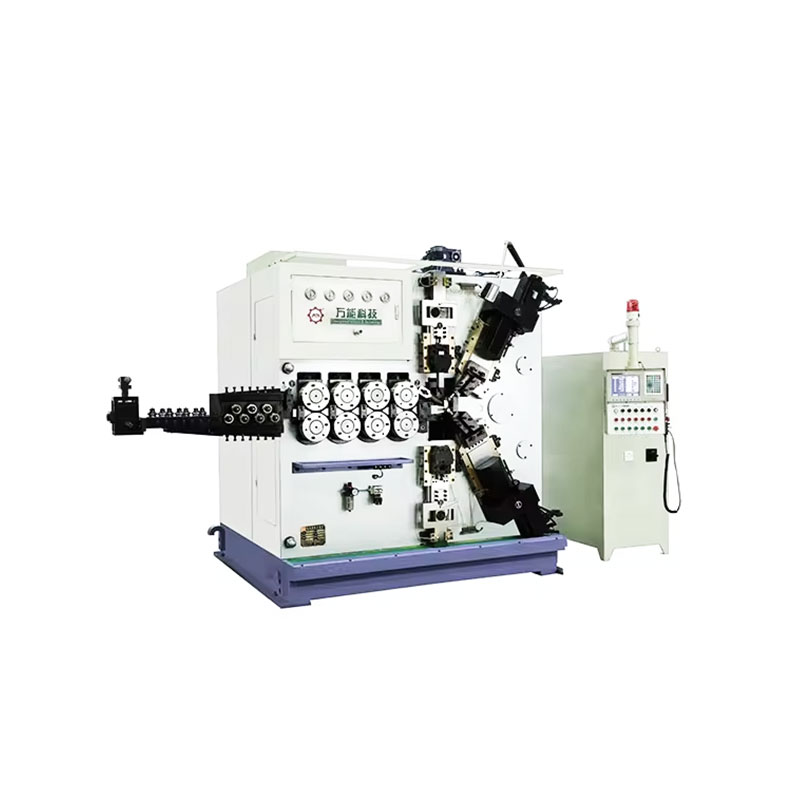
TK-6160 TK-6160 CNC SPRING ROLLING MACHINE...
See Details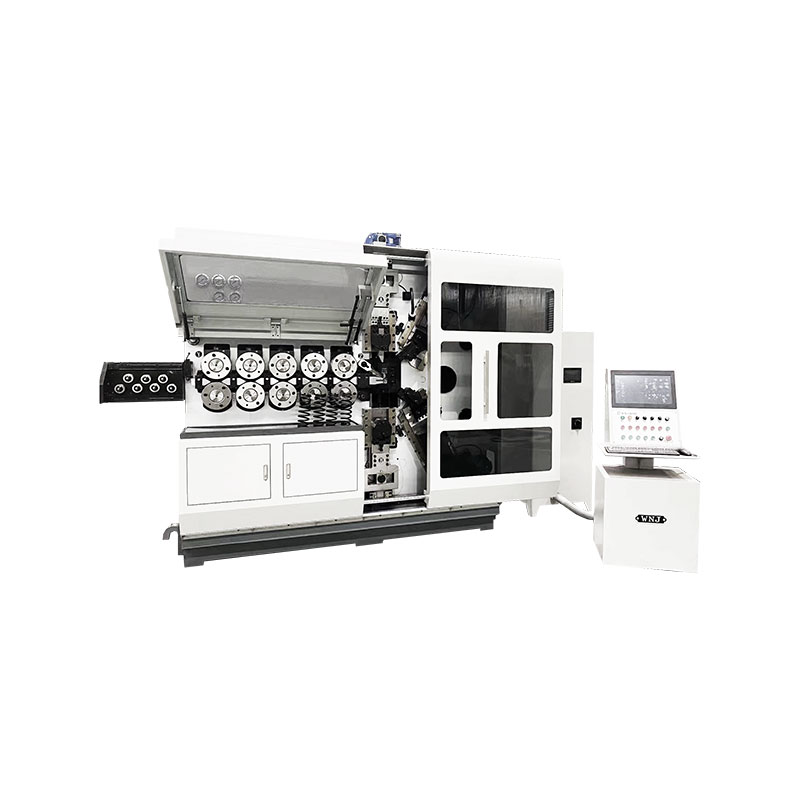
TK-6120 TK-6120 CNC SPRING ROLLING MACHINE...
See Details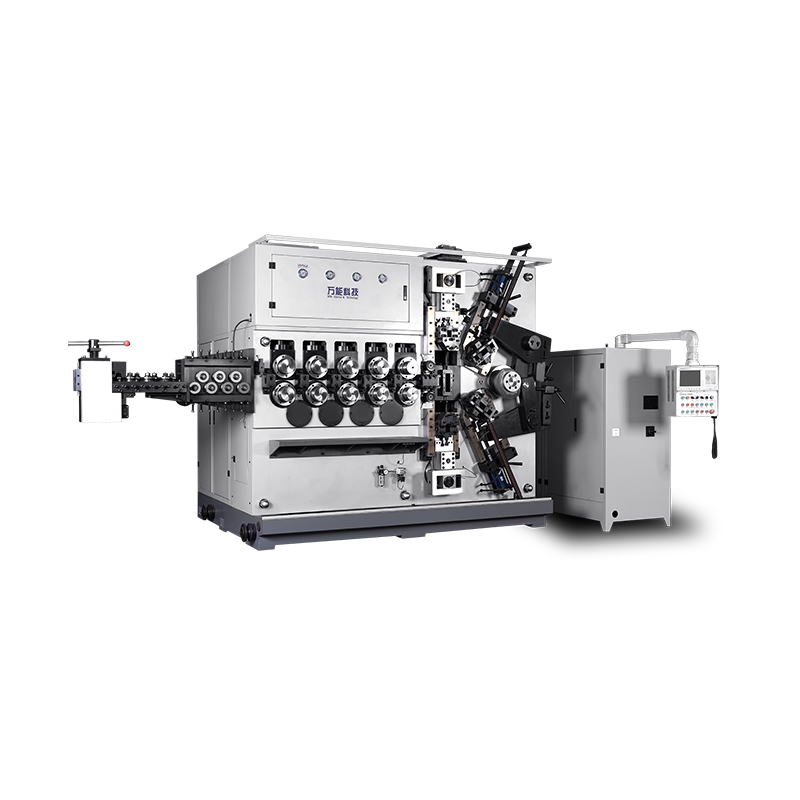
TK-5200 TK-5200 5AXES CNC SPRING COILING MACHINE...
See Details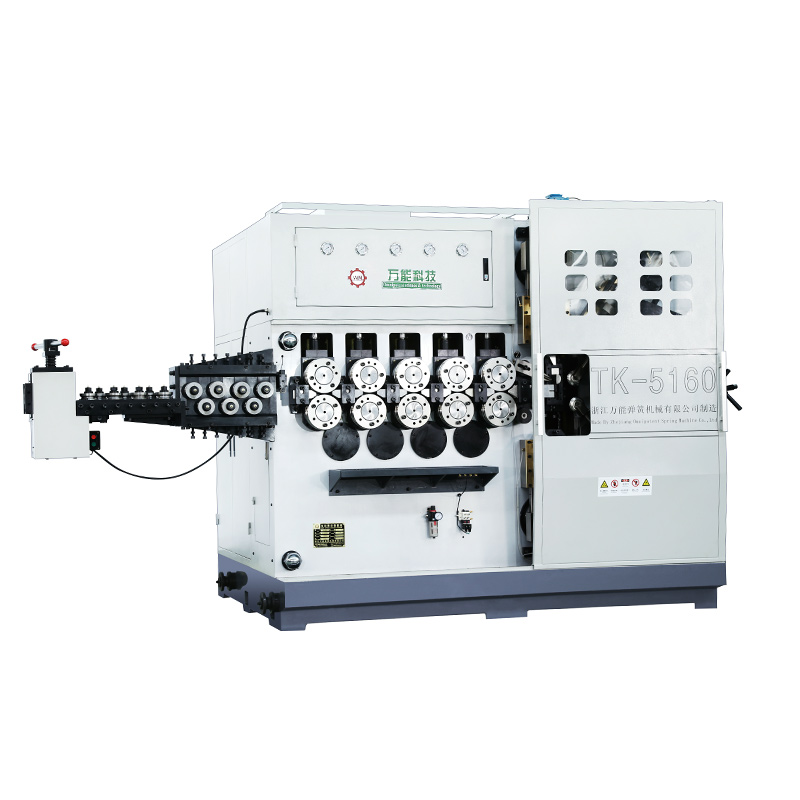
TK-5160 TK-5160 5AXES CNC SPRING COILING MACHINE...
See Details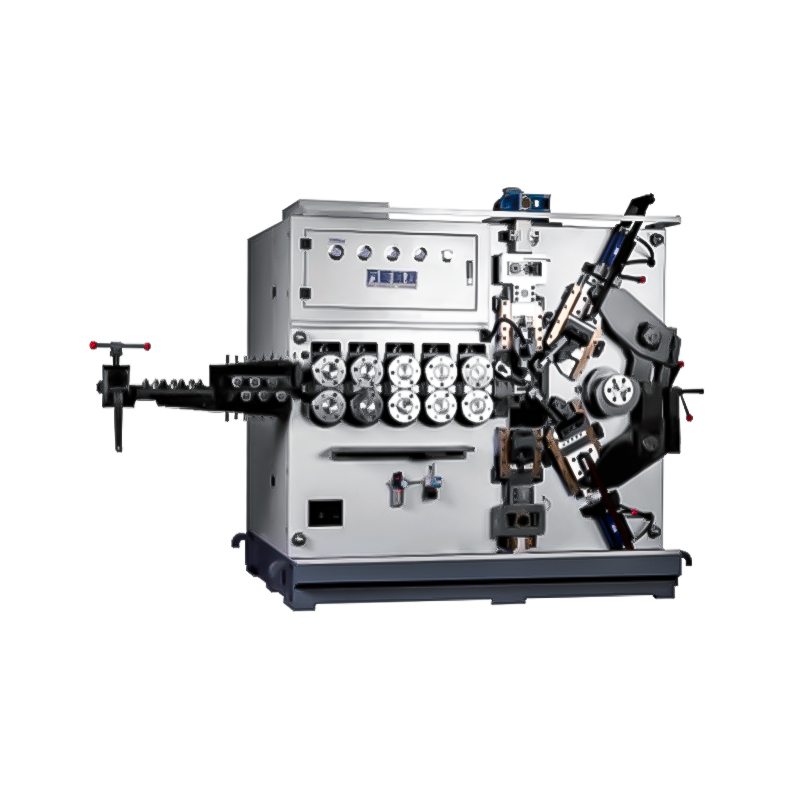
TK-5120 TK-5120 5AXES CNC SPRING COILING MACHINE...
See Details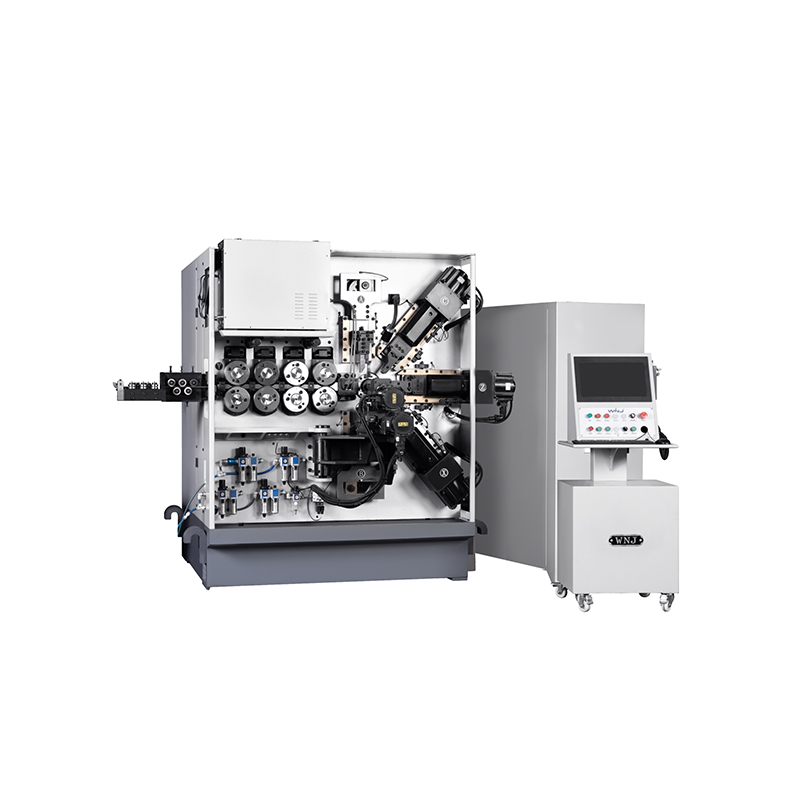
TK TK 10AXES CNC SPRING SCROLL MACHINE...
See Details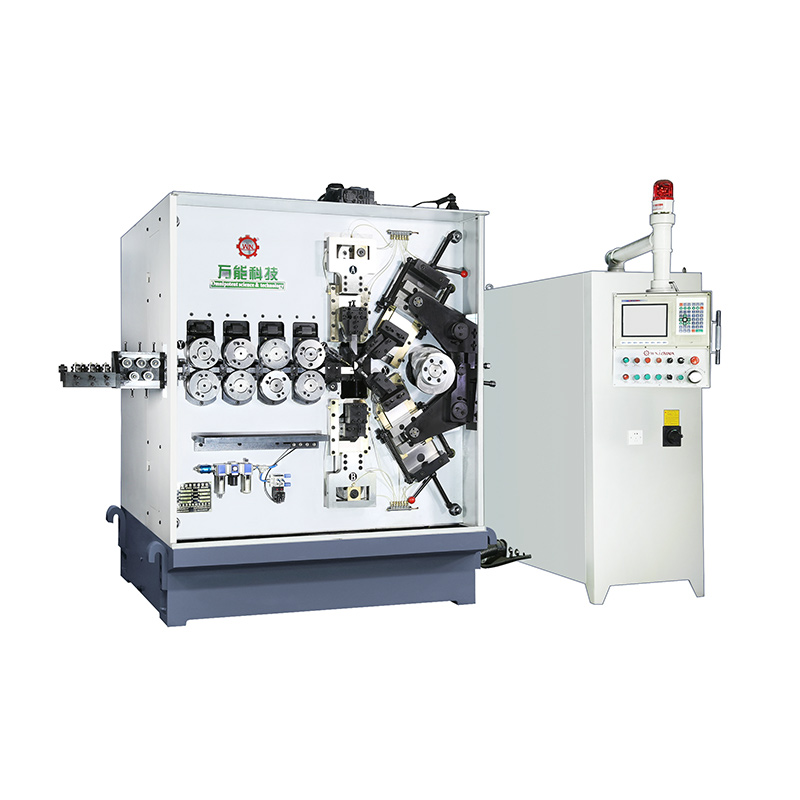
TK-580B、 TK-590 TK-580B、 TK-590 5AXES CNC SPRING COILING MACHINE...
See Details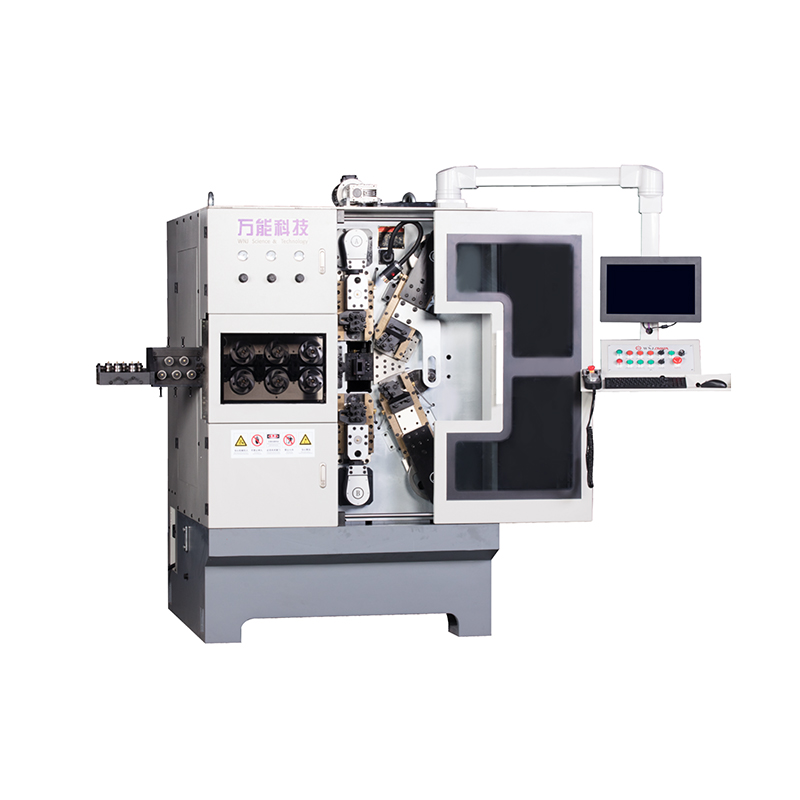
TK-760TK-760 6-7AXES CNC SPRING COILING MACHINE...
See DetailsMobile QR Code

 中文简体
 English
 русский
 Español