Language
Content
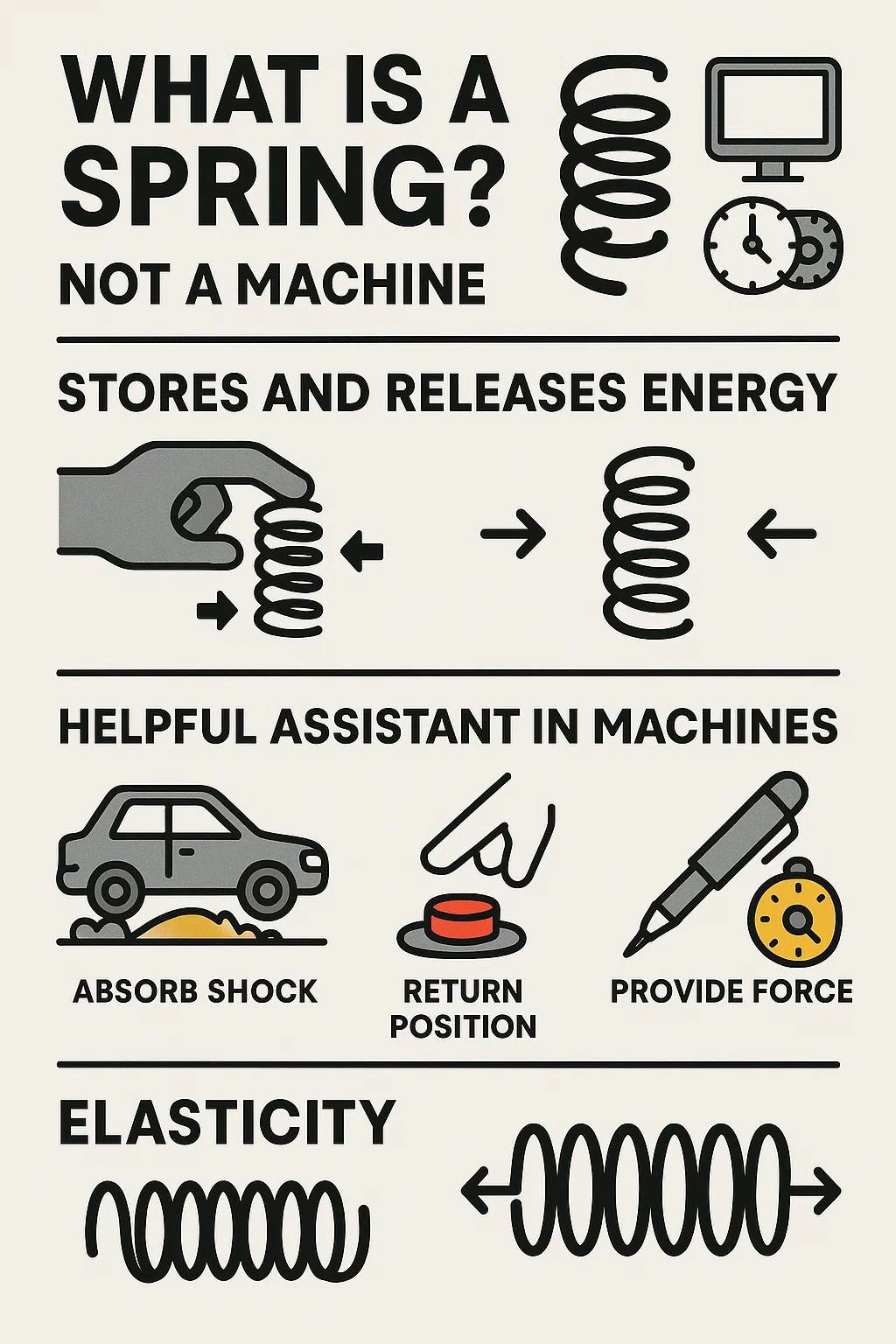
Imagine what a machine looks like: for example, a car, a clock, a computer. They are usually composed of many parts, have power (such as a motor or battery), and can perform complex tasks (running, timing, calculating).
A spring is just a single part. It doesn't have a motor, gears, or the ability to think or perform complex actions on its own. It's more like a material with special functions or a component.
When you compress or stretch a spring, you are doing work on it (applying force).
The spring deforms (shortens or lengthens), and in this process, it stores the force (energy) you applied, like a wound clock spring or a drawn bowstring.
When you release it, the spring tries to return to its original shape, releasing the stored energy in the process, pushing or pulling whatever it is in contact with.
Although a spring itself is not a machine, it is a crucial "little helper" in machines, tools, and equipment because it can:
Absorb shock and provide cushioning: Why doesn't a car fall apart when it goes over potholes? Because the springs in the suspension absorb the impact, making your ride smoother (e.g., shock absorber springs).
Return things to their original position: When you press a button or switch and release it, it springs back on its own; this is due to the small spring inside (return spring).
Provide continuous force: A ballpoint pen can continuously write on paper because the small spring behind the pen tip is gently pushing it (pressure spring).
Store power: Old mechanical clocks can tick for a day because of the tightly wound mainspring (a type of flat torsion spring) that slowly releases energy to drive the gears.
Control movement: Some valves and clutches use the force of springs to determine when to open and close (e.g., valve springs).
The fundamental reason why a spring can "store and release force" is that the material it is made of (usually special spring steel or stainless steel) has excellent elasticity. Elasticity means that after a material is deformed by an external force, it can completely return to its original shape once the external force is removed. Rubber bands are elastic, but they are weak and not durable; springs made of spring steel have excellent elasticity, are strong, and can withstand millions of deformations (fatigue resistance) without easily breaking.
A spring is not a complete machine.
It is a basic mechanical component that utilizes its own elasticity to absorb impact (cushioning), provide thrust/pulling force, reset parts, or store energy.
It is a good partner to machines, silently playing a crucial role in various devices, making machines run more smoothly, safely, and reliably. Without this little thing, many machines wouldn't work! So, next time you see a spring, don't underestimate it; it's an important little component with "superpowers."
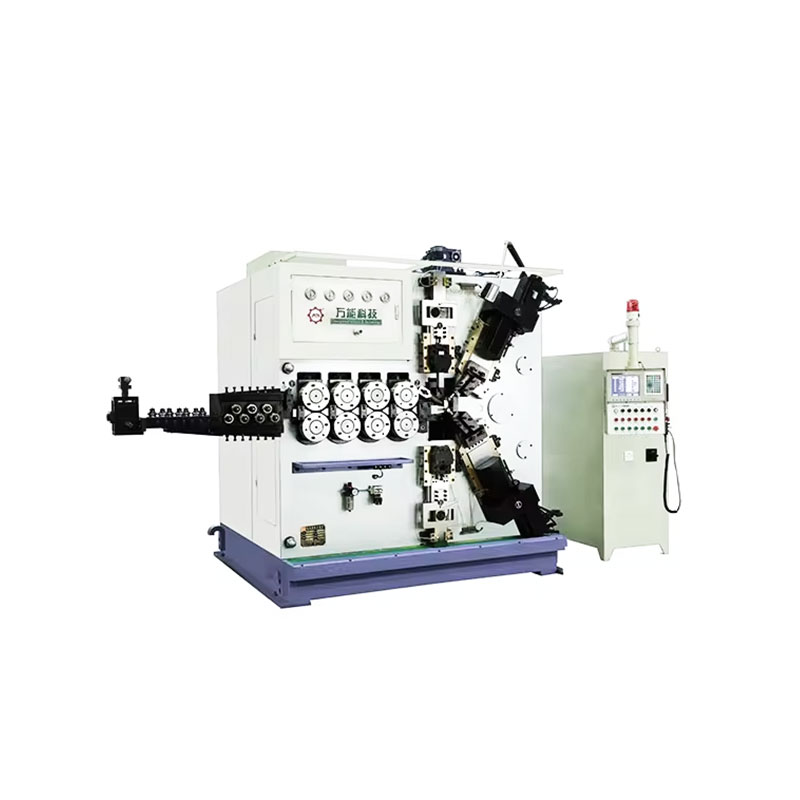
TK-6160 TK-6160 CNC SPRING ROLLING MACHINE...
See Details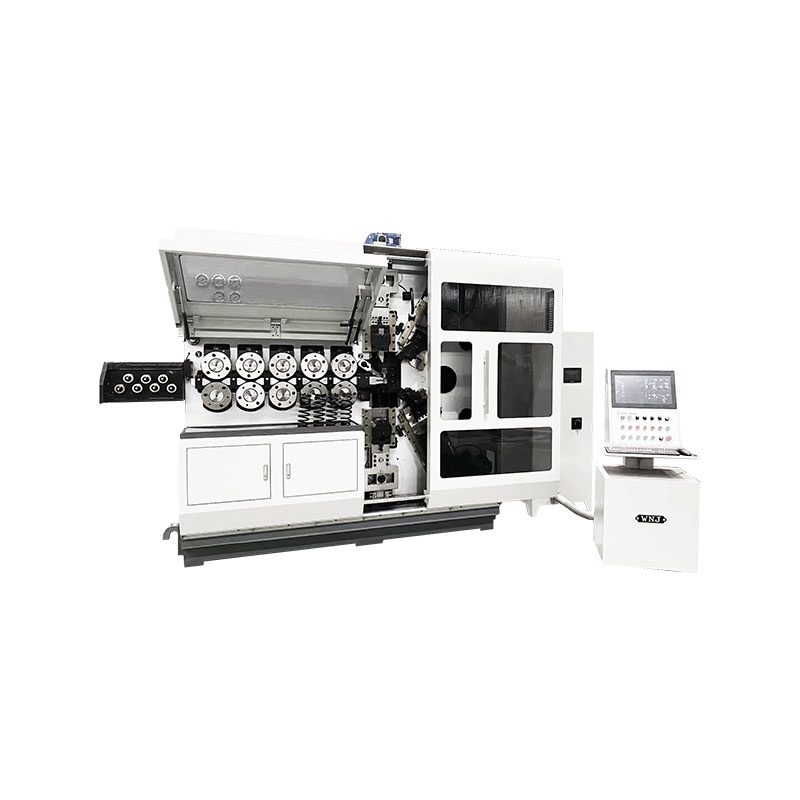
TK-6120 TK-6120 CNC SPRING ROLLING MACHINE...
See Details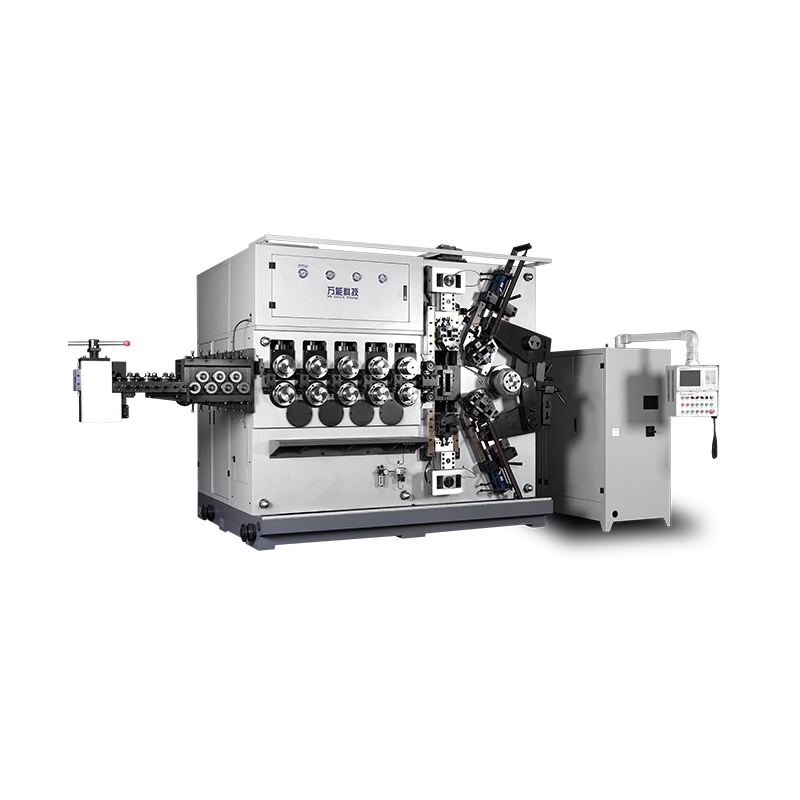
TK-5200 TK-5200 5AXES CNC SPRING COILING MACHINE...
See Details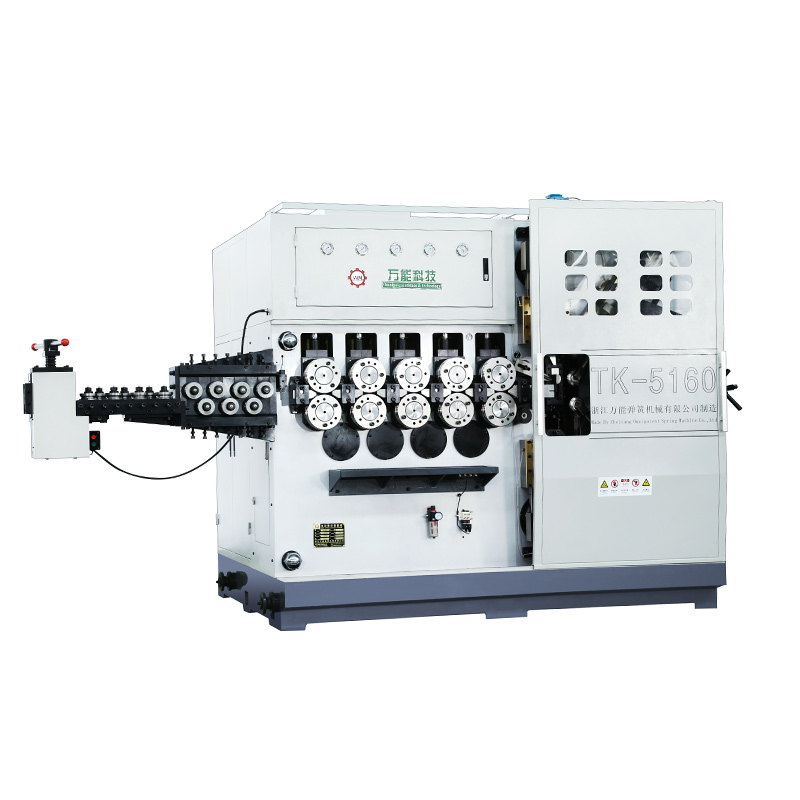
TK-5160 TK-5160 5AXES CNC SPRING COILING MACHINE...
See Details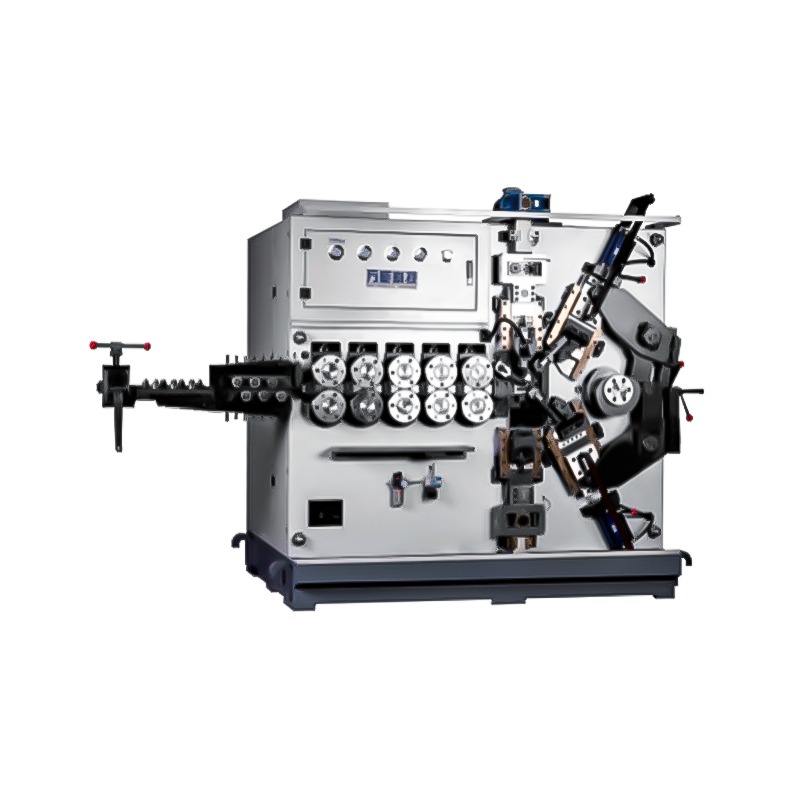
TK-5120 TK-5120 5AXES CNC SPRING COILING MACHINE...
See Details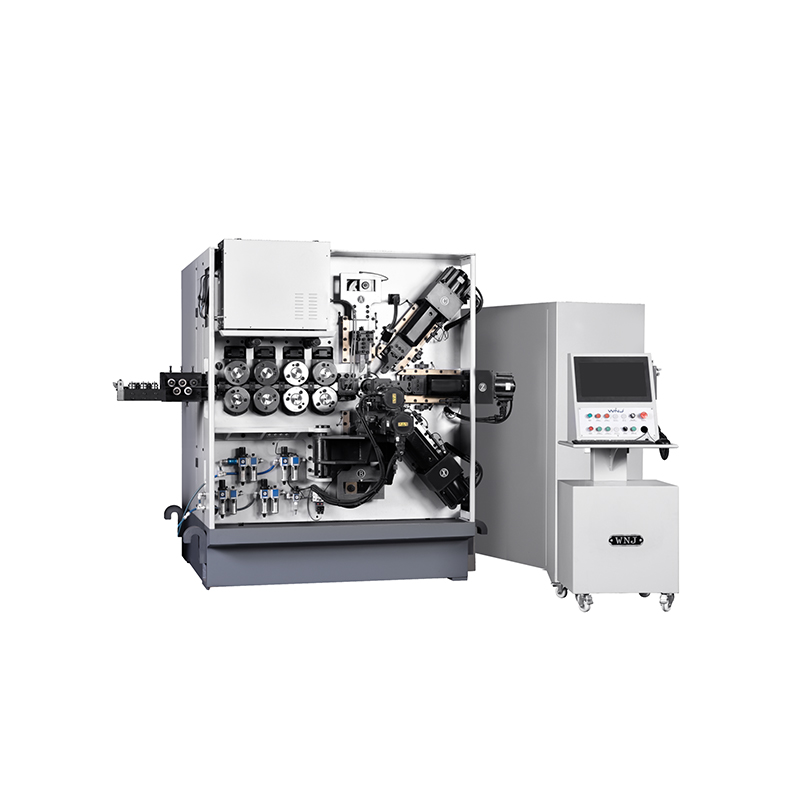
TK TK 10AXES CNC SPRING SCROLL MACHINE...
See Details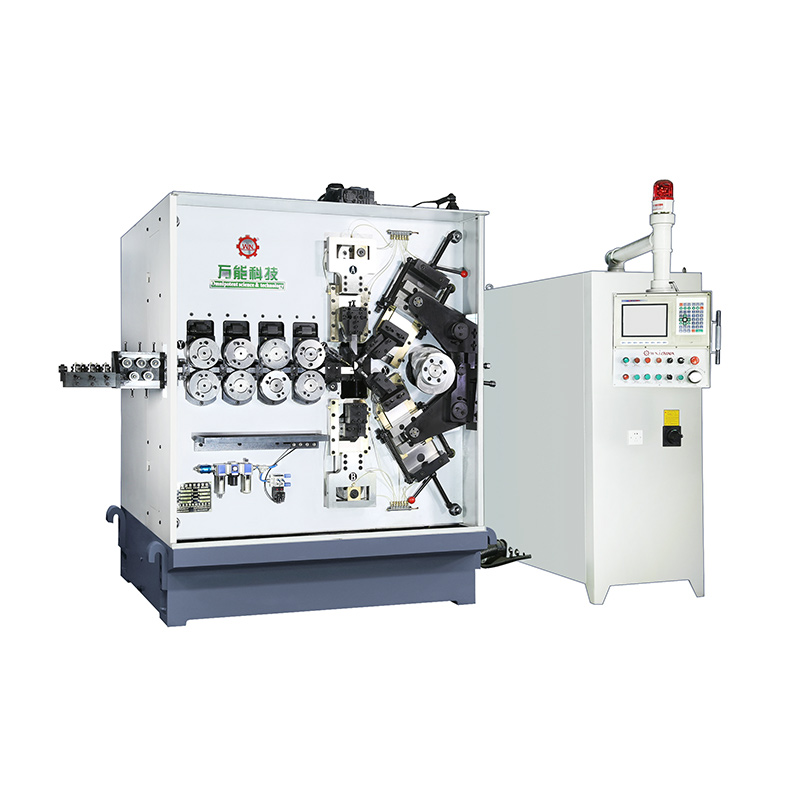
TK-580B、 TK-590 TK-580B、 TK-590 5AXES CNC SPRING COILING MACHINE...
See Details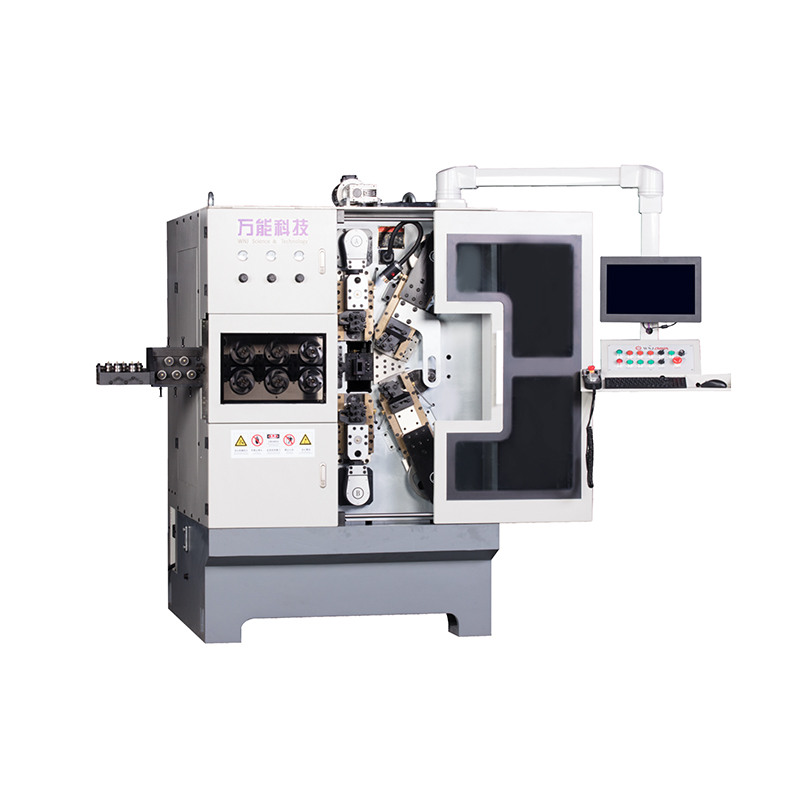
TK-760TK-760 6-7AXES CNC SPRING COILING MACHINE...
See DetailsMobile QR Code

 中文简体
中文简体 English
 русский
 Español