Language
Content
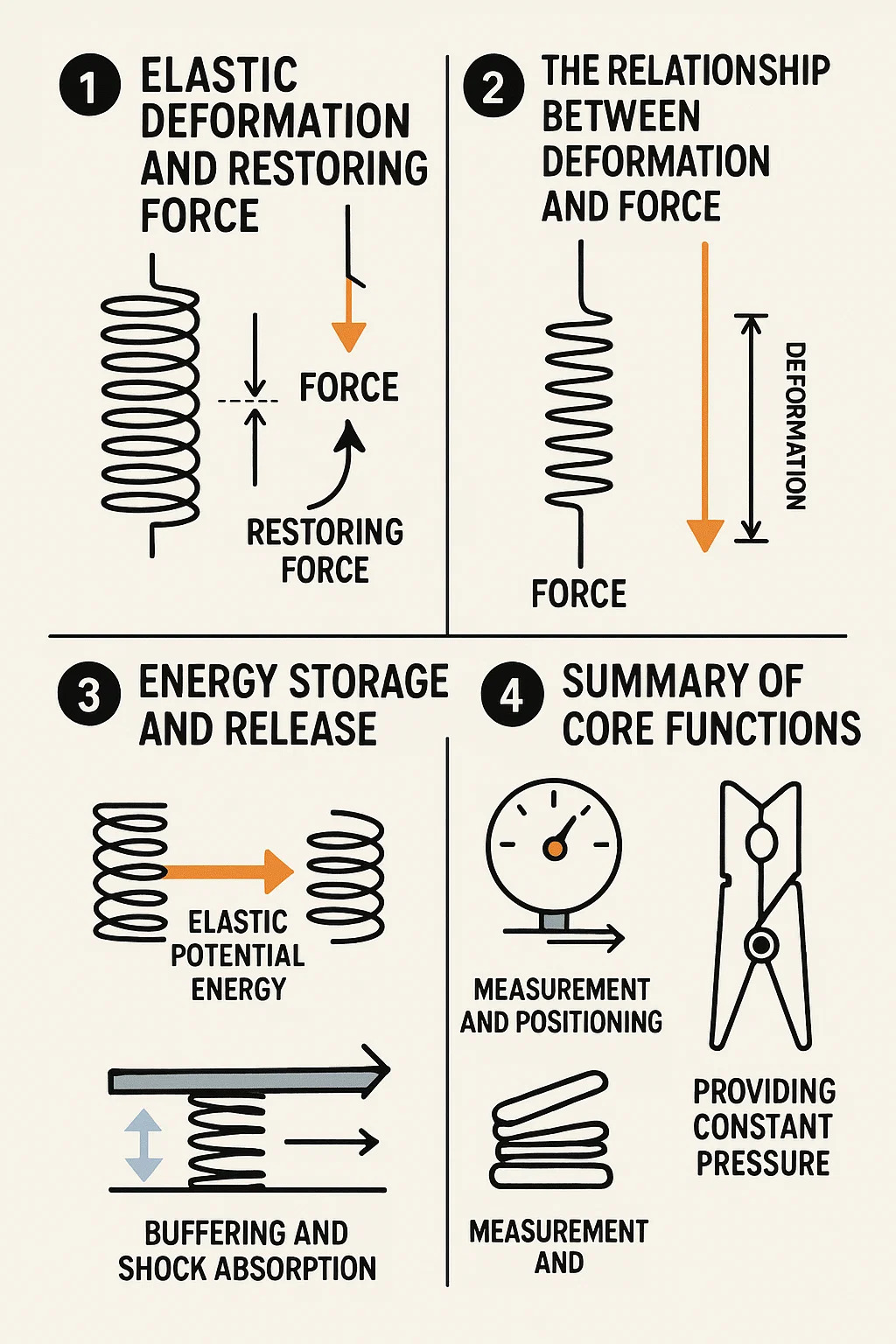
A spring is a common mechanical component, and its working principle is based on two core concepts: elasticity and the balance of forces. We can understand its mechanism in a very simple way.
Deformation creates force: The most crucial characteristic of a spring is its elasticity. This means that when an external force attempts to stretch or compress it, the spring's shape changes (i.e., deformation occurs).
Inherent "reluctance": This deformation is not permanent. The spring's material generates a force that resists the deformation, which we call the restoring force or elastic force. The direction of this force is always opposite to the direction of the external force causing the deformation.
Returning to the original state: As long as the external force does not exceed a certain limit (which we call the elastic limit), once the external force is removed, this restoring force will pull or push the spring back to its original, unstressed shape.
"The longer you pull, the tighter it pulls back": The restoring force of a spring is directly proportional to the degree of its deformation (the distance it is stretched or compressed).
Small force, small resistance: If you apply only a small force to the spring, its deformation is small, and the resulting restoring force is also small.
Large force, large resistance: If you apply a larger force, stretching or compressing the spring further, the restoring force generated internally will be greater, trying to push you away or pull itself back.
Storing energy: The process of applying an external force to a spring and causing it to deform is actually storing mechanical energy in the form of elastic potential energy within the spring. You can imagine it as winding up a clockwork mechanism.
Releasing energy: When a compressed or stretched spring is released, the elastic potential energy it has stored is converted into kinetic energy, thus doing work. For example, this is the principle behind toy guns firing bullets or car shock absorbers absorbing bumps.
Buffering and shock absorption: Springs can absorb the energy from impacts and vibrations and gradually release it over time, protecting the structure (such as the shock absorption system of a car). Measurement and Positioning: In scales, the deformation of a spring can be used to measure weight; in many mechanical devices, it is used to return parts to their initial position after work is completed (such as in buttons and switches).
Providing Constant Pressure: Springs can be used to provide a continuous, stable pressure or clamping force between two objects (such as in clothespins or pens).
TK-6160 TK-6160 CNC SPRING ROLLING MACHINE...
See Details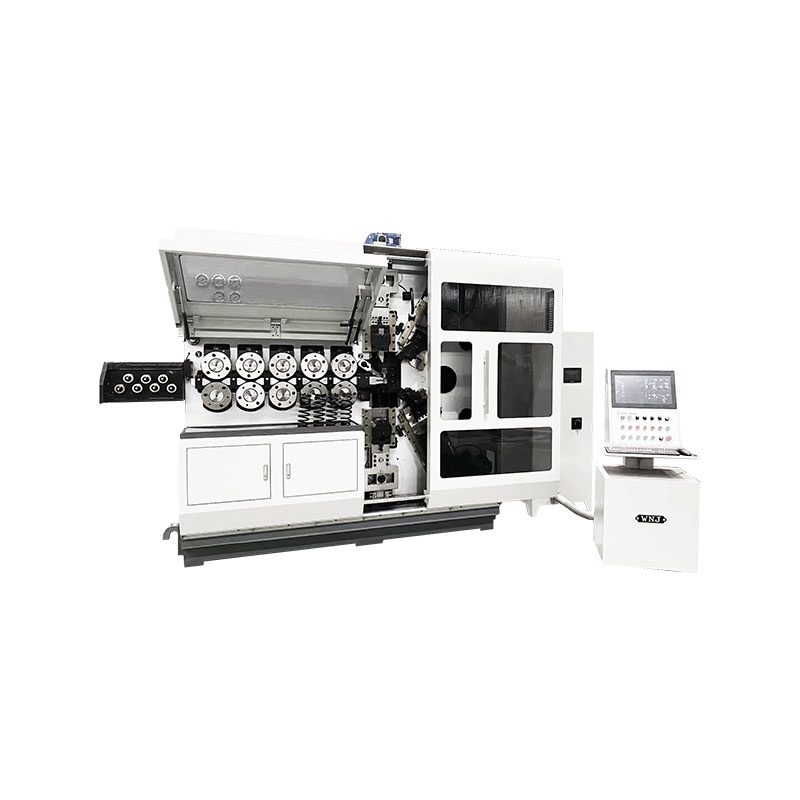
TK-6120 TK-6120 CNC SPRING ROLLING MACHINE...
See Details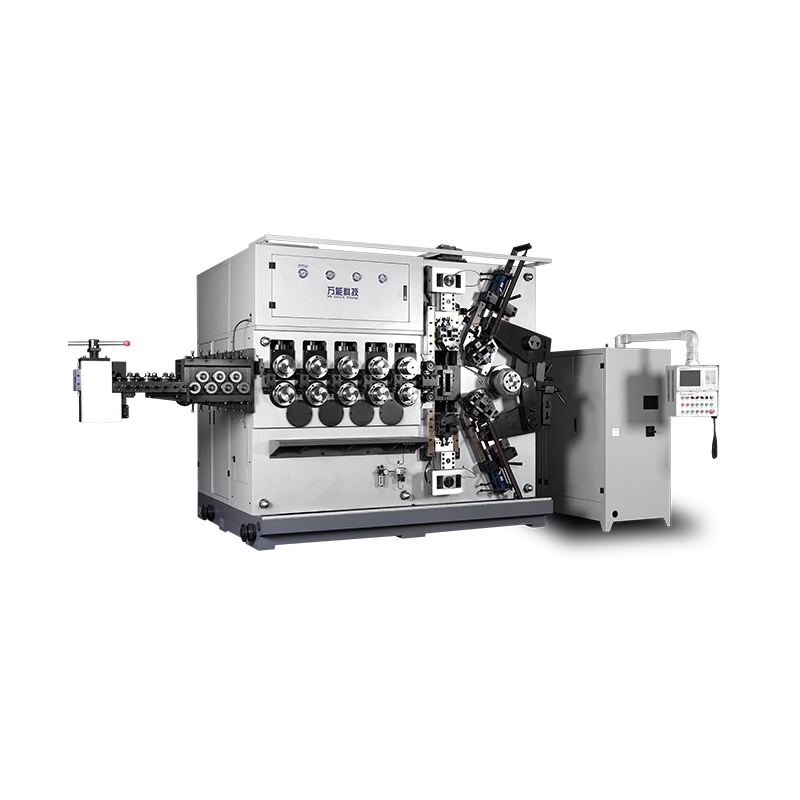
TK-5200 TK-5200 5AXES CNC SPRING COILING MACHINE...
See Details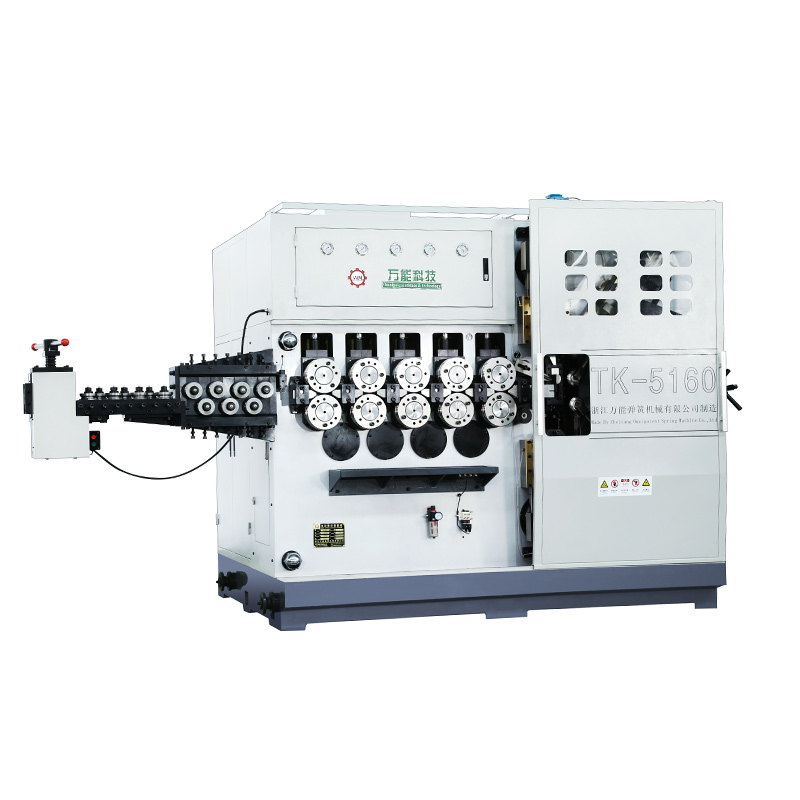
TK-5160 TK-5160 5AXES CNC SPRING COILING MACHINE...
See Details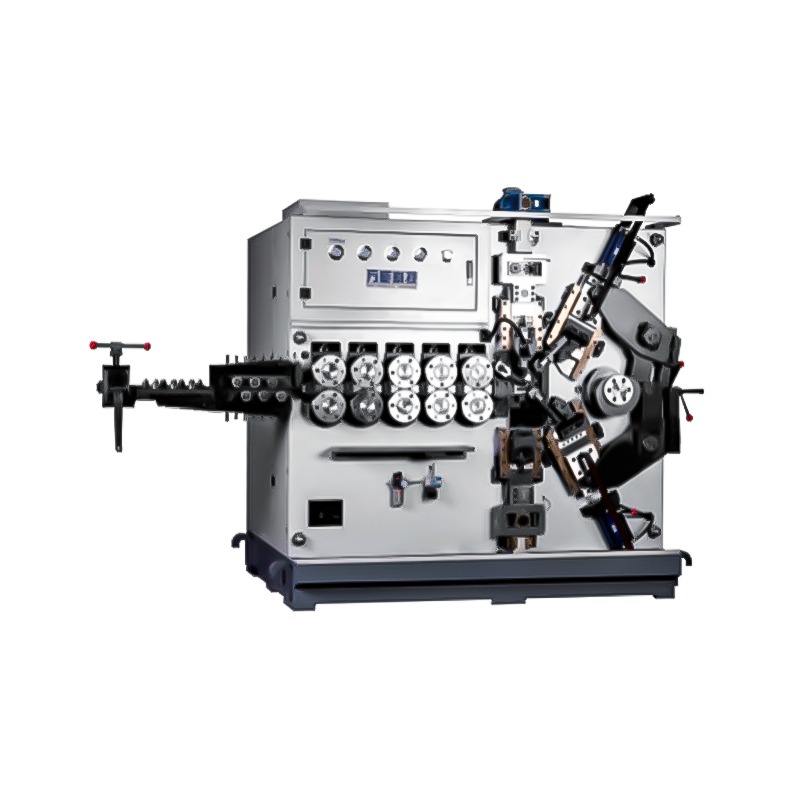
TK-5120 TK-5120 5AXES CNC SPRING COILING MACHINE...
See Details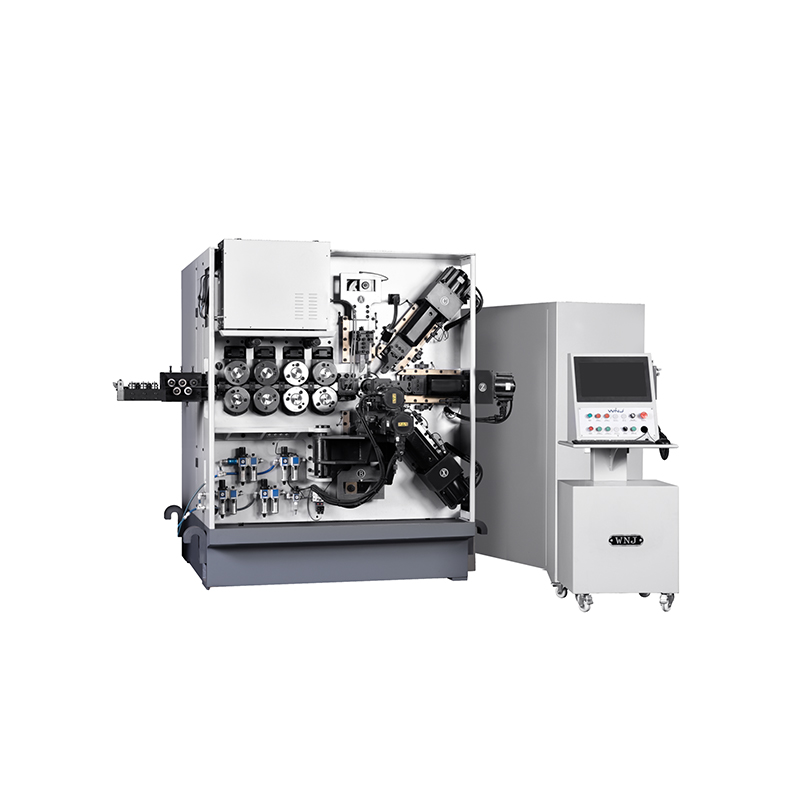
TK TK 10AXES CNC SPRING SCROLL MACHINE...
See Details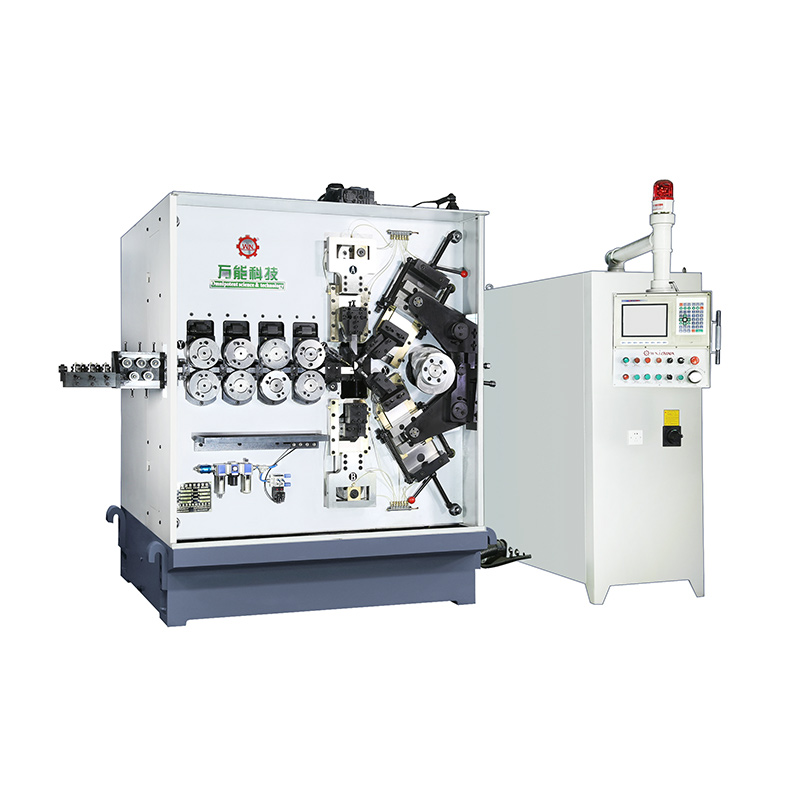
TK-580B、 TK-590 TK-580B、 TK-590 5AXES CNC SPRING COILING MACHINE...
See Details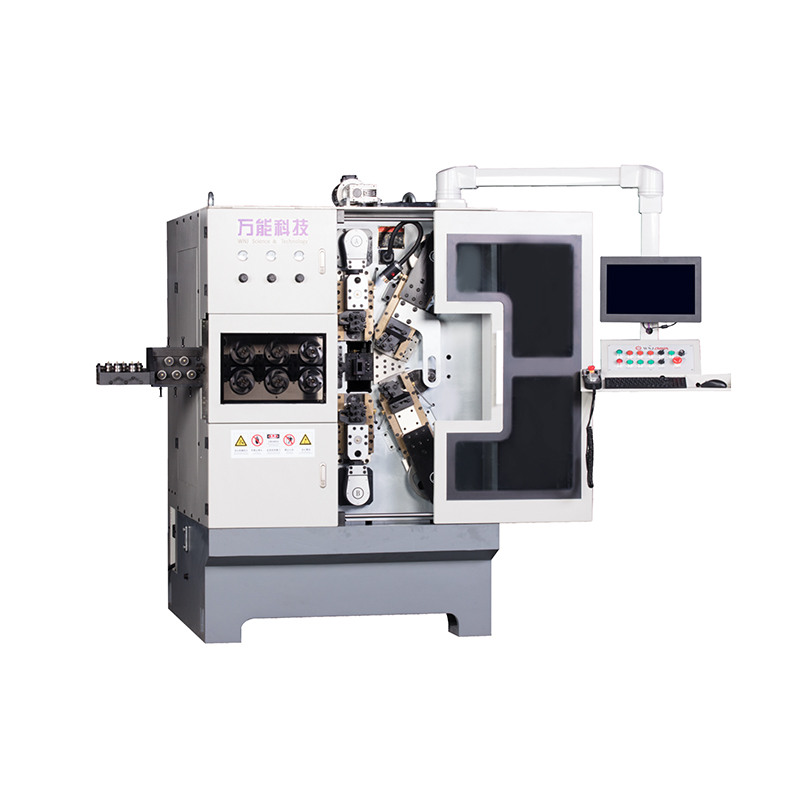
TK-760TK-760 6-7AXES CNC SPRING COILING MACHINE...
See DetailsMobile QR Code

 中文简体
中文简体 English
 русский
 Español