Language
Content
Compression springs are open-coil helical springs that resist compressive forces — when pushed together, they push back. They are the most widely produced spring type in manufacturing, accounting for roughly 60% of all springs made globally. The main types include cylindrical (straight), conical (tapered), barrel (convex), hourglass (concave), and variable-pitch springs. Each geometry serves a distinct mechanical purpose, and choosing the wrong type leads to premature fatigue failure, unwanted resonance, or dimensional misfit.
Understanding each type thoroughly — its geometry, load behavior, material requirements, and the spring machine technology needed to manufacture it — is essential for engineers, procurement specialists, and production managers alike.
The cylindrical compression spring — also called a straight coil spring — maintains a constant outer diameter from one end to the other. This is the simplest geometry to manufacture and the most prevalent form found in everyday products: automotive valve trains, ballpoint pens, door latches, industrial hydraulics, and consumer electronics.
A cylindrical compression spring with closed and ground ends offers the flattest bearing surface, reducing load eccentricity. Automotive engine valve springs, which may cycle at 3,000–6,000 RPM and must withstand hundreds of millions of fatigue cycles over a vehicle's lifetime, are almost always cylindrical with ground ends and made from chrome-silicon or chrome-vanadium alloy wire.
On the production side, a spring machine producing cylindrical springs relies on precise pitch-control servo axes. Modern CNC spring coiling machines — such as the 5-axis and 7-axis models used by high-volume manufacturers — can maintain pitch tolerances within ±0.05 mm at wire feed speeds exceeding 150 m/min. This repeatability is impossible to achieve with older cam-driven mechanical presses.
A conical compression spring has a progressively decreasing diameter from the large base to the small apex. When compressed, coils telescope into one another, allowing the spring to collapse to a solid height equal to just one or two wire diameters — far shorter than a cylindrical spring with the same number of active coils. This makes conical springs the preferred choice wherever installation space in the axial direction is severely limited.
Conical springs exhibit a nonlinear, progressively increasing spring rate. As compression proceeds, the larger-diameter coils contact the seat first, effectively removing them from active deflection. The remaining smaller-diameter coils are stiffer, so resistance increases with every additional millimeter of travel. This progressive rate is highly desirable in automotive suspension systems where a soft initial ride stiffens under heavy load.
Producing conical springs demands diameter-change control on the spring machine — the coiling point must move radially while maintaining consistent pitch and coil tension. Older mechanical spring coiling machines controlled outer diameter through a fixed external cam, which locked in one taper angle per changeover. A modern CNC spring machine with a servo-driven diameter-changing axis can program any taper profile electronically, switching from one spring geometry to another in minutes without physical tooling changes. This has reduced changeover time in high-mix, low-volume production environments from several hours to under 15 minutes.
Barrel springs, sometimes called convex compression springs, have their maximum outer diameter at the midpoint and taper toward both ends. Visually they resemble a barrel or a football in cross-section. This geometry provides an extremely high resistance to lateral buckling — the widest coils at the center act as a natural stabilizing band, preventing the spring from bending sideways during compression even without a guide pin or sleeve.
In applications where a guide rod cannot be fitted due to space constraints or contamination concerns, a barrel spring can replace both the cylindrical spring and its guide assembly, reducing part count. The tradeoff is a nonlinear spring rate: the spring is softer at initial deflection (large diameter, more flexible coils engaging) and progressively stiffer toward full compression.
Manufacturing a barrel spring requires a spring machine capable of bidirectional diameter control — the outer diameter must increase from the bottom end to the center, then decrease symmetrically back to the top end. A standard 3-axis CNC spring coiling machine cannot achieve this profile. Machines with 5 or more controlled axes, incorporating a servo-driven radial slide for the coiling point, can program the convex profile in a single continuous operation. Output rates for barrel springs typically run 20–40% slower than for equivalent cylindrical springs due to the more complex servo path, but the elimination of secondary assembly operations more than compensates in total cost.
The hourglass spring — concave in profile, with the smallest diameter at the center — is the geometric inverse of the barrel spring. Its defining advantage is a very high natural frequency due to the stiff narrow-diameter central coils. This makes it exceptional at avoiding resonance in high-frequency vibrating environments, such as high-speed machinery, pneumatic tools, and precision instruments. Where a cylindrical spring might enter surge (a standing-wave oscillation within the spring body) at certain operating speeds, an hourglass spring's variable coil diameters create multiple natural frequencies, preventing any single resonant mode from dominating.
Hourglass springs also self-center on flat seats, making them useful in applications where lateral positioning is important but a guide is impractical. However, their concave geometry means the central coils are small-diameter and therefore highly stressed — careful material selection and surface finishing (shot peening, for instance) are essential to achieving acceptable fatigue life.
| Spring Type | Load-Deflection | Solid Height | Buckling Resistance | Vibration/Surge Resistance | CNC Axes Needed |
|---|---|---|---|---|---|
| Cylindrical | Linear | Moderate | Low | Moderate | 2–3 |
| Conical | Progressive | Very Low | High | Good | 3–5 |
| Barrel (Convex) | Progressive | Moderate | Very High | Good | 5+ |
| Hourglass (Concave) | Progressive | Moderate | High | Excellent | 5+ |
| Variable Pitch | Dual-Rate | Moderate | Moderate | Excellent | 3–5 |
| Miniature | Linear | Very Low | Low | Moderate | 2–3 (high-precision) |
Variable-pitch compression springs maintain a constant diameter but change the spacing between coils along the spring's length. At low load, the open-pitch sections (with more space between coils) carry the deflection, giving a soft spring rate. Once those sections close solid, the tighter-pitch sections take over, dramatically increasing the spring rate. The result is a dual-rate or multi-rate spring from a single component — no spacers, no additional components needed.
Variable-pitch springs are extensively used in automotive suspension systems. A typical passenger car variable-pitch coilover spring might have an initial rate of 25 N/mm over the first 40 mm of travel, transitioning to 50 N/mm for the next 30 mm. This provides a compliant ride on normal roads while limiting body roll on aggressive cornering without the harshness of a uniformly stiff spring.
On a CNC spring machine, pitch is controlled by the axial feed rate relative to the rotational coiling speed. To produce variable pitch, the controller varies this ratio programmatically during coiling — increasing axial feed for open-pitch sections, reducing it for close-pitch zones. A 3-axis CNC spring coiling machine can accomplish this purely through software programming, making variable-pitch springs one of the easiest "complex" geometries to produce once the machine is properly set up. The challenge lies in achieving consistent pitch transitions across thousands of pieces, which requires tight servo-loop control and well-calibrated wire-straightening systems upstream of the coiling head.
Miniature compression springs — typically defined as springs with an outer diameter below 3 mm and wire diameters below 0.3 mm — represent the most technically demanding segment of spring manufacturing. They are ubiquitous in medical devices (drug delivery systems, implants, surgical instruments), precision instruments, aerospace avionics, and telecommunications equipment.
The micro spring market has grown substantially with the rise of minimally invasive surgery and wearable electronics. A modern insulin pump, for example, may incorporate dozens of micro compression springs with wire diameters of 0.08–0.15 mm, outer diameters of 0.5–1.5 mm, and free lengths under 5 mm. Dimensional tolerances are often ±0.02 mm on outer diameter and ±0.05 mm on free length — tolerances that require extremely rigid, thermally stable spring coiling machine platforms with in-line vision inspection systems.
Wire material choices for miniature compression springs include:
Regardless of the spring geometry, end configuration significantly affects how the compression spring performs in service. The four standard end types are:
After coiling on a spring machine, springs requiring ground ends proceed to a CNC spring grinding machine — a dedicated flat-grinding system that processes both ends simultaneously to achieve parallelism within 1–2° for standard applications, or under 0.5° for precision-critical uses. Modern rotary grinding machines can process 800–2,000 springs per hour depending on spring size and material hardness.
Material selection is arguably as important as geometry when specifying any of the types of compression springs. The spring's elastic modulus, tensile strength, fatigue limit, temperature capability, and corrosion resistance are all material-driven properties. The most commonly used wire materials and their typical applications are:
| Material | Max Working Temp (°C) | Tensile Strength (MPa) | Corrosion Resistance | Primary Uses |
|---|---|---|---|---|
| Music Wire (A228) | 120 | 1900–2500 | Poor | General engineering, instruments |
| Hard-Drawn Wire (A227) | 120 | 1500–1900 | Poor | Light-duty, static loads |
| Chrome-Silicon (A401) | 250 | 1900–2200 | Moderate | Automotive valves, high-cycle springs |
| Chrome-Vanadium (A232) | 220 | 1700–2000 | Moderate | Engine components, shock absorbers |
| 302 Stainless Steel | 260 | 1300–1800 | Excellent | Medical, food processing, marine |
| Inconel 718 | 600 | 1200–1600 | Excellent | Aerospace, turbine engines |
Heat treatment is critical after coiling: springs are typically stress-relieved at 200–250°C to remove residual forming stresses without annealing the material. Shot peening is applied to high-cycle fatigue springs (automotive valve springs, for instance) to introduce compressive residual stresses on the wire surface, which can increase fatigue life by 20–50% depending on the peening intensity and coverage.
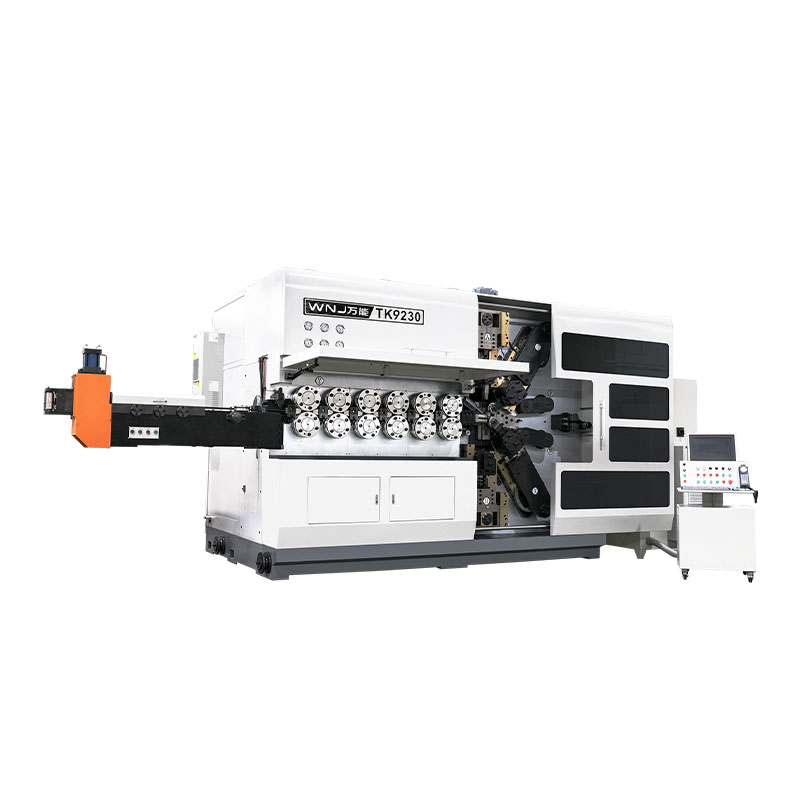
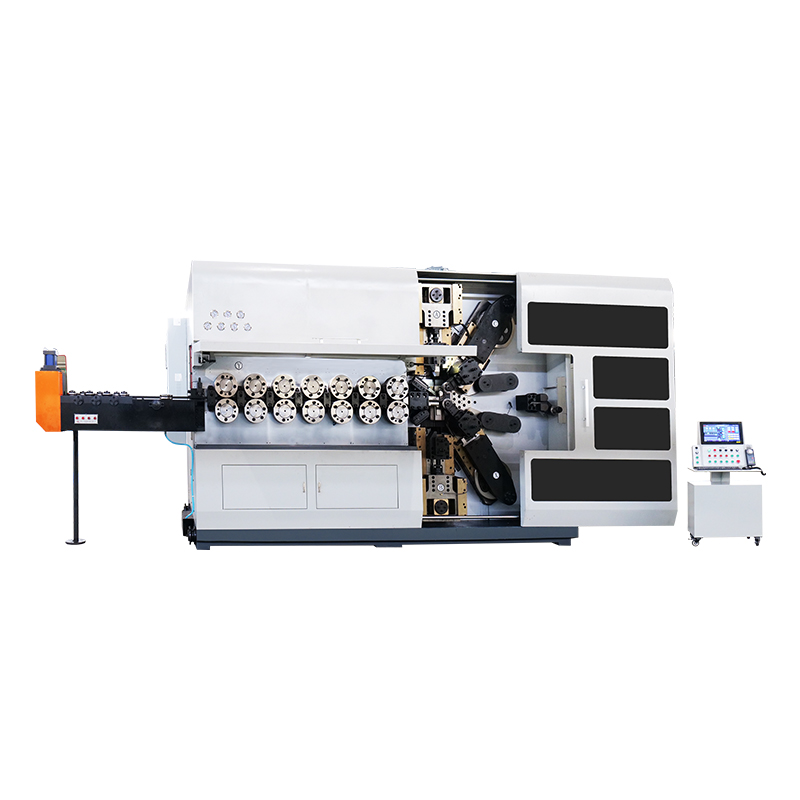
The diversity of compression spring types described above would be commercially impractical without modern CNC spring machine technology. A high-capability spring machine today is a multi-axis servo system combining wire feeding, straightening, coiling, pitch control, diameter control, cut-off, and (in some models) in-line length measurement — all in a single automated unit operating without human intervention after setup.
The number of controlled axes in a spring coiling machine directly determines what spring geometries it can produce:
CNC spring coiling machines processing wire from 0.15 mm to 23 mm in diameter can handle the full range from micro medical springs to heavy industrial suspension springs. The wire diameter range processed determines which spring machine series is appropriate: machines with smaller-diameter capability require finer-tolerance guide components and higher-speed servo systems, while large-wire machines need significantly higher torque in the coiling mechanism.
Modern spring machine platforms increasingly integrate in-line measurement: camera-based vision systems check outer diameter, free length, and coil count immediately after each spring is cut off, rejecting out-of-tolerance parts before they reach the collection bin. For medical spring production, this closed-loop quality system is not optional — FDA and ISO 13485 requirements for implantable device components demand 100% dimensional verification, something only achievable through machine-integrated inspection rather than statistical sampling.
Each industry sector has distinct requirements that influence both the type of compression spring selected and the manufacturing approach taken:
Automotive applications represent the single largest consumption category for compression springs globally. Valve springs, suspension springs, clutch springs, and brake springs together account for over 200 individual spring applications in a typical passenger vehicle. The shift toward electric vehicles has reduced engine valve spring demand but increased demand for battery management system springs, motor brush springs, and thermal management component springs. Spring machines producing automotive parts must be validated under IATF 16949 quality management systems and often require statistical process control (SPC) data from every production run.
Aerospace compression springs operate under extreme conditions: temperatures from -70°C at altitude to over 500°C in engine proximity, cyclic loading at high frequency, and zero tolerance for in-service failure. Specifications follow AS9100 and, for military hardware, MIL-SPEC standards. Material traceability is mandatory — every coil of wire must be documented back to its heat lot, and the spring machine parameters for each production batch must be archived. Conical compression springs are heavily represented in aerospace due to their low solid height, which saves weight and space in fuselage structures and control mechanisms.
Medical device springs, particularly for implantable devices, require ISO 10993 biocompatibility certification of materials, electropolishing or passivation of surfaces, and dimensional repeatability that goes far beyond what general engineering applications demand. Miniature cylindrical stainless steel or nitinol compression springs are found in pacemakers, orthopedic implant delivery systems, stents, and drug-eluting devices. The spring machine producing these components must operate in a controlled environment, and operators must follow documented procedures equivalent to pharmaceutical manufacturing standards.
Heavy-duty cylindrical and barrel compression springs in hydraulic systems must maintain consistent load at specific deflection points across thousands of operating hours. A hydraulic cartridge valve spring that sags by 5% over its service life will shift the valve's cracking pressure, potentially causing system malfunctions. Production tolerances and material specifications for these springs are tighter than for general catalog springs, requiring more controlled manufacturing processes and more rigorous incoming wire inspection before the spring machine begins coiling.
With five major geometry options and dozens of material choices, selecting the correct compression spring for a new application can be streamlined by asking four questions in order:
If none of the specialty geometries are required, default to cylindrical with closed and ground ends — this is the lowest-risk, lowest-cost option, the easiest for a spring machine to produce at high volume, and the best supported by standard spring design software and published material data.
The cylindrical compression spring with uniform pitch is by far the most common type. It accounts for the majority of all compression springs produced globally because its geometry is the simplest to design, the easiest to manufacture on a standard spring machine, and sufficient for the vast majority of engineering applications. Unless a specific design constraint rules it out, cylindrical springs are always the default starting point.
Barrel (convex) springs offer the highest natural resistance to lateral buckling because the wide-diameter central coils act as a stabilizing band. Conical springs also resist buckling well due to the telescoping coil action during compression. For cylindrical springs in buckling-prone configurations (free length greater than 4× outer diameter), a guide pin or sleeve is the standard engineering solution rather than changing the spring geometry.
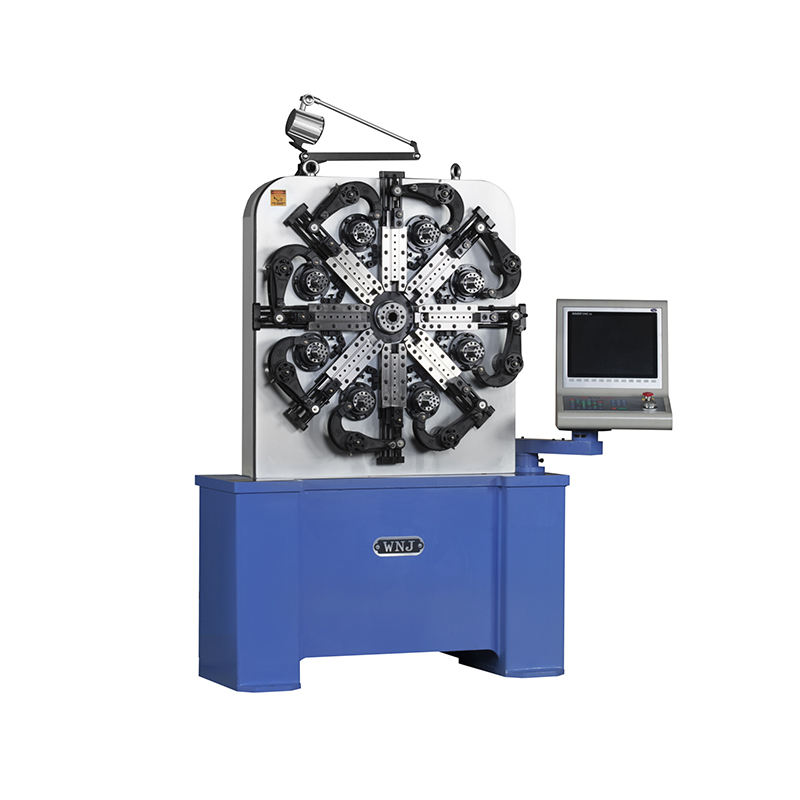
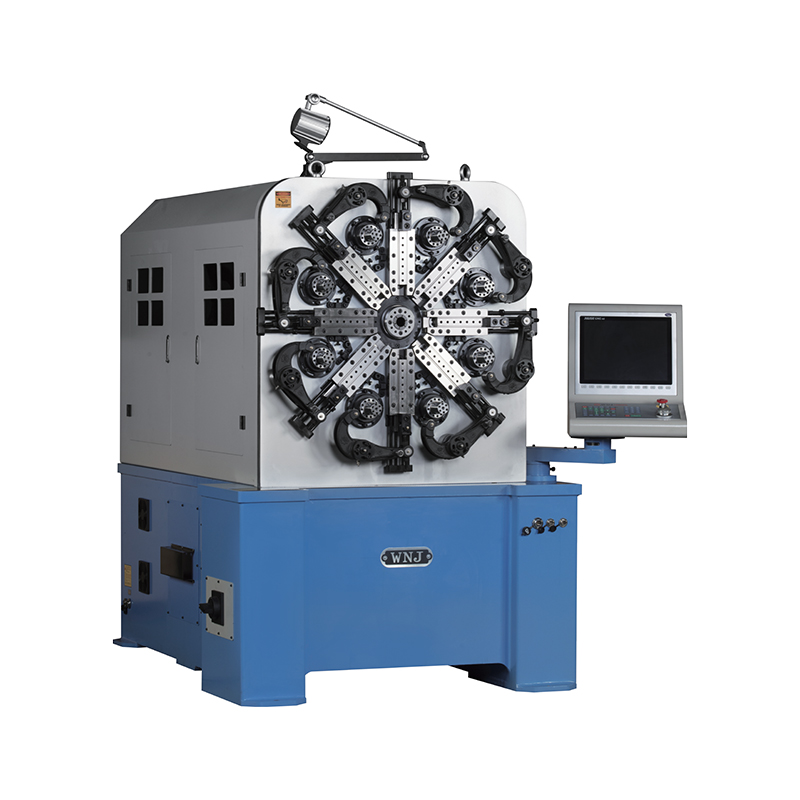
Conical and barrel springs require a CNC spring machine with a servo-controlled diameter-change axis (or equivalent radial slide mechanism). On older cam-driven machines, diameter change was fixed by the cam profile, making non-cylindrical springs very slow to set up. Modern multi-axis CNC spring coiling machines program the diameter profile electronically, achieving any taper or convex/concave shape without physical tooling changes. A 5-axis or higher-axis machine is typically required for production-quality non-cylindrical compression springs.
A variable-pitch spring is a physical spring type where coil spacing varies along the spring's length. A dual-rate spring is a performance description — it describes any spring (or spring assembly) that exhibits two distinct spring rates at different deflection ranges. Variable-pitch springs achieve a dual-rate characteristic through their geometry. A conical spring achieves a similar effect through progressive coil contact. Some assemblies use two coaxial springs of different rates to achieve dual-rate behavior without relying on geometry alone.
Yes — a sufficiently capable spring machine can produce multiple compression spring types. A 5-axis CNC spring coiling machine can produce cylindrical, conical, and variable-pitch springs with software changeover. A 10- or 12-axis camless spring machine extends this further, handling barrel, hourglass, and complex variable-geometry springs on the same platform. The key limitation is wire diameter range: the machine's coiling tooling is optimized for a specific wire diameter band, so switching between very different wire gauges still requires tooling changes even on fully CNC platforms.
Cold-coiling of wire on a spring machine introduces residual stresses in the wire from the plastic deformation of forming. Without stress relief, these residual stresses can cause the spring to creep (change its free length over time under load) or can reduce fatigue life by adding to operational stresses in the most-stressed outer fiber of the wire. Stress-relief heat treatment at 200–250°C for 30–60 minutes relaxes these residual stresses without significantly softening the wire. Springs made from pre-hardened wire (music wire, hard-drawn wire) are cold-coiled and then stress-relieved; springs made from annealed alloy wire are coiled soft and then hardened in a spring temper furnace after coiling.
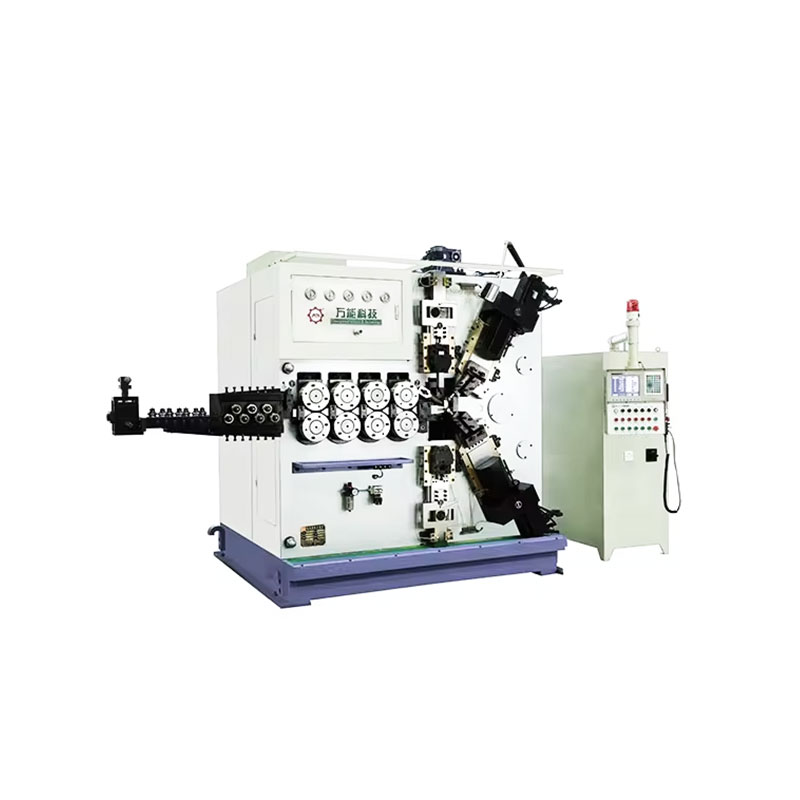
TK-6160 TK-6160 CNC SPRING ROLLING MACHINE...
See Details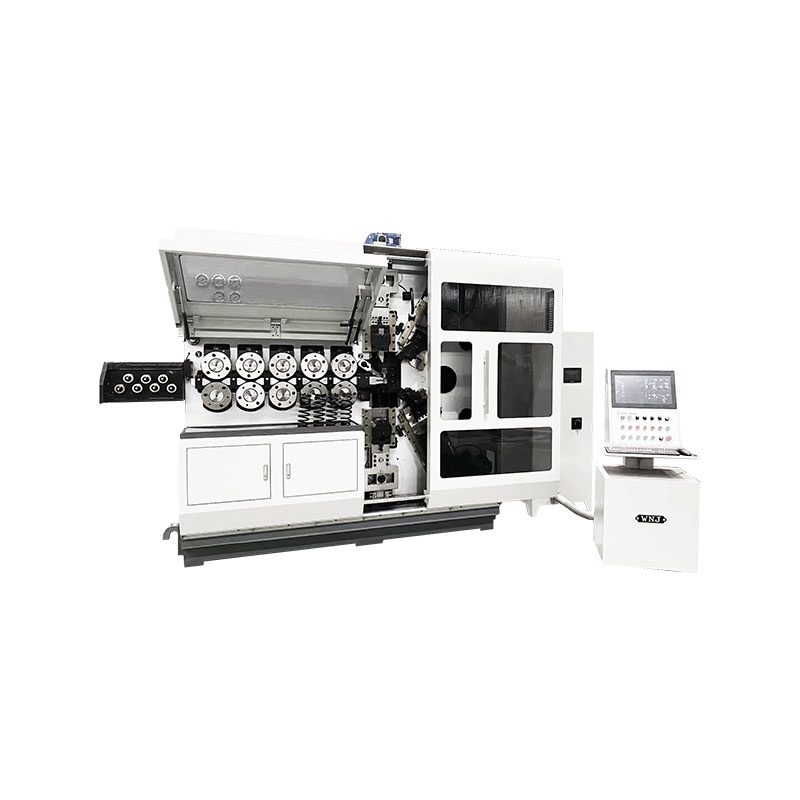
TK-6120 TK-6120 CNC SPRING ROLLING MACHINE...
See Details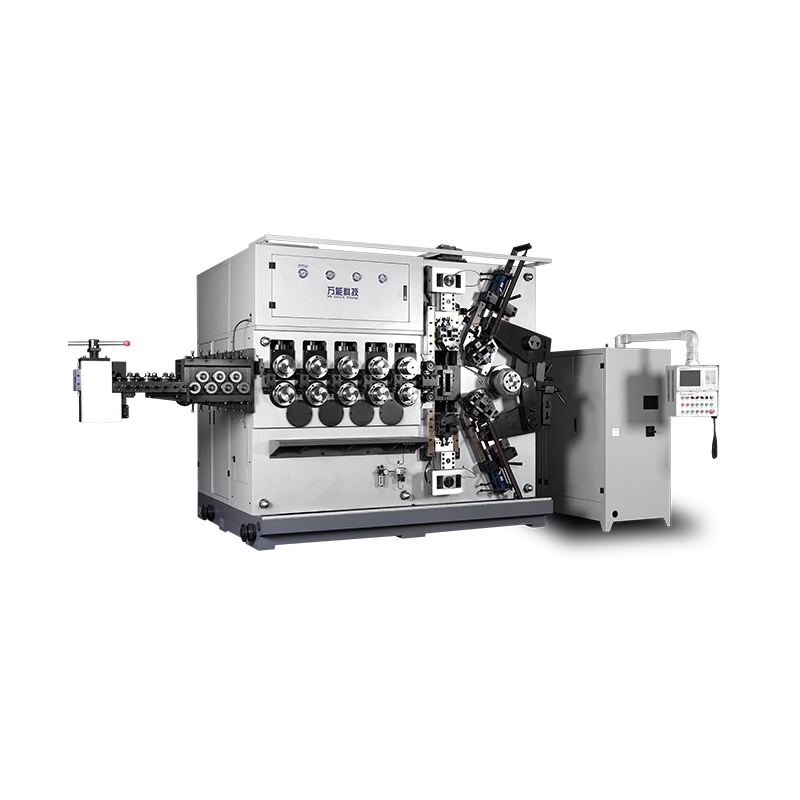
TK-5200 TK-5200 5AXES CNC SPRING COILING MACHINE...
See Details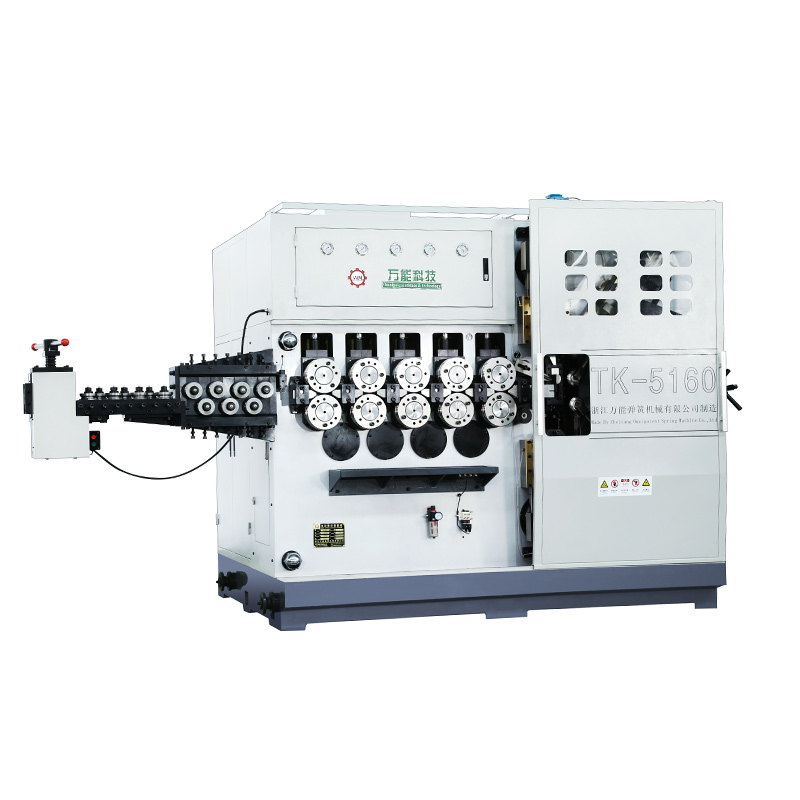
TK-5160 TK-5160 5AXES CNC SPRING COILING MACHINE...
See Details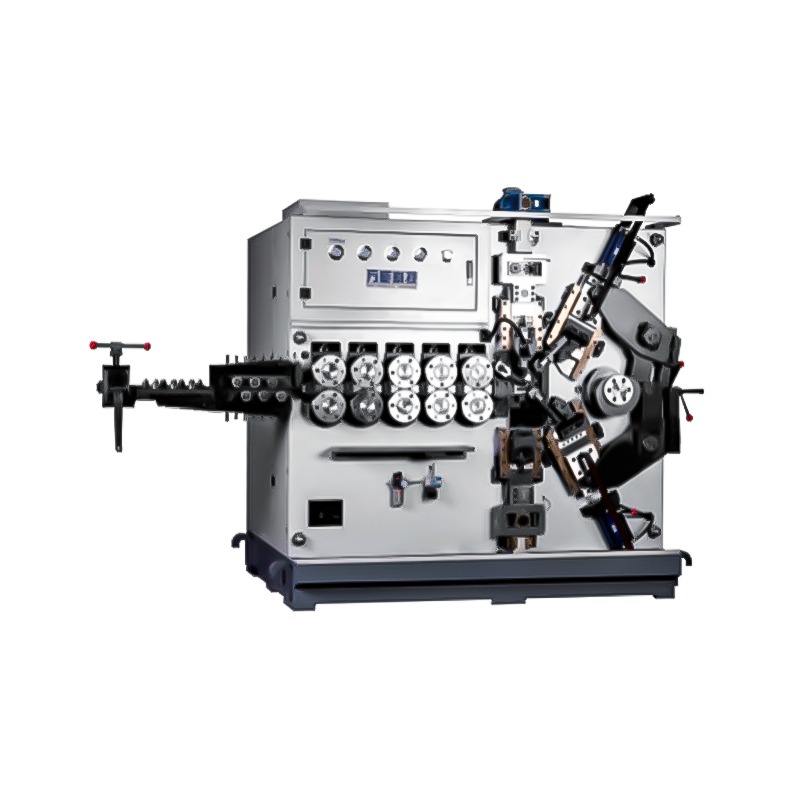
TK-5120 TK-5120 5AXES CNC SPRING COILING MACHINE...
See Details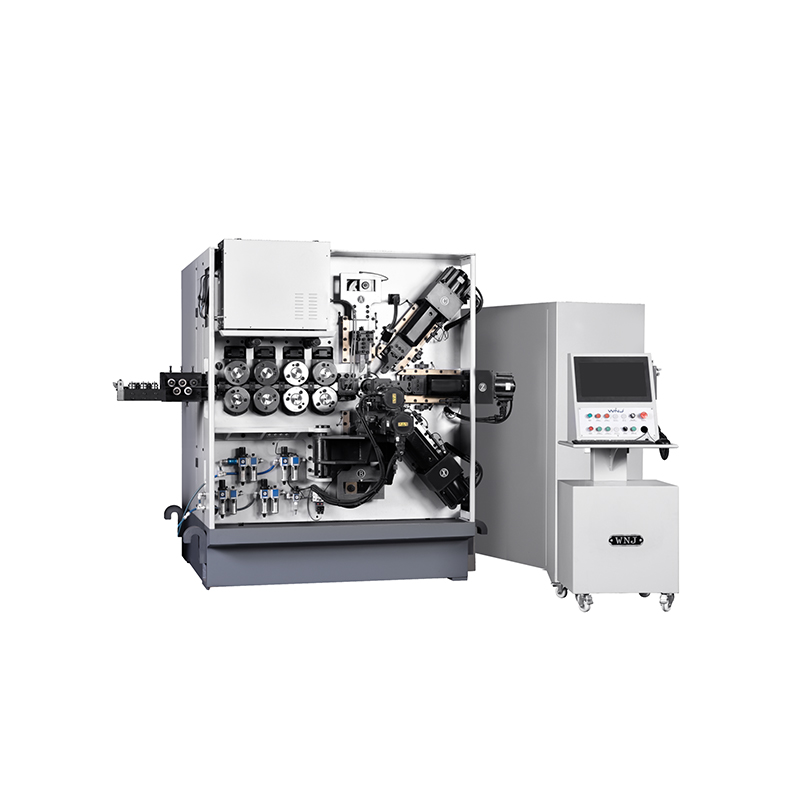
TK TK 10AXES CNC SPRING SCROLL MACHINE...
See Details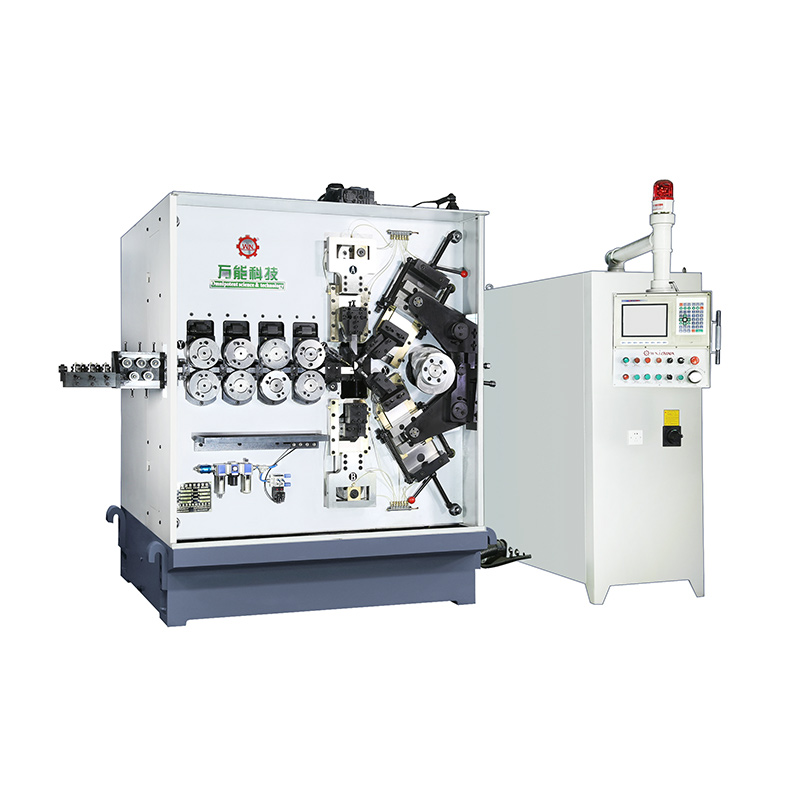
TK-580B、 TK-590 TK-580B、 TK-590 5AXES CNC SPRING COILING MACHINE...
See Details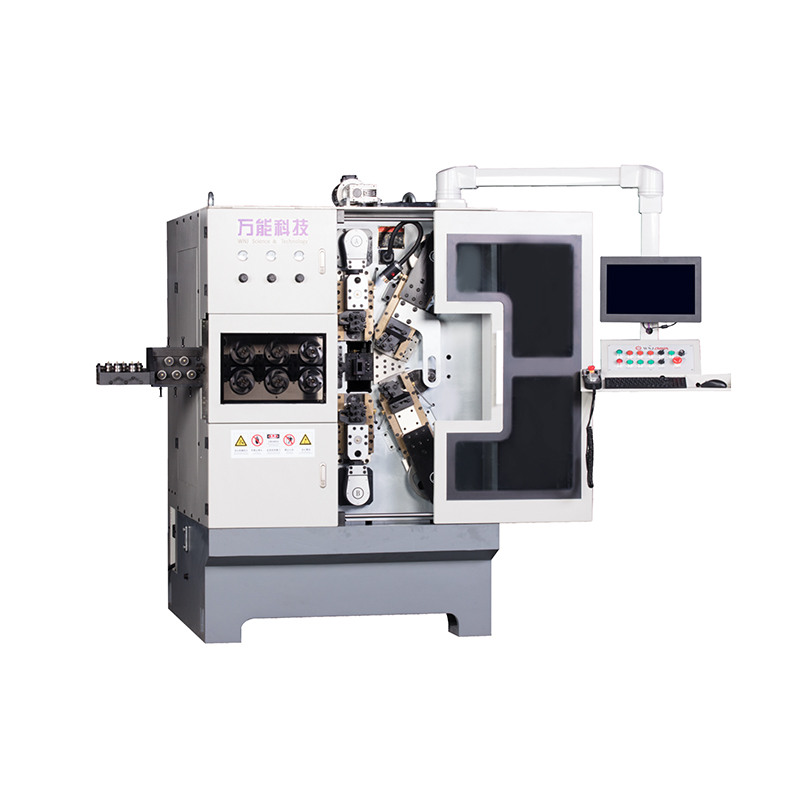
TK-760TK-760 6-7AXES CNC SPRING COILING MACHINE...
See DetailsMobile QR Code

 中文简体
中文简体 English
 русский
 Español