Language
Content
A helical spring is a wire wound into a continuous spiral coil that stores and releases mechanical energy. When you compress, stretch, or twist it, the spring deflects and stores energy. When the external force is removed, it returns to its original shape. This simple but powerful mechanism is the reason helical springs appear in everything from car suspensions to the tiny buttons on your smartphone.
The word "helical" describes the coil geometry itself. That spiral shape distributes stress along the full length of the wire, which means even a relatively thin wire can support a substantial load. If you take a typical compression spring with a 2 mm wire diameter and 25 mm outer diameter, it can easily handle hundreds of Newtons of force without deforming permanently. This efficiency is why the helical design has remained the most widely used spring format in modern engineering for over 150 years.
For manufacturers, the practical implication is straightforward: the way you wind the wire determines how the spring behaves. Pitch, coil count, wire diameter, and end configuration all directly affect how the spring performs in the field. Getting those parameters right during production depends on the spring making machine's precision.
Bottom line: A helical spring converts mechanical energy into elastic deformation and back, and the quality of that conversion is defined by how precisely it is manufactured.Before you select a manufacturing machine, you must clearly understand what type of helical spring you will be producing. The three core categories each demand different tooling, setup, and machine capabilities.
Compression springs resist an axial compressive force. The coils are spaced with air gaps between them so the spring can shorten when loaded. They represent the largest segment of the spring market and are produced in enormous volumes by CNC coilers. Common applications include automotive suspension systems, shock absorbers, engine valve springs, mattress cores, and industrial pneumatic equipment. A compression spring with free length 50 mm and wire diameter 2.5 mm might be designed to compress 20 mm before reaching its solid height, meaning it provides resistance across the entire deflection range.
Extension springs work in the opposite way: they resist a pulling force. The coils are normally wound tightly together with no air gap, and the spring stretches when loaded. The ends usually have hooks, loops, or threaded inserts for attachment. Extension springs appear in trampolines, garage door mechanisms, baby strollers, and tensioning systems for conveyor belts. Because the wire is under axial tension, the end hook failure is a common concern, which is exactly why precision forming tools matter in the coiling process.
A torsion spring resists rotational torque. The ends are positioned so they can be attached to components that rotate relative to each other. Torsion springs store energy when twisted and release it as rotational force. They are essential in clothespins, mouse traps, clock mechanisms, braking systems in vehicles, and electrical switches. The design parameters for torsion springs include leg length and angle, which typically require a CNC spring forming machine with multi-axis control to produce accurately.
The manufacturing process for a helical spring is highly deterministic. Every operation must happen in sequence, and any deviation in one stage directly affects spring quality. Below is a practical step-by-step view of what happens inside a spring making facility.
The raw wire comes from a spool and is fed through a straightening mechanism. The wire feeding system must maintain uniform tension. If the wire is fed with slippage or uneven pull, the resulting pitch will be inconsistent, which in turn shifts the spring rate. A well-maintained wire feeding unit ensures that the wire enters the forming area at a consistent speed and force.
This is the heart of the process. In a CNC spring coiling machine, the wire is guided around a mandrel or directly shaped by servo-driven tools. The pitch is set by the axial movement of the forming tools relative to the wire feed. For complex spring geometries, a multi-axis forming machine coordinates several servo movements simultaneously. This is where the axis count of the machine determines your production scope.
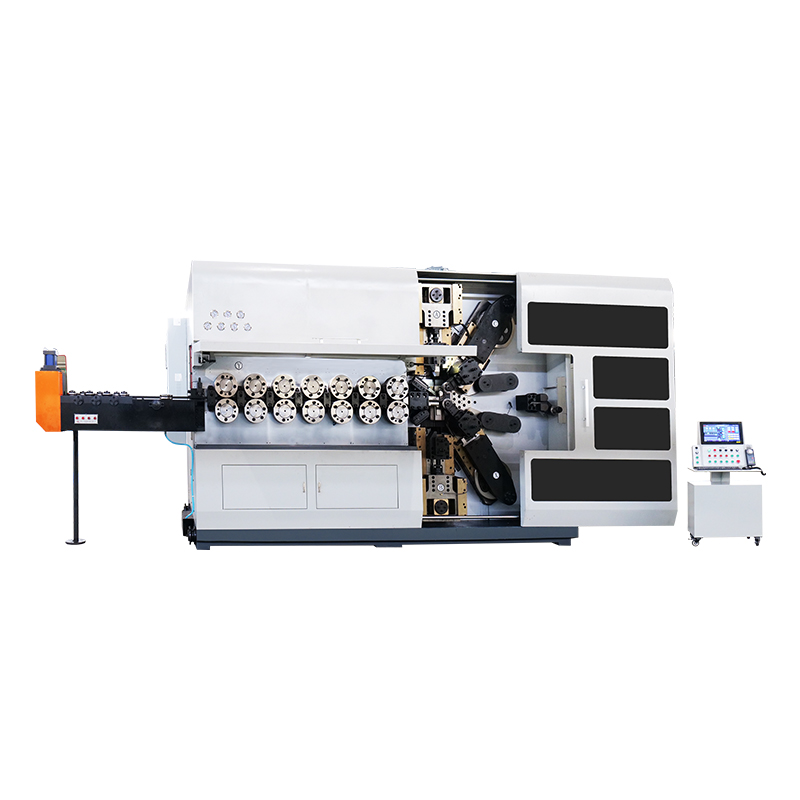
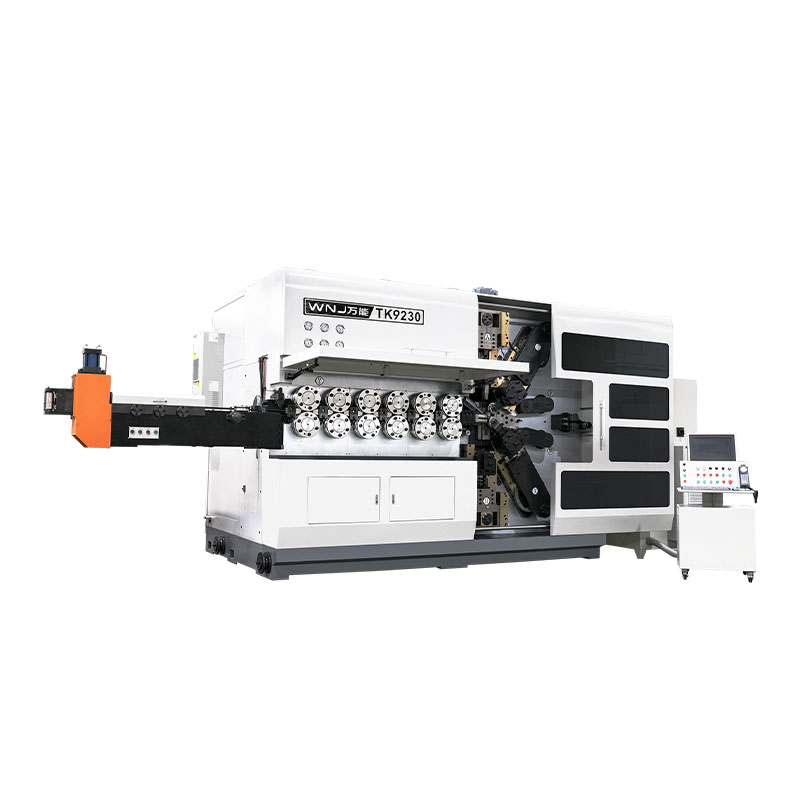 CNC Spring Coiling Machine with Multi-Axis OptionsThis machine series processes wire diameters from 0.3 to 8.0 mm and supports multiple axes for varied spring forms. Ideal for production requiring precise coiling and consistent heat treatment performance.View Product →
After coiling, most springs must be heat treated to relieve internal stresses and achieve the required mechanical properties. For carbon steel springs, austenitizing around 850°C followed by oil quenching and tempering at 350°C to 450°C is standard. The tempering furnace holds the spring at temperature for a precise duration. Improper heat treatment results in brittleness, premature fatigue failure, or inconsistent hardness across the batch.
Compression springs require flat, parallel ends. Spring grinding machines remove the material to create the end surfaces. For a high-precision spring, the flatness tolerance can be as low as 0.05 mm out of parallel. The grinding process also obtains a precise free length. Without a proper grinding machine, the spring may not seat correctly in an assembly.
Final operations include shot peening to improve fatigue life, coating for corrosion resistance, and dimensional inspection to verify specifications. Each spring may be inspected for free length, outer diameter, spring rate, and surface quality.
The material is the foundation of every spring. The correct material choice depends on the operating environment, load conditions, expected cycle life, and cost constraints. The table below compares the materials most commonly used in helical spring production.
| Material | Tensile Strength | Max Service Temp | Corrosion Resistance | Primary Applications |
|---|---|---|---|---|
| 65Mn Carbon Steel | 980-1080 MPa | 120°C | Low | General purpose industrial springs |
| 60Si2Mn Silicon Steel | 1275-1375 MPa | 200°C | Low | Heavy-duty automotive suspension springs |
| 304 Stainless | 515-675 MPa | 300°C | High | Medical devices, food processing, outdoor equipment |
| 316L Stainless | 485-620 MPa | 350°C | Very High | Chemical processing, marine, pharmaceutical |
| 17-7PH Precipitation Hardening | 1650-1900 MPa | 400°C | High | Aerospace components, high-performance machinery |
| Phosphor Bronze | 510-650 MPa | 100°C | Medium | Electrical contacts, connectors, switches |
From a production perspective, the harder the material, the greater the challenge for your coiling machine. High-tensile materials like 17-7PH require more forming force and more rigid machine components. If you plan to work with exotic alloys, choose a machine with sufficient servo torque and hardened tooling.
Every spring is defined by six core parameters. Understanding these is crucial whether you are designing a spring or configuring a machine to produce it. When one of these changes, other properties shift as well.
Wire Diameter (d)
The thickness of the wire. Doubling the wire diameter increases the spring rate by a factor of 16 because the rate equation depends on d^4. Small changes in wire diameter cause large changes in force.
Mean Coil Diameter (D)
The average diameter of the coil. The spring rate is inversely proportional to D^3, so a 10 percent increase in coil diameter reduces stiffness by nearly 27 percent.
Pitch (p)
The distance between adjacent coils. Pitch directly controls free space and maximum deflection. A larger pitch allows more travel before the spring reaches solid height.
Number of Active Coils (n)
The number of coils that actually deflect under load. Fewer active coils produce a stiffer spring; more active coils produce a softer spring.
Free Length (L0)
The length of the spring when no load is applied. Free length is set during coiling and is affected by the number of coils and the pitch.
Spring Rate (k)
The force required per unit of deflection. The formula for compression springs is k = Gd^4 / (8D^3n), where G is the shear modulus of the material.
For a production environment, the most critical insight is this: small changes in wire diameter cause exponential changes in spring rate. A wire supplier that provides material with ±0.02 mm variation can cause the spring rate to fluctuate by about 15 percent. This is why precision wire measurement and acceptance checks are mandatory.
The machine you choose determines not just what springs you can produce today, but what kinds of orders you can accept in the future. There are three primary machine types to consider, and they each serve a different production profile.
These are the workhorses of high-volume compression spring production. They operate at very high speeds and are typically configured with 3 to 7 axes. If your business focuses on standard compression springs in large quantities, a dedicated coil machine with automatic wire feeding offers the best cost per spring. Production speeds on modern machines can exceed 150 coils per minute depending on spring size.
A forming machine offers more versatility because it uses independently controlled axes to move multiple forming tools. A 5-axis forming machine can switch between compression, torsion, and extension springs without extensive re-tooling. It excels in medium runs and when the product mix is diverse. The wider range of motion allows you to create variable pitch springs, stepped springs, and springs with special end configurations.
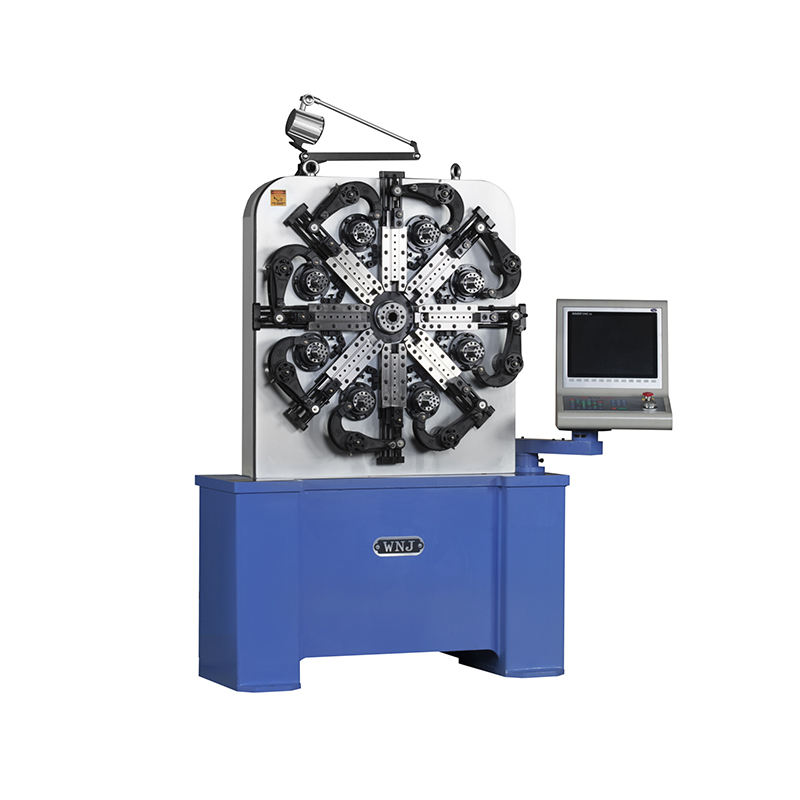 Versatile CNC Spring Forming Machine for Complex ShapesWith independently controlled axes, this forming machine handles diverse spring types without extensive re-tooling. Its flexibility suits medium runs and variable pitch or special end configurations.View Product →
Camless machines use servo-driven blades instead of mechanical cams. The setup time is substantially shorter because there are no physical cam profiles to fabricate or adjust. For small-batch production and frequent changeovers, camless machines save significant time. They are especially good for complex wire forms and spring geometries that would be difficult to achieve with conventional cams.
When you evaluate machines, consider the number of axes first. Each axis is an independently controlled servo motor. A 3-axis machine can produce basic compression springs. A 5-axis machine covers most standard spring types. A 10-axis machine provides maximum flexibility for intricate wire bending and very complex geometries. These differences in capability matter when your customers come back with a wider variety of spring specifications.
Before you commit to a machine, review the original equipment manufacturer's service record and spare parts availability. A well-built machine from a factory with consistent quality control will hold its setup longer. If you are in the market for a new spring machine, there is no better starting point than researching the detailed guidance on how to buy a good spring machine before striking a deal.
A realistic selection rule
High-volume, simple springs: coiling machine. Mixed products, medium runs: forming machine with 5 axes or more. Small lots, high variety: camless machine. Your decision should be driven by the order profile you expect a year from now, not just the work you have today.
Spring quality failures lead to rejected batches, lost production time, and damaged customer relationships. The most common quality issues come from three sources: material variation, machine misalignment, and inconsistent heat treatment.
A focused quality check routine catches these early. At the minimum, every batch should be checked for free length, outer diameter, and spring rate on a sampling basis. When running a critical application, consider 100 percent check of free length and tolerance dimension.
If you are experiencing quality problems in your existing spring operation, many of them trace back to machine setup rather than the machine itself. Understanding the common misunderstandings in spring machine use can help you identify and correct issues that silently erode throughput and quality.
Driving principle: consistency in the wire, tooling, and heat treatment produces springs that meet specification run after run.
Helical springs are everywhere. Understanding the specific demands of each industry helps you position your production capacity accurately.
The automotive sector is by far the largest consumer of helical springs. A single passenger vehicle can contain between 25 and 40 springs, including suspension springs, valve springs, clutch springs, and brake release springs. Suspension springs often use silicon-steel wire like 60Si2Mn because it offers high strength and excellent fatigue resistance. The tolerances are demanding: valve springs may require load variation of less than 5 percent across a batch.
Medical devices demand the highest reliability and cleanliness. Springs used in surgical instruments, infusion pumps, and orthopedic implants are often made from 316L stainless steel. They must have zero surface contamination and meet very small dimensional tolerances. A spring used in a portable insulin pump might have a wire diameter of only 0.3 mm, requiring a machine capable of precise handling of fine wire.
Aerospace springs operate under extreme conditions. They must maintain consistent performance from -50°C to +150°C and withstand high vibration. Materials like 17-7PH precipitation hardening stainless are common. Every spring used in flight-critical systems is usually tested for load at several points in its deflection range before assembly.
In connectors and switches, miniature torsion springs are used to maintain contact pressure. Phosphor bronze is common here because it offers good conductivity and corrosion resistance. These springs are very small, often with wire diameters below 0.5 mm, and require machines with excellent fine-wire handling capabilities.
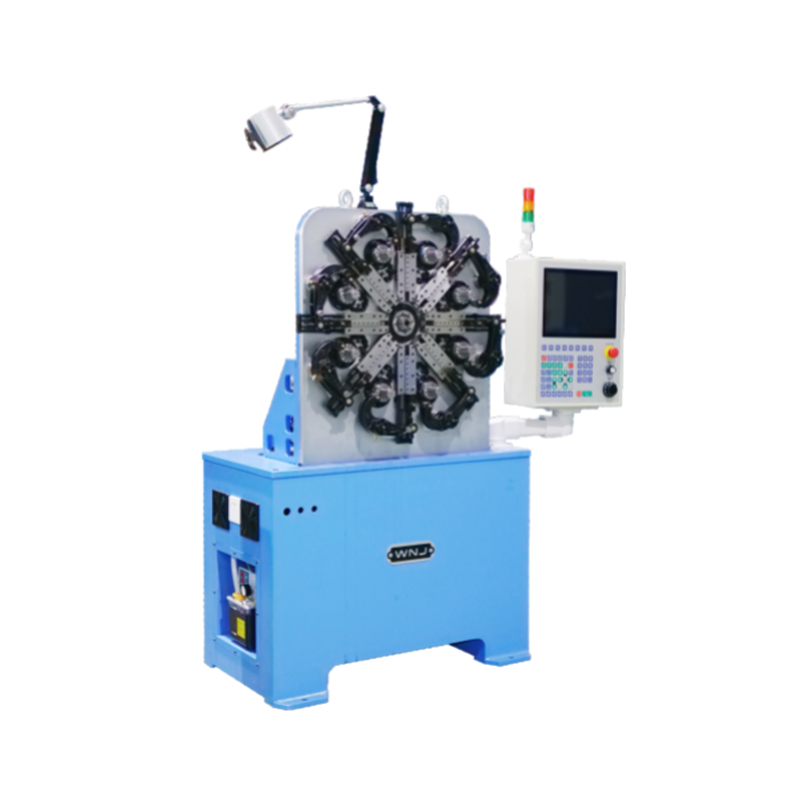 Precision 3-Axis Forming Machine for Miniature SpringsDesigned for fine wire handling, this CNC machine ensures accurate forming of small torsion springs used in electronics. It offers high axial resolution and stable performance for tight tolerances.View Product →
Each industry has its own certification and material requirements. Before taking on a new sector, verify that your machine can work with the required materials and meet the industry's typical tolerance band. If you produce springs for the electronics industry, a machine with high axial resolution and low thermal drift is a must.
Spring machines are precision equipment. The difference between a machine that runs reliably for ten years and one that needs frequent repairs comes down to maintenance discipline. Here is a practical maintenance schedule that keeps your production line healthy.
A small issue caught early costs a few minutes to fix. The same issue left undetected can lead to a multi-day shutdown and a rejected batch of springs. Your maintenance process should be systematic and documented. In many cases, keeping a simple log of tool wear and machine adjustments reveals patterns that predict failures before they happen.
How is the spring rate calculated for a helical compression spring?
The spring rate k is calculated using the formula k = G*d^4 / (8*D^3*n), where G is the shear modulus of the wire material, d is the wire diameter, D is the mean coil diameter, and n is the number of active coils. A shear modulus for carbon spring steel is approximately 79 GPa. This formula tells you exactly how force and deflection relate.
What is the difference between a cam-driven spring machine and a camless spring machine?
A cam-driven machine uses physically cut cam profiles to control tool movement, and changing the spring design means making new cams. A camless machine uses servo motors to control the tools directly, which allows parameter changes in the software instead of manufacturing new cams. Camless machines are much faster to set up and are ideal for small batches or frequent product changes.
Can a CNC spring machine automatically adjust the pitch of the spring during production?
Yes. Modern CNC machines can control the pitch in real time during the coiling process. The machine's servo axes programmatically change the relative feed speed to create variable pitch springs. Auto-correction features can monitor the spring dimensions during the run and adjust parameters automatically to maintain the target tolerance.
What causes spring failure under repeated loading?
Fatigue failure is the most common cause. It results from crack initiation at a surface defect or stress concentration point, then gradual crack growth until failure. Common contributors include surface scratches from coiling, insufficient shot peening, and overly high stress during operation. The design should limit the working stress to a safe proportion of the material's ultimate tensile strength.
How do I choose the wire diameter for a helical spring?
Wire diameter selection depends on the required spring force, the allowable stress, and the space available. As a starting point, the shear stress under maximum load should remain below 50-60 percent of the material's ultimate tensile strength for static applications, and less for cyclic loading. Standard wire size tables can then be used to pick the nearest available gauge that meets the requirement.
Is a spring tempering furnace necessary for all helical springs?
Most cold-coiled springs benefit from a low-temperature heat treatment to relieve residual stresses after forming. Springs made from hard-drawn wire or stainless steel can be used without tempering in low-stress applications. However, high-strength springs, especially those used in automotive or aerospace, usually require a controlled tempering process to achieve the required mechanical properties and prevent premature failure.
How many axes do I need on a CNC spring forming machine?
For basic compression springs, 3 axes is sufficient. For most common spring types including extension and simple torsion, 5 axes gives you enough freedom. When producing complex wire forms or springs with varying pitch, 10 axes or more offers the greatest flexibility. The axis count directly relates to the complexity of the springs you can produce without changing tooling.
Producing high-quality helical springs is a systems challenge. The material supplier, the machine, the tooling, the heat treatment process, and the inspection protocols all need to work together. The machine is not the only factor, but it is the factor that gives you the greatest control over spring geometry and consistency.
The right machine for your business depends on production volume, product range, and the materials you intend to process. Dedicated coiling machines excel at high volume and simple geometry. Multi-axis forming machines provide the versatility to take on a wider array of jobs. Camless machines minimize setup time for high-mix, low-volume production.
Whatever path you take, invest in the maintenance routine. A disciplined check schedule, consistent lubrication, and proactive tool replacement pay for themselves in reduced downtime and improved spring quality. The spring industry rewards manufacturers who focus on consistency, accuracy, and long-term reliability.
If you are expanding your capabilities or upgrading existing equipment, build a clear picture of your target spring types and volumes first. The machine that earns its keep is the one that matches your actual production reality, not the one with the longest feature list.
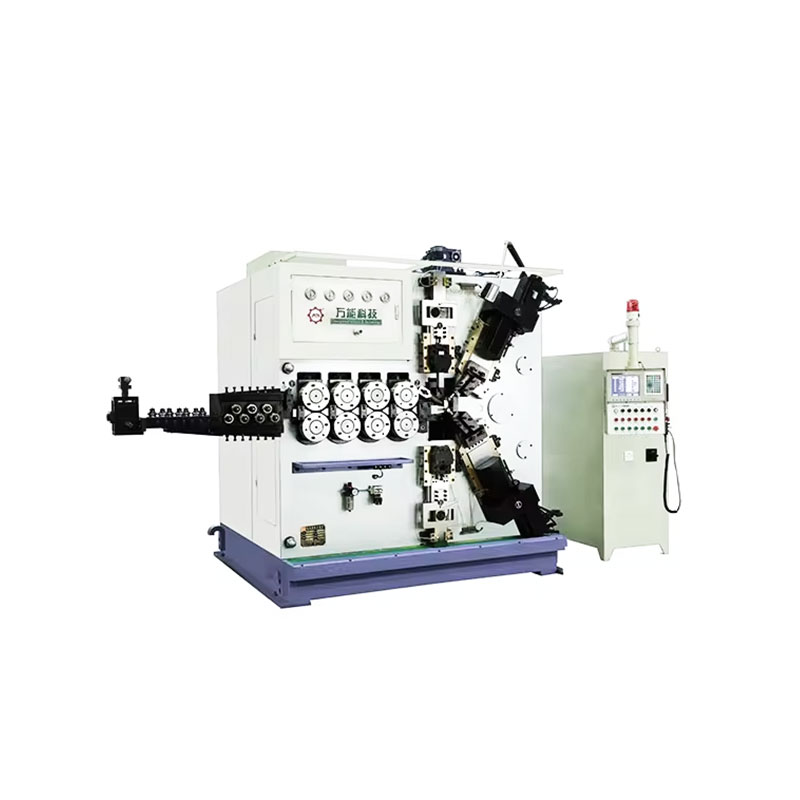
TK-6160 TK-6160 CNC SPRING ROLLING MACHINE...
See Details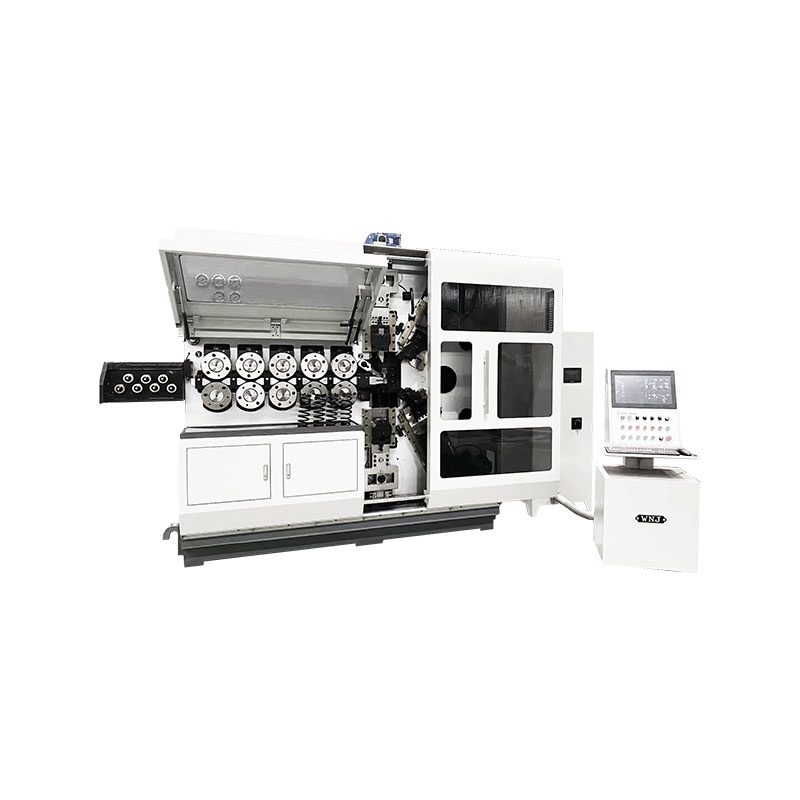
TK-6120 TK-6120 CNC SPRING ROLLING MACHINE...
See Details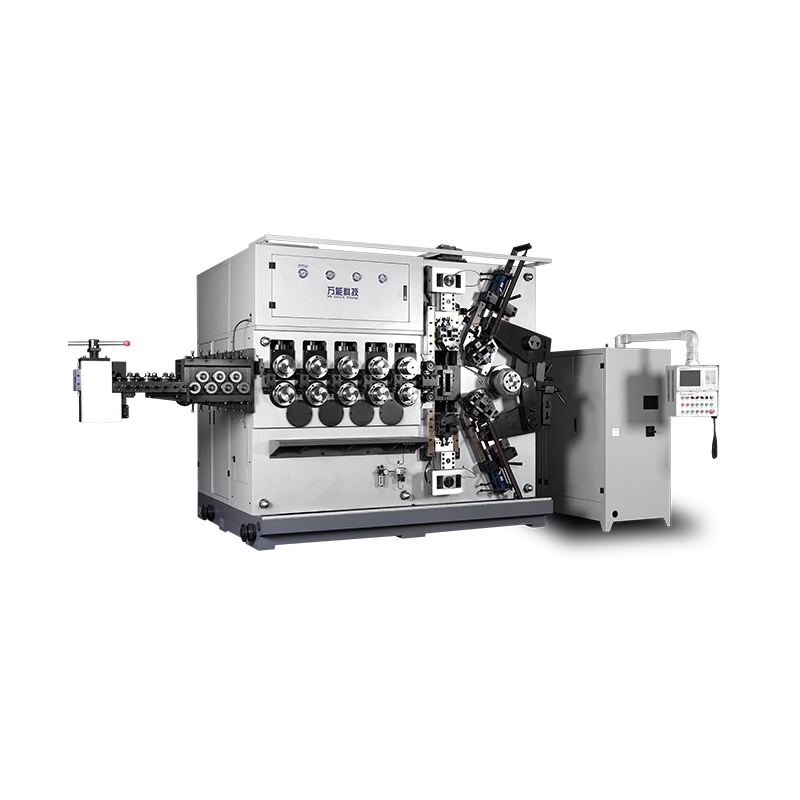
TK-5200 TK-5200 5AXES CNC SPRING COILING MACHINE...
See Details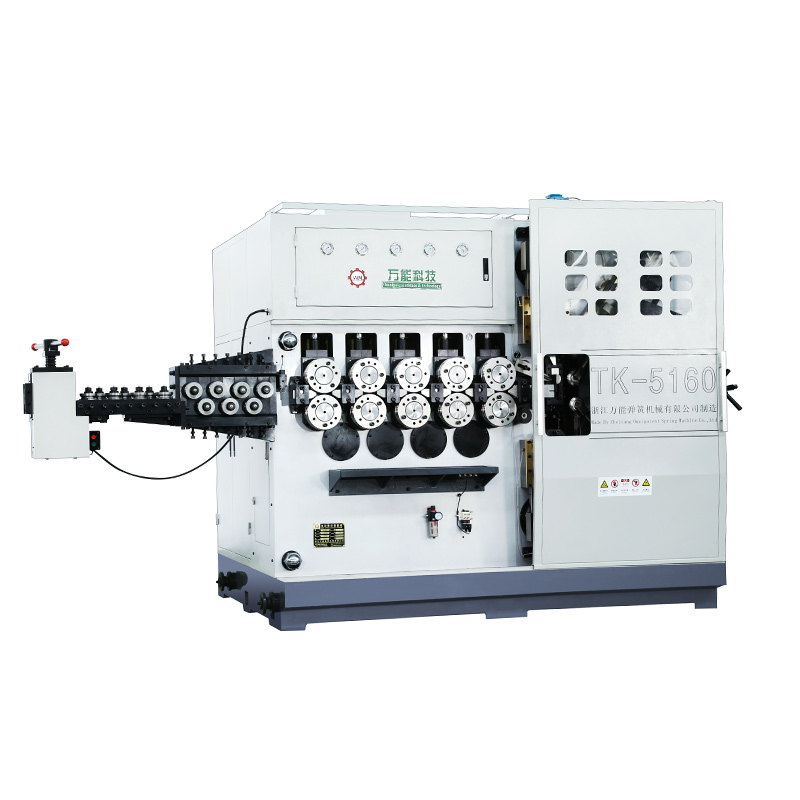
TK-5160 TK-5160 5AXES CNC SPRING COILING MACHINE...
See Details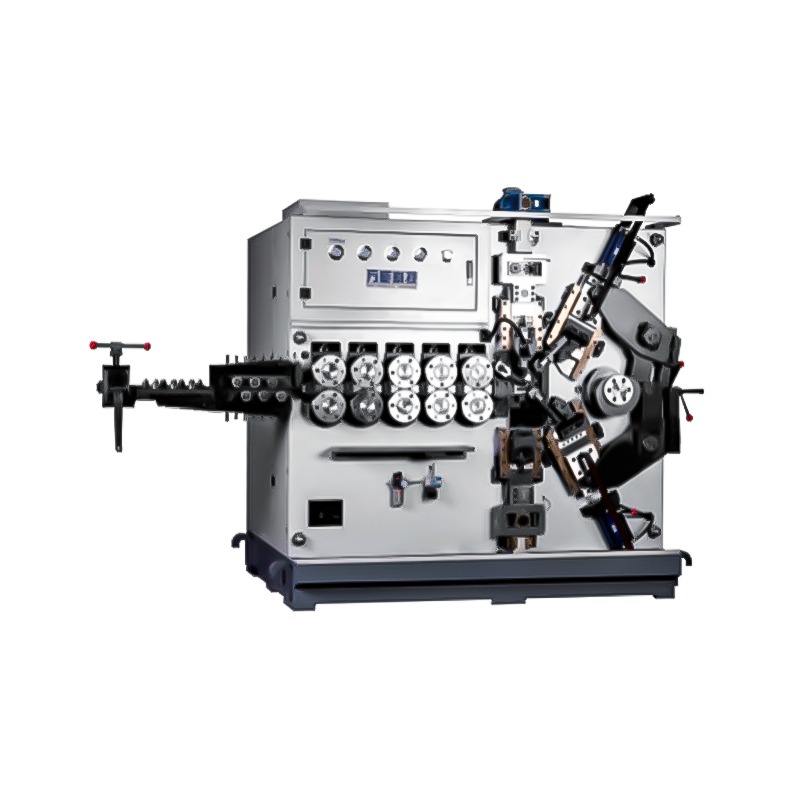
TK-5120 TK-5120 5AXES CNC SPRING COILING MACHINE...
See Details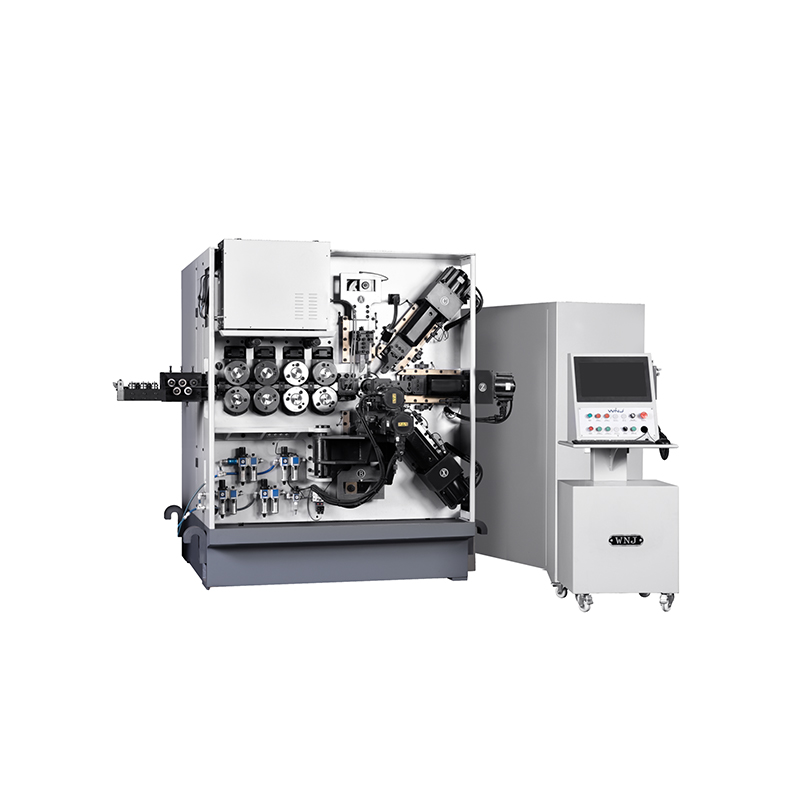
TK TK 10AXES CNC SPRING SCROLL MACHINE...
See Details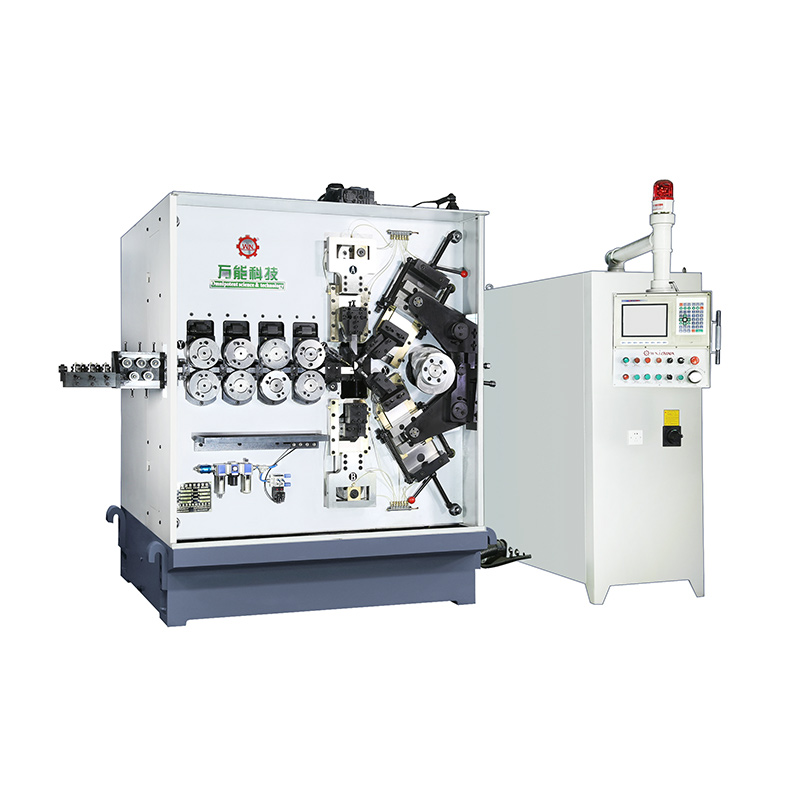
TK-580B、 TK-590 TK-580B、 TK-590 5AXES CNC SPRING COILING MACHINE...
See Details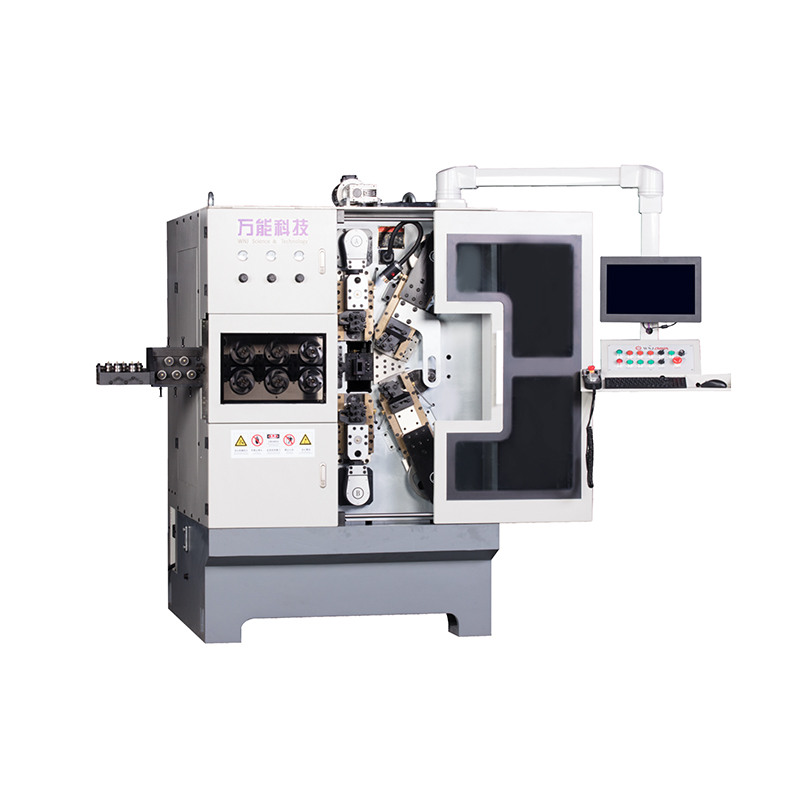
TK-760TK-760 6-7AXES CNC SPRING COILING MACHINE...
See DetailsMobile QR Code

 中文简体
中文简体 English
 русский
 Español