Language
Content
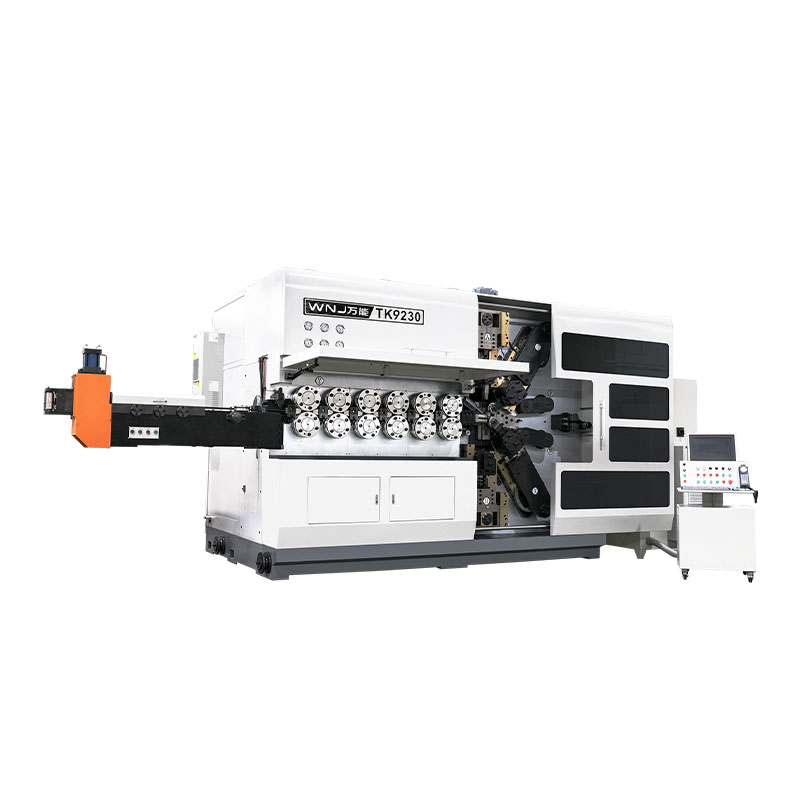
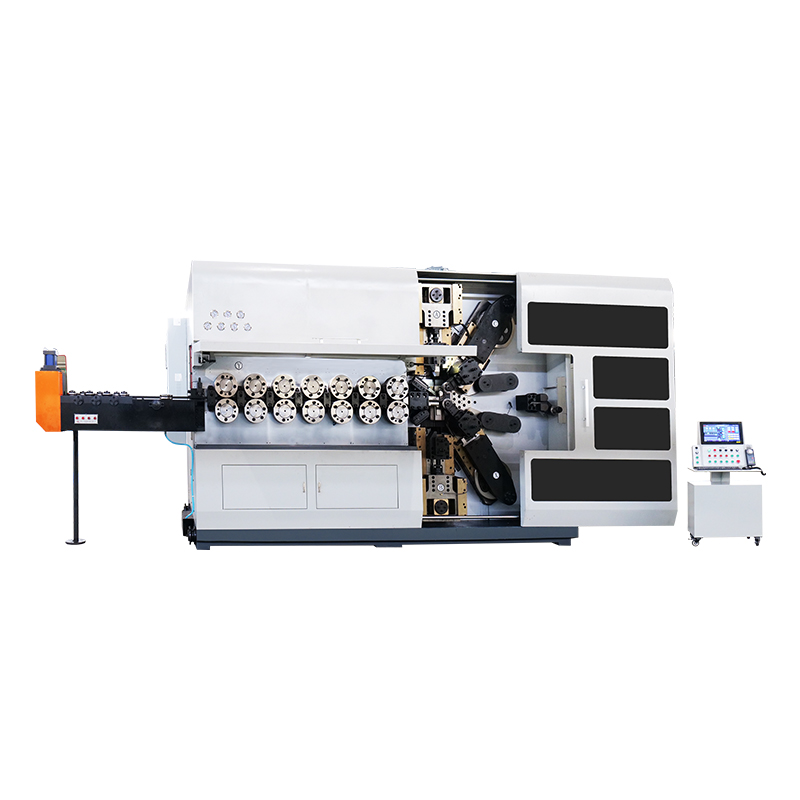
A CNC wire forming machine is a computer-controlled system that bends, cuts, and shapes metal wire into precise geometries — from simple hooks to complex 3D forms — without manual repositioning or tooling changes between cycles. The core advantage is repeatability: a properly programmed CNC wire forming machine can hold dimensional tolerances within ±0.05 mm across thousands of parts per shift, something that is essentially impossible to achieve by hand or on older cam-driven equipment.
For manufacturers sourcing spring and wire-form components, the distinction matters enormously. A CNC spring forming machine — a specialized variant of wire forming equipment — can produce compression springs, torsion springs, extension springs, and custom coil profiles from the same wire spool by simply loading a new program. Setup time drops from hours to minutes. Scrap rates, which on legacy equipment commonly run 3–8% during changeovers, fall to under 1% on modern CNC platforms because the machine self-corrects via closed-loop feedback.
This article explains how these machines work, what separates entry-level from industrial-grade systems, how to match machine specifications to your wire diameter and production volume, and what to look for when evaluating a supplier or building in-house capacity.
At a mechanical level, a CNC wire forming machine feeds wire from a coil through a straightener, then into a forming head equipped with multiple bending tools arranged radially. A servo-driven feed mechanism advances the wire in precise increments while individual servo axes rotate or extend the bending tools to create each bend angle in sequence. The entire motion profile — feed length, bend angle, rotation speed, dwell time — is stored as a CNC program that runs identically every cycle.
Entry-level machines typically operate on 2–4 axes. Mid-range equipment runs 6–8 axes and can produce flat wire forms with multiple bends in a single pass. High-end systems reach 12 or more axes and can execute full 3D wire forms — helical shapes, spatial curves, multi-plane bends — without operator intervention. Each additional axis adds capital cost but reduces the number of secondary operations needed downstream.
Traditional wire forming machines used a rotating cam shaft to drive tool motion. Cam profiles were physically machined for each part, making changeover slow and inflexible. CNC wire forming machines replace cams with independent servo motors on each axis. The result: changing a part program takes under five minutes, and the same machine can run 200 different part numbers in a single week without retooling. Servo systems also allow the controller to detect wire springback and compensate automatically — a significant advantage when forming high-carbon steel or stainless wire where material batch variation affects the final angle.
Premium CNC wire forming machines incorporate inline measurement — laser sensors, vision systems, or contact gauges — that measure the finished part before it exits the machine. If a dimension drifts outside tolerance, the controller adjusts the corresponding axis offset immediately. This closed-loop approach is what allows lights-out production runs overnight without a dedicated operator watching every cycle.
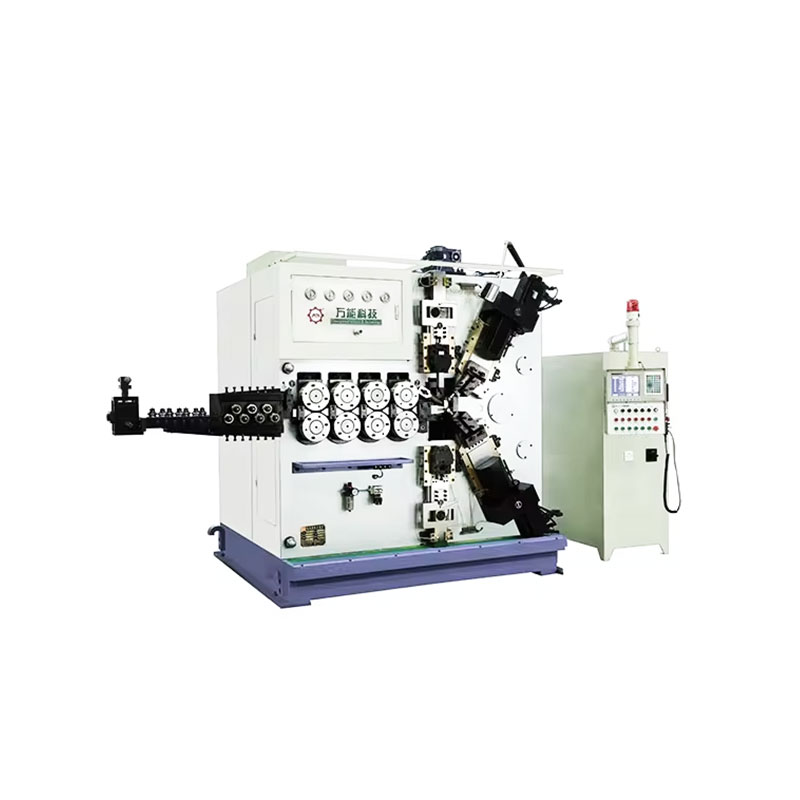
The market segments into several distinct machine categories, each optimized for different wire gauges, geometries, and production environments. Understanding the differences prevents a common and expensive mistake: buying a machine rated for the wrong wire diameter range.
| Machine Type | Wire Diameter Range | Typical Axis Count | Best Application | Approximate Cycle Rate |
|---|---|---|---|---|
| CNC compression spring machine | 0.1 – 6 mm | 4 – 6 | High-volume coil springs | Up to 300 pcs/min |
| CNC torsion spring machine | 0.2 – 8 mm | 6 – 8 | Torsion springs with angled legs | 20 – 80 pcs/min |
| Universal CNC spring forming machine | 0.1 – 12 mm | 8 – 12 | Mixed spring types, frequent changeover | 15 – 120 pcs/min |
| CNC wire bending machine | 1 – 20 mm | 4 – 10 | Shaped wire forms, brackets, frames | 5 – 60 pcs/min |
| 3D CNC wire forming machine | 0.5 – 16 mm | 10 – 16+ | Complex spatial wire assemblies | 2 – 30 pcs/min |
These are the workhorses of the spring industry. A dedicated CNC spring forming machine for compression springs uses a pitch tool and two or more forming rolls to coil wire continuously. Modern machines can switch from one spring OD to another in under 15 minutes by adjusting servo parameters — no physical tooling swap required for moderate diameter changes. Production rates of 150–300 pieces per minute are standard for small-diameter wire (under 2 mm).
For manufacturers who need flexibility above raw throughput, a universal CNC spring forming machine handles compression, extension, and torsion springs plus shaped wire forms. The trade-off is that cycle rates are lower than single-purpose machines, and the initial investment is higher — typically 40–80% more than a dedicated compression spring machine of equivalent wire range. However, the ability to respond to varied customer orders without buying multiple machines often makes the economics favorable for job shops and contract manufacturers.
A full 3D CNC wire forming machine can rotate the forming head or the wire itself between bends, creating forms with compound angles and spatial curves that flat-bending machines cannot produce. These are used in automotive wire harness supports, medical device components, and furniture frames. Some 3D systems integrate welding or assembly operations inline, which further reduces manual handling.
Choosing the wrong machine based on headline numbers — maximum wire diameter, maximum axis count — is one of the most common procurement errors. These specifications need to be evaluated together, not in isolation.
Every CNC wire forming machine specifies a minimum and maximum wire diameter, but the usable range is narrower than the published figures suggest. A machine rated for 0.3–8 mm will typically perform best in the 1–6 mm range. At the extremes, forming forces increase dramatically and the machine may not maintain stated tolerances. Verify the machine's rated capacity for the specific material you intend to run: stainless steel requires 30–50% more forming force than mild steel at the same diameter, and high-carbon spring steel requires more still. Always confirm the machine's force ratings with the material grade, not just the wire gauge.
Feed speed (in meters per minute) combined with the part's wire length determines the theoretical maximum production rate. A machine with a 60 m/min feed speed producing a part requiring 0.5 m of wire can theoretically run 120 parts per minute — but only if the bending cycle time is shorter than the feed time. For complex parts with many bends, the bending cycle becomes the bottleneck, and feed speed is largely irrelevant. Request cycle time data for a representative part from your actual part library, not a simple benchmark part used for marketing purposes.
These are not the same measurement. Accuracy describes how close a single output is to the programmed dimension. Repeatability describes how consistently the machine produces the same output across thousands of cycles. For most industrial wire forming applications, repeatability is more important than absolute accuracy, because parts are measured against each other rather than against an absolute standard. Leading CNC wire forming machines achieve ±0.05 mm repeatability on bend length and ±0.3° on bend angle under controlled conditions. Ask for data across a full production run, not a capability study conducted under ideal conditions.
The CNC controller is the machine's brain, and the quality of the programming interface directly affects changeover time, operator skill requirements, and the ability to store and retrieve programs efficiently. Look for controllers that offer graphical simulation — the ability to preview the full wire form motion on screen before running a physical part. This feature alone can cut programming time by 50–70% for complex parts. Confirm that the controller can store a sufficient number of programs (500+ for job shops) and that programs can be backed up to an external server or cloud system.
A straightener that cannot remove coil set from the wire spool will introduce dimensional errors that no amount of servo compensation can correct. High-quality CNC wire forming machines include multi-roller straighteners with independently adjustable rollers for each axis of curvature. For stainless or high-carbon wire, a straightener with hardened rollers and a roller diameter at least 10x the wire diameter is the minimum acceptable specification.
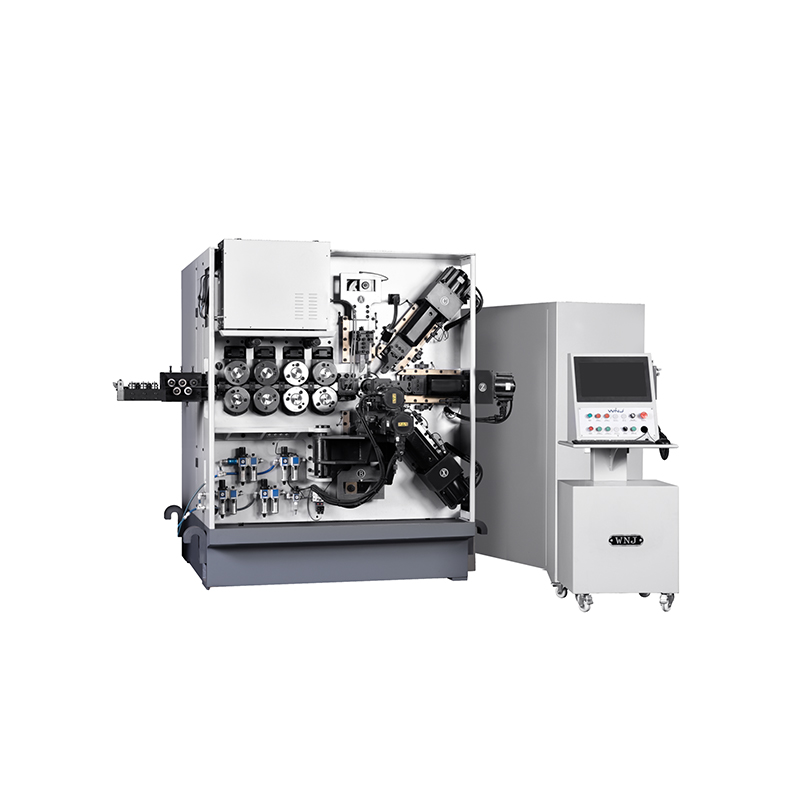
The range of materials that modern CNC wire forming machines can handle has expanded significantly over the past decade, driven by demand from medical, aerospace, and electronics sectors.
The output of CNC wire forming and spring forming machines is embedded in virtually every product category that involves mechanical function. Understanding the application demands in each sector helps explain why machine specifications vary so widely.
A single passenger vehicle contains 300–1,200 individual spring and wire-form components, covering everything from valve springs in the engine to seat recline mechanisms to door check springs. Electric vehicles have different spring requirements than combustion vehicles — fewer valve springs but more suspension travel springs and battery management components — which is shifting demand toward larger-diameter wire and longer free lengths. Automotive Tier 1 suppliers typically operate high-volume dedicated CNC spring forming machines running at 100+ pieces per minute with automated sorting and packaging lines.
The medical sector demands the tightest tolerances and most demanding material specifications of any CNC wire forming application. Surgical clips, guidewires, bone anchors, and stent scaffolds may require tolerances of ±0.02 mm or better, with 100% dimensional inspection of every part. The CNC wire forming machine used for medical parts must be capable of processing nitinol, MP35N, and other specialty alloys, and the manufacturing environment must meet cleanroom standards. Production volumes are relatively low but part values are high — unit prices in the range of $5–$500 per wire form are common depending on complexity and material.
Fine wire forming at diameters below 0.5 mm requires a specialized CNC wire forming machine with micro-scale forming tools, high-speed feed systems, and vision-based inline inspection. Contact springs for connectors, antenna elements, and shield clips are produced in this way. Tolerances are extreme: a connector contact spring may have a free length tolerance of ±0.1 mm and a spring force specification within ±10 grams — requirements that only CNC-controlled equipment can reliably achieve at volume.
Return springs, detent springs, retaining clips, and wire guides for industrial machinery are generally produced in medium volumes with moderately tight tolerances. This sector is where universal CNC spring forming machines are most commonly deployed, because the variety of parts needed for one production line can span multiple spring types and wire diameters.
Springs and wire forms in consumer products must meet cost targets that industrial or medical parts do not face. High-volume CNC spring forming machines running at 150–300 pieces per minute are the norm here. Material is typically carbon steel or light stainless, tolerances are moderate (±0.1–0.3 mm), and the competitive advantage comes from machine utilization and raw material cost rather than technical complexity.
Programming a CNC wire forming machine is fundamentally different from programming a machining center. There is no standard G-code for wire forming — each machine builder uses a proprietary programming language or graphical interface, and programs are not portable between brands without conversion. This is one of the most underappreciated factors when selecting a machine platform.
Modern controllers offer graphical programming environments where the operator defines the wire form geometry visually — specifying bend angles, bend radii, feed lengths, and tool assignments on a screen representation of the finished part. The controller then generates the servo motion profile automatically. This approach reduces programming time for simple-to-medium parts to 20–60 minutes. Text-based programming (entering numerical values directly) is faster for experienced programmers modifying an existing program but has a steeper learning curve for new operators.
Metal wire springs back elastically after each bending operation. A 90° programmed bend in 2 mm stainless wire may produce only an 82–85° actual bend if springback is not compensated. CNC wire forming machines address this in two ways: the programmer manually enters overbend values based on material data and experience, or the machine uses an adaptive system that measures the first part, calculates the required correction, and updates the program automatically. Adaptive compensation systems reduce the number of sample parts needed during setup from 10–20 to 2–5, which is significant when running expensive materials.
Some CNC wire forming machine platforms now offer offline simulation software that models the full forming process on a computer before any physical wire is consumed. The simulation predicts forming forces, identifies potential tool collisions, and estimates springback based on material input data. For complex 3D wire forms, offline simulation can save hours of physical setup time and dozens of meters of expensive wire during the programming phase.
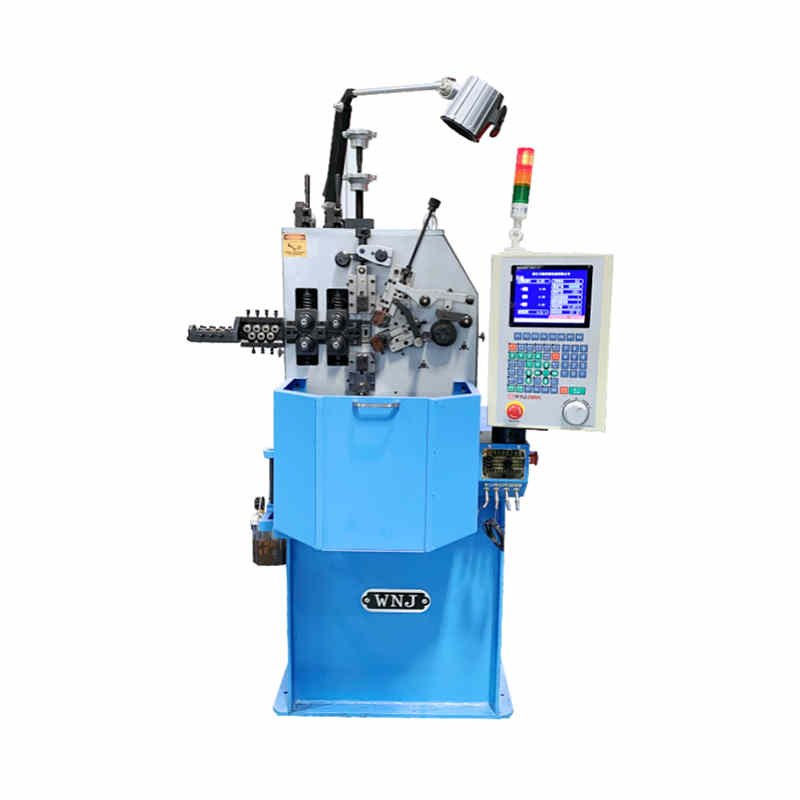
A CNC wire forming machine operating at 100 pieces per minute runs approximately 6 million cycles per month. At this intensity, maintenance discipline directly determines machine uptime and dimensional consistency. Neglected maintenance on a wire forming machine does not typically cause catastrophic failure — instead, it causes gradual dimensional drift that may go unnoticed until customer complaints arrive.
The most frequent cause of dimensional drift in CNC wire forming machines is not electronic failure — it is mechanical wear in the forming tools and feed rolls. A feed roll that has worn from its nominal diameter by 0.05 mm will introduce a cumulative feed error that compounds across each bend, causing the finished part to be shorter than programmed. Regular measurement of feed roll diameter and replacement at a defined wear limit (typically 0.1 mm under nominal) prevents this failure mode entirely.
The CNC wire forming machine market has seen consistent technical advancement over the past five years, driven by automation requirements, material diversity, and the need for tighter quality documentation in regulated industries.
Standalone CNC wire forming machines increasingly ship with integrated part handling — conveyors, vibratory bowls, and robotic transfer arms that move finished parts directly to inspection stations or packaging equipment. For high-volume applications, fully automated cells eliminate all manual handling between the wire coil and the finished packaged part. The investment is higher, but labor cost per part drops by 60–80% compared to manual collection and sorting.
Modern CNC wire forming machines can output production data — cycle count, rejection rate, dimensional measurement results, machine uptime — in real time via OPC-UA or similar industrial communication protocols. This data feeds directly into Manufacturing Execution Systems (MES), allowing production managers to monitor wire forming output alongside other manufacturing processes on a single dashboard. For customers requiring statistical process control (SPC) documentation, this capability is becoming a standard requirement rather than a premium feature.
The latest generation of servo drives used in CNC spring forming machines provides position resolution below 0.001 mm and response times under 1 millisecond. This enables forming speeds that were not achievable five years ago while maintaining equivalent dimensional accuracy. Some manufacturers report throughput improvements of 25–35% from upgrading servo drives on existing machines without replacing the mechanical structure.
Machine builders are increasingly engineering CNC wire forming systems specifically for high-strength alloys and superelastic materials. Specialized forming head designs with higher stiffness and better thermal management allow consistent processing of Inconel, titanium, and nitinol at production rates that were previously only achievable with hand-loaded semi-automated equipment.
A CNC spring forming machine is a specific type of CNC wire forming machine optimized for producing springs — primarily compression, extension, and torsion springs — from coiled wire. A CNC wire forming machine is a broader category that includes spring forming but also covers flat wire forms, shaped brackets, clips, and other non-spring geometries. Many manufacturers use the terms interchangeably for universal machines that handle both functions.
For a program that is already stored in the controller and uses the same wire diameter, changeover on a modern CNC wire forming machine typically takes 5–15 minutes — primarily time to verify the first part and confirm dimensions. If a wire diameter change is also required, add 15–30 minutes to change and thread the new wire and adjust the straightener. Physical tooling changes (for parts requiring specialized forming geometry) can add 30–90 minutes.
Wire diameter capability varies widely by machine model. Entry-level CNC spring forming machines typically handle 0.1–4 mm. Mid-range machines cover 0.3–8 mm. Large-capacity machines extend to 16 mm or beyond for industrial springs. The practical rule is that a single machine performs best across a range of approximately 10:1 — so a machine rated for 0.5–5 mm will produce better results in that range than a machine nominally rated 0.1–16 mm but physically sized for the larger end.
Yes, but not all machines are equally suited. Stainless steel, particularly harder grades like 17-7PH, requires significantly higher forming forces than mild steel at the same diameter. Confirm that the machine's rated forming force and torque specifications provide at least 30–40% headroom above the calculated forming force for your specific stainless grade and wire diameter. Also verify that the straightener and feed roll materials are appropriate for stainless — standard steel rollers wear rapidly when running stainless wire continuously.
Standard CNC spring forming machines produce forms in a single plane or in a helical coil geometry. True 3D wire forms — with bends in multiple planes — require a machine with a rotating forming head or wire rotation capability. Some manufacturers offer an optional rotary axis attachment for their standard CNC spring forming machines that adds partial 3D capability, though the range of achievable geometries is narrower than a purpose-built 3D system.
The break-even calculation depends on part complexity, material cost, and required tolerances, but as a general guideline: if you are purchasing more than 50,000–100,000 wire-formed parts per year of a consistent design, the economics of in-house CNC wire forming typically favor the capital investment. Below that volume, outsourcing to a contract spring manufacturer with existing CNC equipment is usually more cost-effective. This threshold drops significantly if your parts require tight tolerances, specialty materials, or short lead times that contract manufacturers struggle to accommodate reliably.
TK-6160 TK-6160 CNC SPRING ROLLING MACHINE...
See Details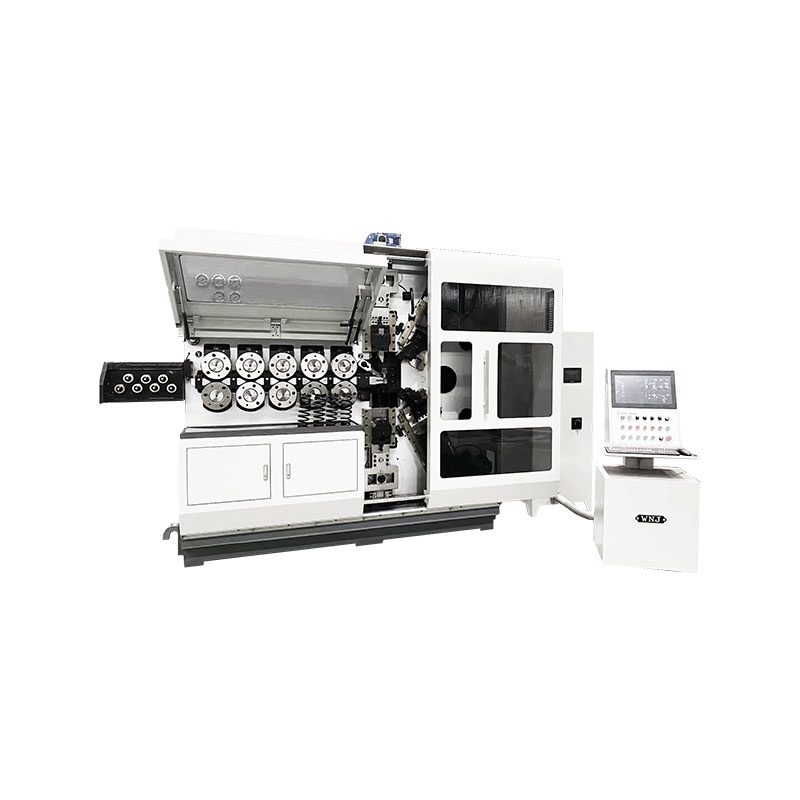
TK-6120 TK-6120 CNC SPRING ROLLING MACHINE...
See Details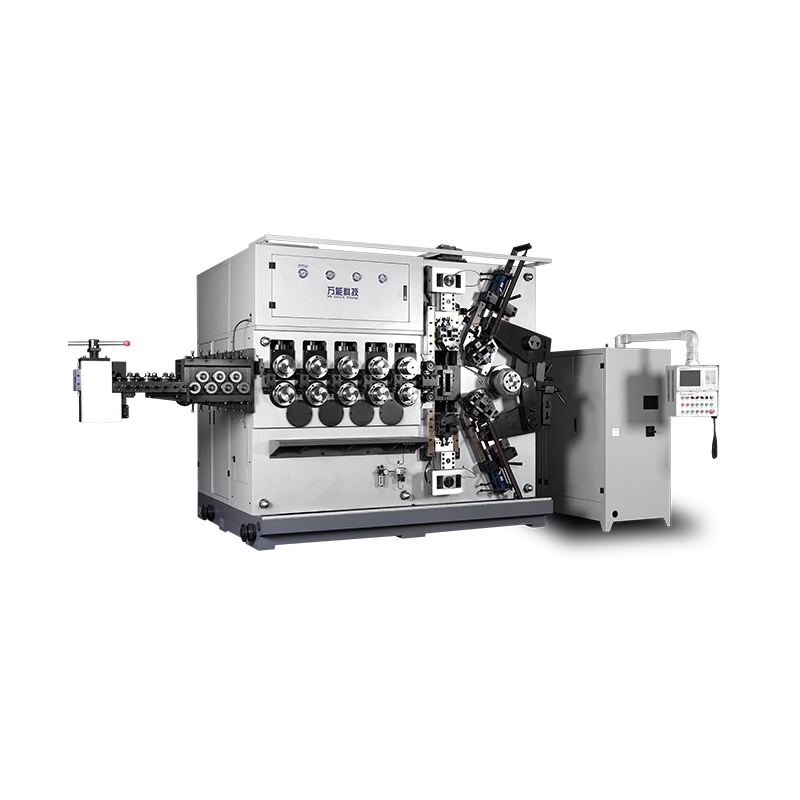
TK-5200 TK-5200 5AXES CNC SPRING COILING MACHINE...
See Details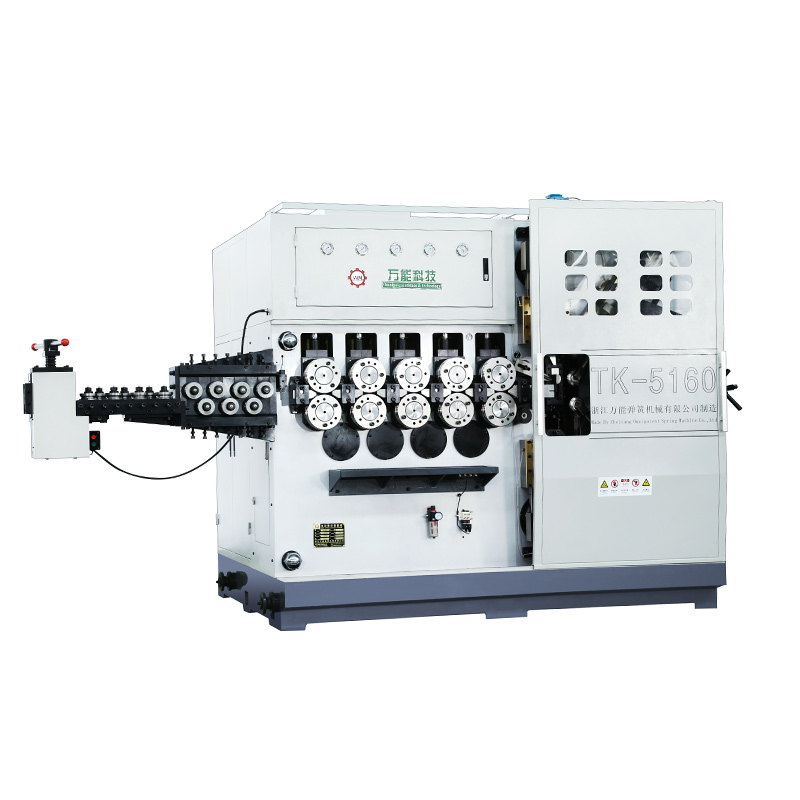
TK-5160 TK-5160 5AXES CNC SPRING COILING MACHINE...
See Details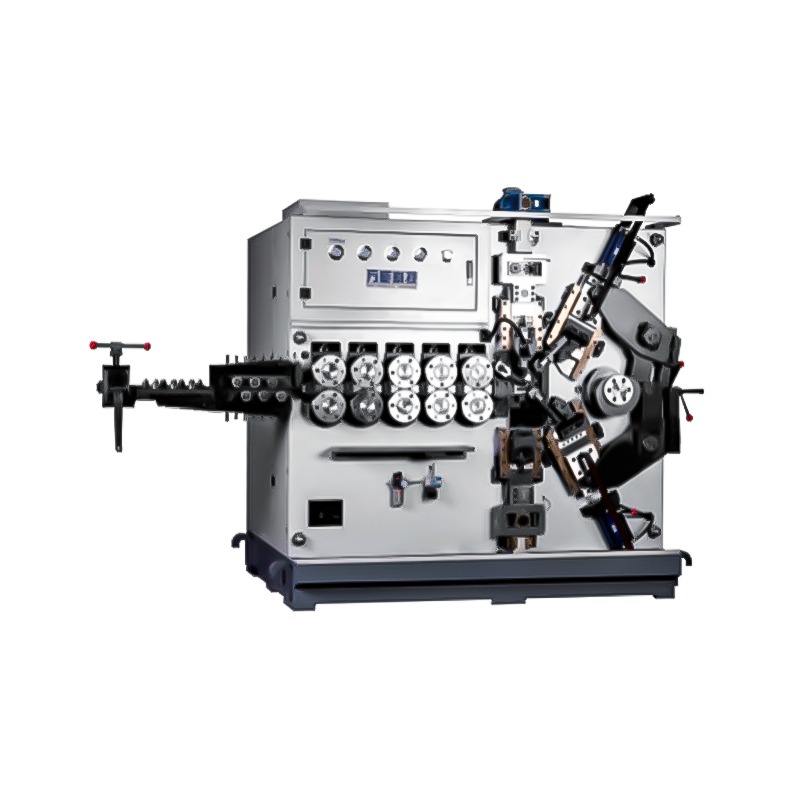
TK-5120 TK-5120 5AXES CNC SPRING COILING MACHINE...
See Details
TK TK 10AXES CNC SPRING SCROLL MACHINE...
See Details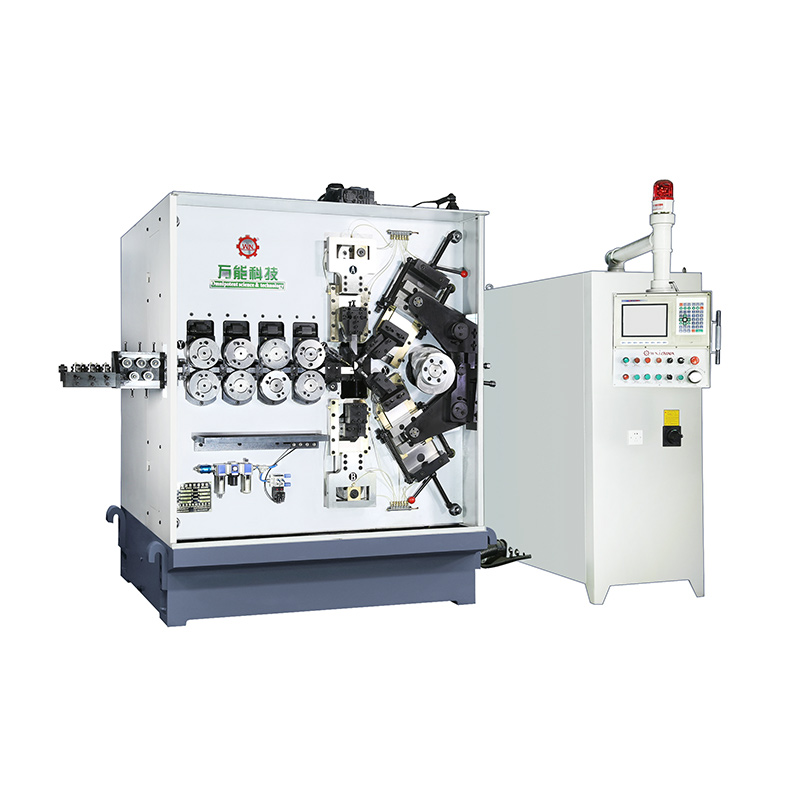
TK-580B、 TK-590 TK-580B、 TK-590 5AXES CNC SPRING COILING MACHINE...
See Details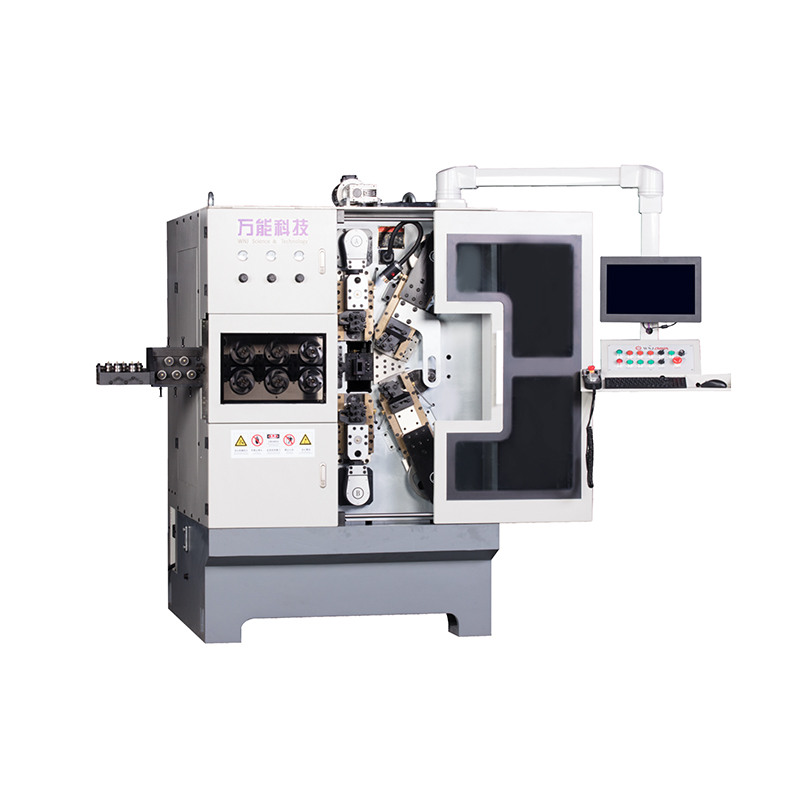
TK-760TK-760 6-7AXES CNC SPRING COILING MACHINE...
See DetailsMobile QR Code

 中文简体
中文简体 English
 русский
 Español