Language
Content
The short answer: a spring maker needs a machine that matches three things at once — the wire diameter range of the parts being produced, the axis count required for the spring geometry, and a control system stable enough to run unattended for a full shift. Get any one of those wrong and the rest of the shop floor pays for it, either in scrapped wire or in a changeover that eats an afternoon.
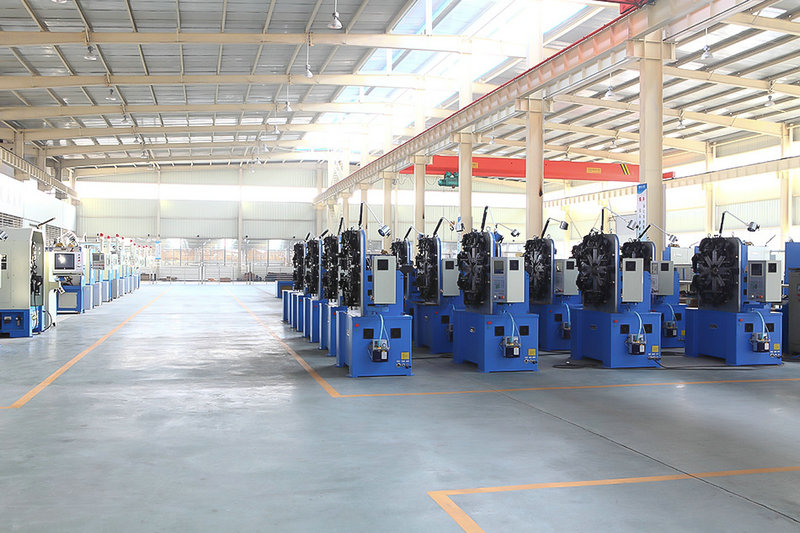
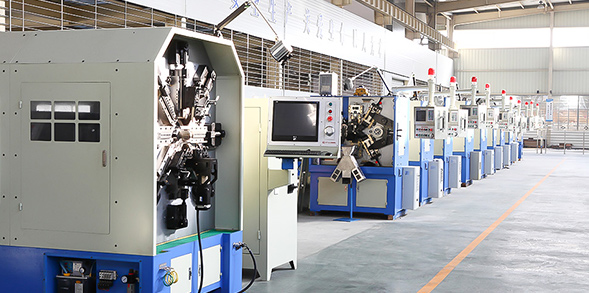
Most buyers searching for equipment quickly discover that "spring machine" is a broad category covering everything from a basic 2-axis coiler to a 12-axis camless system. Zhejiang Omnipotent Spring Machine Co.,ltd, known in the trade under its WNJ brand, has been building this range of CNC spring machinery since 1993 out of Shengzhou, Zhejiang — one of the country's established production clusters for computer-controlled spring coiling equipment. Its product line spans the low end of the range (3-axis CNC635 coilers) up through 12-axis camless platforms, which makes it a useful reference point for understanding how the category is structured.
The company operates from a facility of more than 20,000 square meters in the Shengzhou Economic Development Zone, with a workforce that includes senior engineers and dedicated production technicians, and it runs a spring machinery research arm that cooperates with outside technical experts and domestic academic institutions on an ongoing basis. That combination of in-house manufacturing scale and applied research is fairly typical of the established players in this segment of the Zhejiang machinery cluster, and it is one reason the region has become one of the country's recognized production bases for computer-controlled spring machinery rather than a single-factory phenomenon.
For a spring maker evaluating equipment, the practical takeaway is that the category splits along a handful of decision points rather than a single "best machine" answer: how many axes the product mix actually requires, whether cam-type or camless coiling fits the changeover pattern of the order book, what wire diameter range covers current and near-future parts, how the control system and servo motors handle long unattended runs, and what happens downstream once a coil comes off the machine and still needs grinding and tempering before it is a finished spring.
The rest of this guide walks through each of those decisions in turn, then covers installation planning, defect troubleshooting, a worked cost-payback example, and a sourcing comparison between running coiling in-house and outsourcing it to a contract spring maker — the kind of detail that a spec sheet alone does not answer.
Axis count is the single most misunderstood spec on a CNC spring machine data sheet. It does not describe speed or size — it describes how many independent motion controls the machine has over the wire as it is fed, bent, and cut. A 3-axis machine controls feed, coiling diameter, and pitch. A 10-axis or 12-axis camless machine adds independent wire guides, secondary bending arms, and cutting stations that can each be programmed on their own path.
A 3-axis unit such as WNJ's CNC635 handles straightforward compression and tension springs efficiently and is usually the more economical entry point for a spring maker whose product mix is not highly varied. A 5-axis cam-driven model, like the CNC650Z referenced in WNJ's coiling machine line, adds an eight-station wire-turning function for controlled bending, hook bending, and curling — useful once the product mix starts to include hook-ended tension springs.
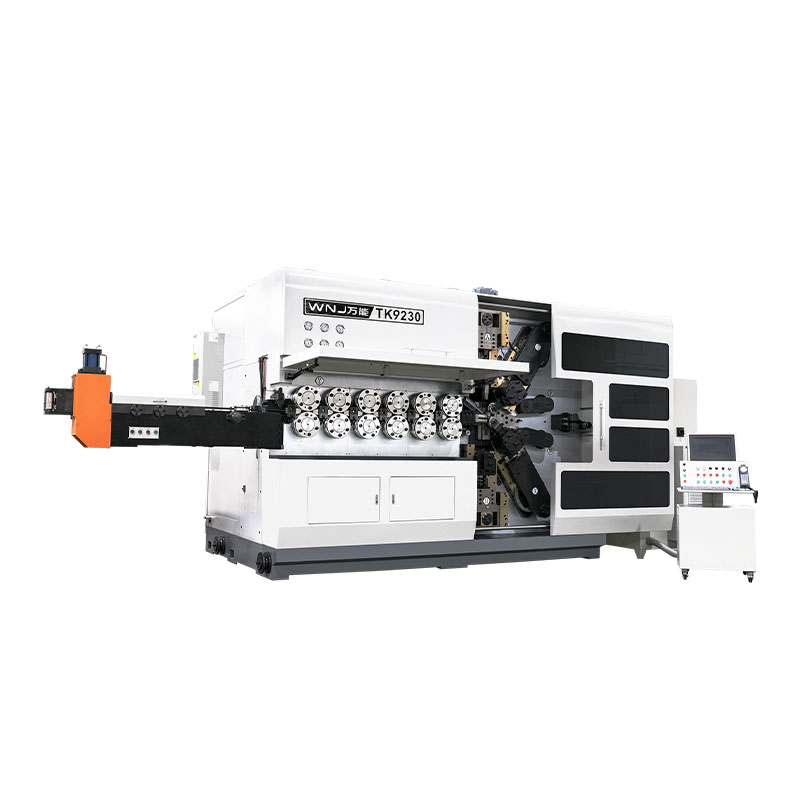
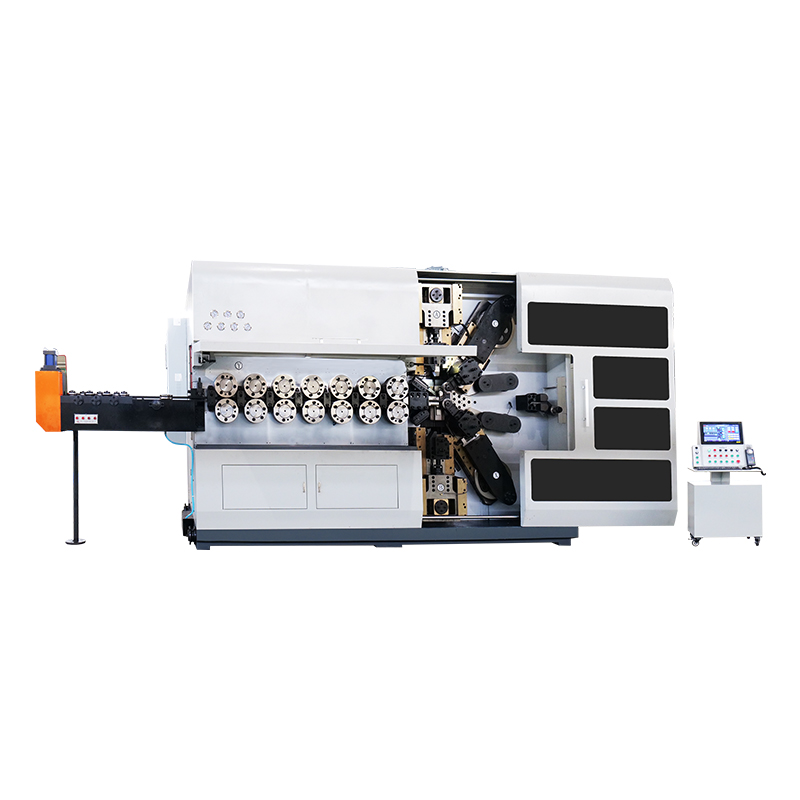
Once a shop needs double torsion springs, pagoda-shaped springs, rectangular springs, or other special-shaped forms, a 10-axis or 12-axis camless machine becomes the more practical choice. WNJ's CNC1025 (10-axis) and CNC1240/CNC1260/CNC1280 (12-axis) camless platforms are built around this exact requirement, trading the mechanical cam stack for independently driven axes that can be reprogrammed rather than physically retooled between jobs.
A recurring mistake among first-time spring machine buyers is treating axis count as a straightforward quality ranking, buying the highest-axis model available on the assumption that it will outperform a lower-axis machine on every job. In practice a 12-axis camless machine running a simple compression spring gains nothing over a 3-axis coiler on that job — the extra axes sit idle, the programming overhead is higher, and the per-unit cost of the machine is spread across fewer simple parts than it would be on a dedicated low-axis line. The axis count should be set by the most complex geometry the shop expects to run routinely, not by the geometry it might run once.
Beyond axis count, the way wire is physically fed into the machine affects stability at higher speeds. Several of WNJ's camless models use a rotary wire-feed structure rather than a straight-line feed, which the company positions as steadier and easier to control, particularly on longer runs where wire drag and coil memory can otherwise introduce small variations in pitch over time.
| Axis Count | Representative Model | Best Suited For |
|---|---|---|
| 2–3 axis | CNC635 | Compression and tension springs, high-volume simple geometries |
| 5 axis (cam-driven) | CNC650Z | Hook bending, curling, controlled bending on tension springs |
| 10 axis (camless) | CNC1025 | Torsion springs, wire forming, mixed small-batch production |
| 12 axis (camless) | CNC1240 / CNC1260 / CNC1280 | Double torsion springs, pagoda springs, rectangle and special-shaped forms |
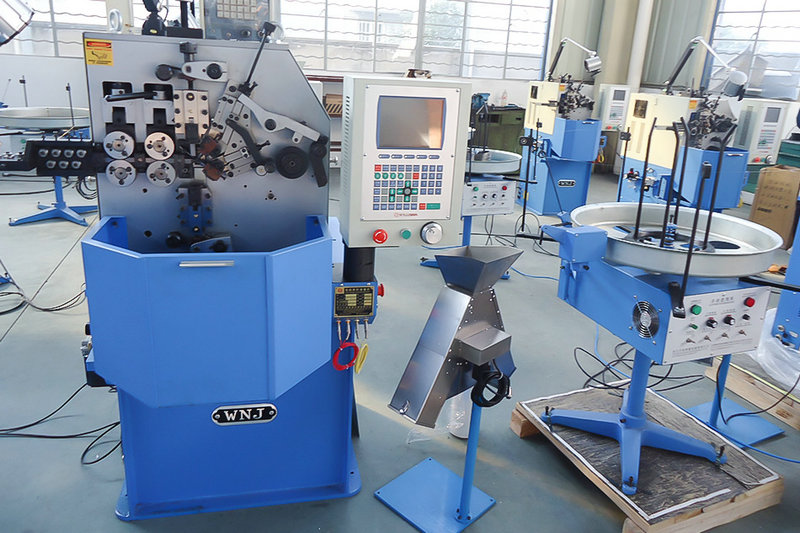
A cam-type machine relies on physical cam stacks and mechanical linkages to shape the wire, which keeps the machine cost lower and the mechanics familiar to operators trained on older equipment. The tradeoff is changeover time — switching to a new spring geometry usually means swapping cams and re-timing the mechanism by hand.
A camless design replaces the cam stack with independently driven servo axes, so a new spring profile is a matter of loading a different program rather than physically reconfiguring the machine. WNJ's camless CNC line is built specifically around this changeover advantage, and the company positions it for shops running frequent product changes or short production runs rather than one geometry at very high volume.
The practical test for a spring maker deciding between the two is order variety, not order size. A shop running the same compression spring by the hundred thousand rarely needs camless flexibility. A shop where every third order is a different torsion or pagoda-shaped part usually recovers a camless machine's higher price through changeover time saved alone.
On a cam-type machine, switching spring geometry generally involves removing the old cam set, installing the new cams in the correct sequence, re-timing the coiling head against the feed rollers, and running a handful of test pieces to confirm the pitch and diameter land within tolerance. Depending on the operator's familiarity with the specific job, this can take anywhere from under an hour to most of a shift, and it is time the machine is not producing revenue-generating parts.
On a camless machine, the equivalent step is loading a stored program — or writing a new one from the target spring's diameter, pitch, and length parameters — and running the same handful of test pieces. No physical cam removal or re-timing is involved, which is the entire basis for the changeover-time advantage. The tradeoff shows up instead in the initial programming effort for a brand-new geometry the machine has never run before, which still requires a skilled operator's judgment even though it does not require touching the mechanism itself.
Wire diameter range sets the ceiling and floor of what a machine can physically process, and it is worth checking against actual production needs rather than assuming a wider range is always better. WNJ's CNC coiling series is built to process wire diameters from 0.3mm up to 8.0mm, which covers the bulk of compression, tension, and torsion spring work used in automotive suspension components, electronics contacts, and general industrial equipment.
Wire thinner than roughly 0.5mm behaves differently under coiling tension than heavier gauge stock — it is more prone to whip and requires tighter feed-roller calibration. Machines rated across a wide range, like the 0.3–8.0mm span above, typically need a recalibration pass on feed pressure and guide clearance when moving from the thin end of the range to the thick end, rather than running both extremes on one fixed setting.
A spring maker producing small electronics springs rarely needs the full 8.0mm capacity, and buying for headroom that is never used adds cost without adding output. Conversely, a shop supplying automotive suspension or heavy industrial equipment components needs the upper end of that range and should confirm it against the specific model, since not every CNC spring machine in a given product line is rated for the same maximum.
Wire diameter range is only half of the material picture. Spring wire also varies by alloy — carbon steel, stainless steel, oil-tempered wire, and specialty alloys such as Inconel or phosphor bronze all behave differently under coiling tension. Harder or more work-hardening alloys generally need slower coiling speeds and more conservative bend radii to avoid surface cracking, while softer stainless grades tolerate faster feed rates but can spring back further after coiling, which means the target coil diameter programmed into the machine needs to be adjusted to compensate for that spring-back rather than matching the finished spec exactly.
Tolerance requirements vary widely by end use. A general industrial compression spring might tolerate outside-diameter variation of a few percent, while a precision electronics contact spring or a medical-adjacent component often needs tolerances closer to a few hundredths of a millimeter. Confirming the tolerance a given CNC spring machine can hold in practice — not just its theoretical resolution — against the actual application's drawing tolerance is one of the more commonly skipped steps in equipment selection, and it is worth requesting a sample run on the buyer's own wire stock before finalizing a purchase.
The control system and servo motors determine repeatability more than almost any other component on the machine. WNJ's CNC and camless lines are built around a Taiwan-made computer control system paired with Japanese servo motors, a combination the company presents as the basis for the stability of its coiling accuracy across long production runs.
Several of WNJ's coiling machines are also equipped with a precision detection and tracking device that halts the machine automatically when it identifies an unqualified part, rather than continuing to run and producing a batch of scrap before an operator notices a drift in tolerance. Parameters such as outside diameter and bend angle can typically be adjusted mid-run on these systems without stopping to reprogram from scratch, which matters on longer shifts where wire stock or ambient temperature shifts slightly over several hours.
A bilingual interface — Chinese and English displayed together, as WNJ's control panels are described — also reduces training time on mixed-nationality shop floors, which is a smaller but real factor for manufacturers exporting machines internationally.
Wire stock is not perfectly uniform coil to coil, and ambient shop temperature can shift the wire's stiffness slightly over an eight- or twelve-hour run. A control system that lets an operator nudge outside diameter or bend angle without halting production and re-loading a program keeps a long run inside tolerance without the downtime a full stop-and-reprogram cycle would cost. This is a smaller-sounding feature on a spec sheet than axis count or wire range, but it is frequently the difference between a shift that finishes a batch cleanly and one that needs a second setup pass halfway through.
A detection and tracking device that halts the machine on an out-of-tolerance part is only useful if it is checking the dimensions that actually matter for the application — typically outside diameter, free length, and in some configurations pitch consistency. Before relying on this feature, it is worth confirming exactly which dimensions the detection system monitors on a given model, since an automatic stop that only checks one parameter will not catch a defect in another.
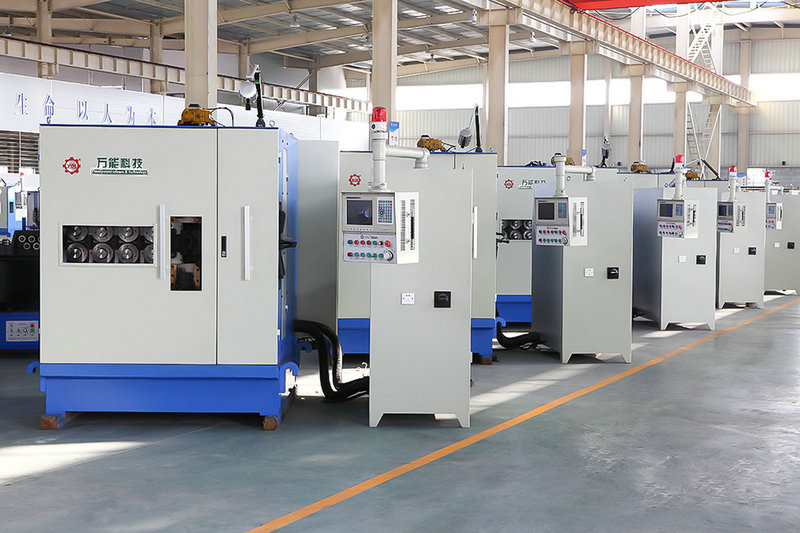
Coiling is only the first step. Most finished springs also need end grinding for flat, square seating surfaces and a tempering pass to relieve internal stress from the coiling process. Zhejiang Omnipotent Spring Machine Co.,ltd manufactures spring grinding machines and temper furnaces alongside its coiling equipment, which lets a spring maker source a coiling-to-tempering line from a single supplier rather than matching equipment from separate vendors with different control interfaces.
Grinding accuracy affects how evenly a compression spring seats under load, and an unevenly ground end is a common cause of premature fatigue failure in automotive suspension springs and industrial compression applications. Tempering, meanwhile, is what stabilizes the spring's set point after coiling — skipping or under-running this step is one of the more frequent quality complaints in lower-cost spring production.
| Production Stage | Equipment Category | Quality Factor Addressed |
|---|---|---|
| Coiling / forming | CNC spring coiling / camless machine | Diameter, pitch, and shape accuracy |
| End finishing | Spring grinding machine | Flat, square end seating |
| Stress relief | Temper furnace | Set-point stability under repeated load |
Uptime, not raw machine speed, is usually the bigger driver of a spring maker's actual output over a full year. Two practical maintenance patterns worth planning around: parts availability and self-diagnostics.
WNJ maintains a rolling multi-year inventory of control boards through its distributor network while keeping firmware backward-compatible, so older machine programs can be loaded directly onto replacement hardware without a rewrite. For a shop running machines on a ten-year-plus depreciation schedule, this kind of backward compatibility avoids the common problem of a control board failure effectively retiring an otherwise mechanically sound machine.
With fewer staff on overnight runs, unattended fault detection matters more than during a fully staffed day shift. WNJ's approach, drawn from its own field guidance to production managers, is to run self-diagnostic scripts that flag common anomalies such as wire breakage, feed blockage, or tool wear before they cascade into a larger stoppage or a batch of scrap.
A spring maker evaluating any CNC spring machine, not only WNJ's line, should ask two direct questions before purchase: how far back does firmware compatibility extend, and what does the machine do automatically when it detects an out-of-tolerance part. Those two answers predict more about total cost of ownership than the headline axis count usually does.
Springs made on CNC coiling and camless equipment feed into a narrower set of end applications than the broad "industrial" label suggests, and knowing which application a shop is targeting changes which machine features matter most.
Suspension systems, door mechanisms, seat adjusters, and various latch assemblies rely on compression, tension, and torsion springs that need to hold tolerance across a very high production volume and a long service life under repeated load cycles. This is typically where tempering quality and grinding consistency matter as much as coiling accuracy, since a spring that coils correctly but is under-tempered will still fail early under cyclic automotive loading.
Small-diameter, low-force springs used in connectors, switches, and battery contacts sit at the thin end of the wire diameter range and usually prioritize dimensional consistency over raw output speed, since a single out-of-tolerance batch can affect an entire downstream assembly run.
General industrial equipment — from appliances to heavier machinery — spans the widest range of spring types and is often where a shop's camless flexibility gets used the most, since industrial equipment orders tend to be smaller runs of more varied spring geometries compared to automotive's high-volume single-part runs.
Most coiling defects trace back to one of a small number of root causes, and diagnosing which one is at fault is faster with a reference table than by trial and error on the shop floor.
| Defect | Typical Root Cause | First Adjustment to Try |
|---|---|---|
| Inconsistent outside diameter | Worn coiling point or unstable wire feed pressure | Inspect and replace the coiling point; recheck feed roller pressure |
| Uneven pitch along the coil | Pitch tool wear or feed rate fluctuation | Check pitch tool condition; verify feed motor speed stability |
| Surface cracking on bends | Bend radius too tight for the wire alloy, or coiling speed too high | Increase bend radius or reduce coiling speed for the alloy in use |
| Spring length drifting over a run | Cutting tool wear or wire tension drift | Replace cutting blade; recalibrate tension roller |
| Premature fatigue failure after tempering | Under-tempering or uneven grinding at the spring ends | Verify temper furnace cycle time and grinding squareness |
The following is an illustrative example a spring maker can adapt with its own figures — it is not a quote or a specific machine price, since actual equipment cost varies by axis count, wire range, and options.
Suppose a shop currently outsources a torsion-spring order that costs the equivalent of a moderate five-figure sum per year in outside processing fees, and a camless CNC machine capable of running that geometry in-house carries a total landed cost — machine, freight, and installation — in the low six figures. If bringing the work in-house also opens capacity to take on additional similar orders at a comparable margin, the effective payback period shortens considerably compared to looking at the displaced outsourcing cost alone.
| Factor | What to Plug In |
|---|---|
| Current outsourcing spend | Annual fees paid to an outside spring maker for the target part |
| Machine landed cost | Equipment price plus freight, duties, and installation |
| Added operating cost | Operator time, wire stock, maintenance, and utilities |
| Spare capacity value | Additional orders the machine can absorb beyond the original part |
Payback period, in simple terms, is landed cost divided by the net annual savings from displaced outsourcing plus any margin captured on new spare-capacity orders. Shops that only run the numbers against the single part that triggered the purchase tend to overestimate payback period, since a camless machine's flexibility usually gets used for more than one part once it is on the floor.
Bringing spring coiling in-house is not automatically the better choice, and the decision usually comes down to order volume, part variety, and how much control the buyer needs over lead time.
The decision point that gets overlooked most often is quality control overhead. In-house coiling gives direct visibility into every batch as it is produced, while outsourcing shifts that inspection burden to incoming quality checks on delivered parts — a real cost even when the outsourcing invoice itself looks cheaper on paper.
A CNC spring machine is not a plug-and-run appliance, and skipping site preparation is one of the more common causes of a rocky first few weeks after delivery.
Most CNC coiling and camless machines need a stable three-phase power supply sized to the machine's servo motor draw, along with clean compressed air for pneumatic feed and clamping functions where those are used. Floor loading and vibration isolation matter more on higher-axis camless machines, since their tighter tolerances are more sensitive to floor-transmitted vibration from adjacent equipment such as presses or heavy grinding machines.
Initial commissioning typically includes running sample parts across the wire diameters and geometries the shop expects to produce, confirming tolerances against the shop's own gauges rather than only the manufacturer's test report, and training operators on both routine parameter adjustment and the basic troubleshooting steps covered in the defect table above. Shops that build in a commissioning period with real production wire, rather than accepting a machine on a single demonstration sample, tend to catch calibration issues before they show up in a customer-facing batch.
| Term | What It Means |
|---|---|
| Coiling point | The tool that guides wire into its coiled diameter as it is fed through the machine |
| Pitch tool | The tool controlling the spacing between coils along the spring's length |
| Spring-back | The degree to which wire relaxes toward its original shape after being bent, which the machine must be programmed to compensate for |
| Free length | The length of a finished spring when it is not under load |
| Camless | A machine design using independently driven servo axes instead of mechanical cam stacks to shape wire |
Spring makers outside China evaluating a CNC spring machine supplier typically weigh three things beyond the machine spec sheet: language support, spare-parts logistics, and regional service coverage. WNJ has built out branch offices in Shanghai, Beijing, and Shandong province domestically, alongside international agents covering Europe, Turkey, India, South Korea, and Argentina, which shortens the path for parts and service requests outside mainland China.
For any overseas order, it is worth confirming three things directly with the manufacturer before finalizing a purchase: which agent or office covers the buyer's region, expected lead time for wear parts such as guide bushings and cutting tools, and whether machine documentation and the control interface are available in the buyer's working language.
A spring coiling machine is built primarily to wind wire into a helical compression or tension spring shape. A spring forming machine (sometimes called a wire forming machine) covers a broader range of bent and shaped wire parts beyond a simple coil, including brackets, hooks, and custom wire forms used across automotive and electronics assemblies.
Simple torsion springs can often be produced on a 5-axis cam-driven machine. Double torsion springs, pagoda-shaped torsion parts, or torsion springs combined with secondary bending typically require a 10-axis or 12-axis camless machine, since these geometries need independently controlled bending arms rather than a fixed cam sequence.
It depends entirely on the product mix rather than a single ideal number. A shop making small electronics or appliance springs rarely needs to go above roughly 3mm, while automotive suspension and heavy industrial equipment work commonly requires machines rated up to 8.0mm, matching the upper end of ranges seen on CNC coiling series such as WNJ's.
It depends on order variety more than order volume. A shop running one or two spring geometries at high volume rarely recovers the price difference. A shop with frequent changeovers between different spring shapes usually recovers the added cost through the time saved not re-timing cam stacks between jobs.
A practical baseline is reviewing spare control-board stock and firmware backward compatibility at the time of purchase and again at any major shop equipment refresh, since a control board failure without a compatible replacement is one of the more common reasons an otherwise mechanically sound coiling machine gets retired early.
It is not strictly required, but sourcing coiling, grinding, and tempering equipment from one supplier — as with WNJ's combined product line — typically simplifies control-interface training and service contact points compared to matching equipment from separate vendors with different systems.
Outsourcing to a contract spring maker generally makes more sense for low or irregular order volume, one-off prototypes, or geometries so rare that a dedicated in-house machine would sit idle most of the year. Once volume is steady enough to keep a machine reasonably utilized, in-house coiling usually offers better lead-time control and direct quality visibility.
The most common causes are a worn coiling point or unstable wire feed pressure. Inspecting and, if needed, replacing the coiling point, then rechecking feed roller pressure, is the standard first troubleshooting step before assuming the control program itself is at fault.
Most machines need a stable three-phase power supply matched to the servo motor draw, clean compressed air where pneumatic functions are used, and adequate floor loading with vibration isolation — particularly for higher-axis camless machines, whose tighter tolerances are more sensitive to vibration from nearby equipment.
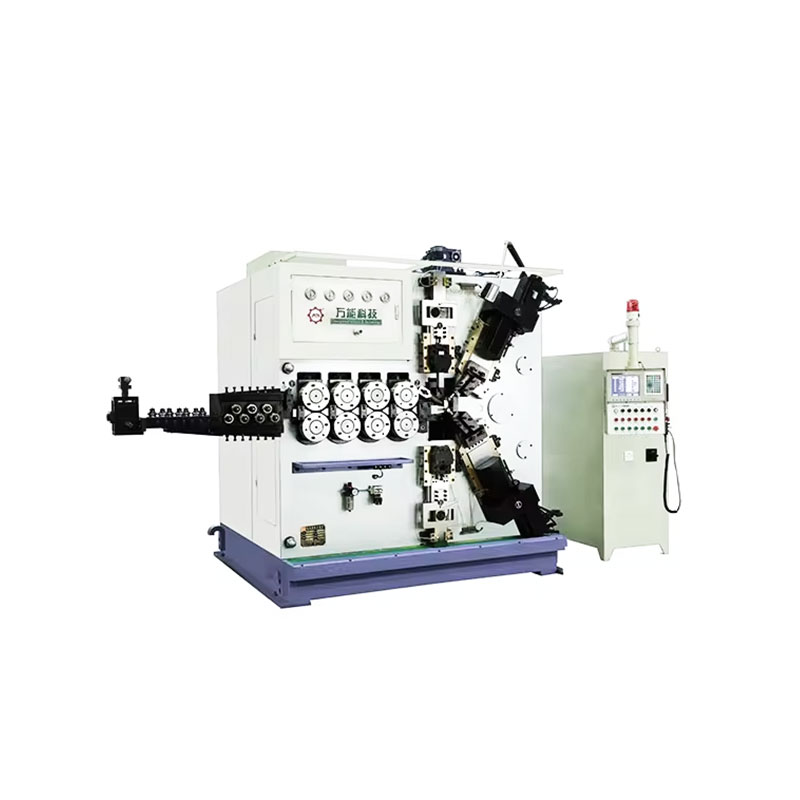
TK-6160 TK-6160 CNC SPRING ROLLING MACHINE...
See Details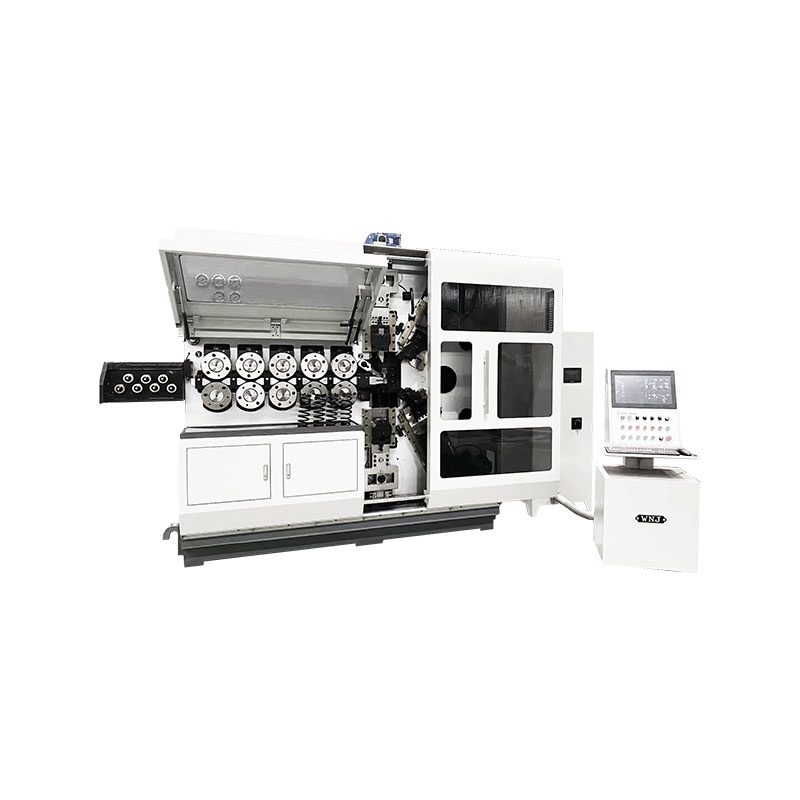
TK-6120 TK-6120 CNC SPRING ROLLING MACHINE...
See Details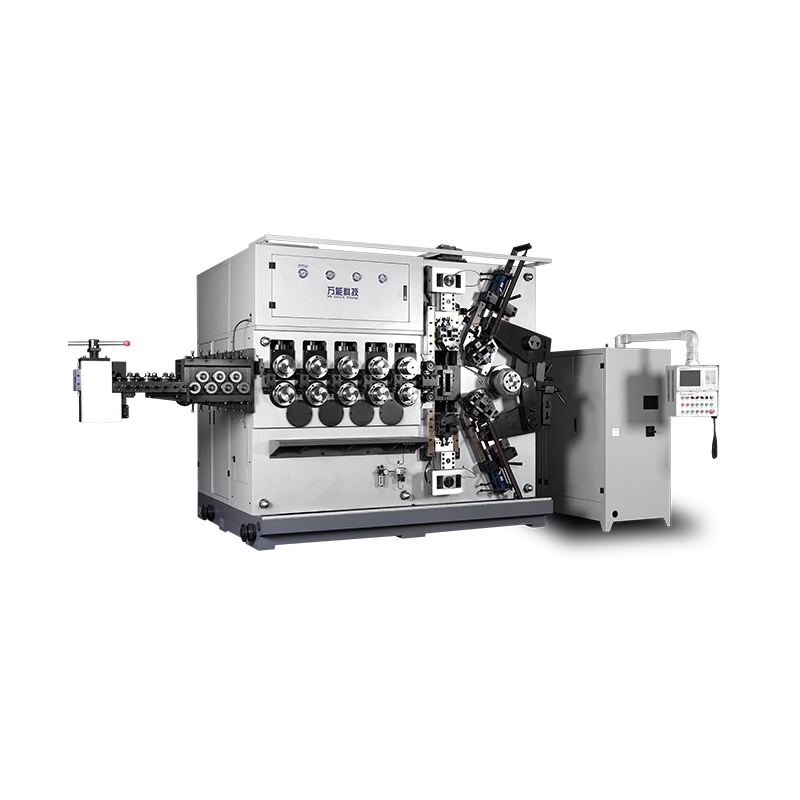
TK-5200 TK-5200 5AXES CNC SPRING COILING MACHINE...
See Details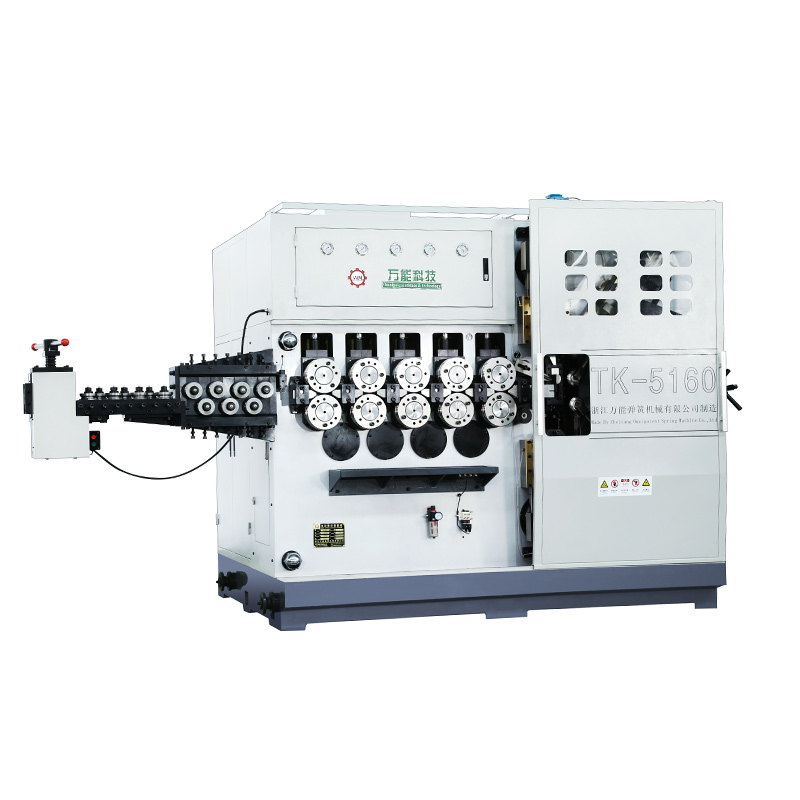
TK-5160 TK-5160 5AXES CNC SPRING COILING MACHINE...
See Details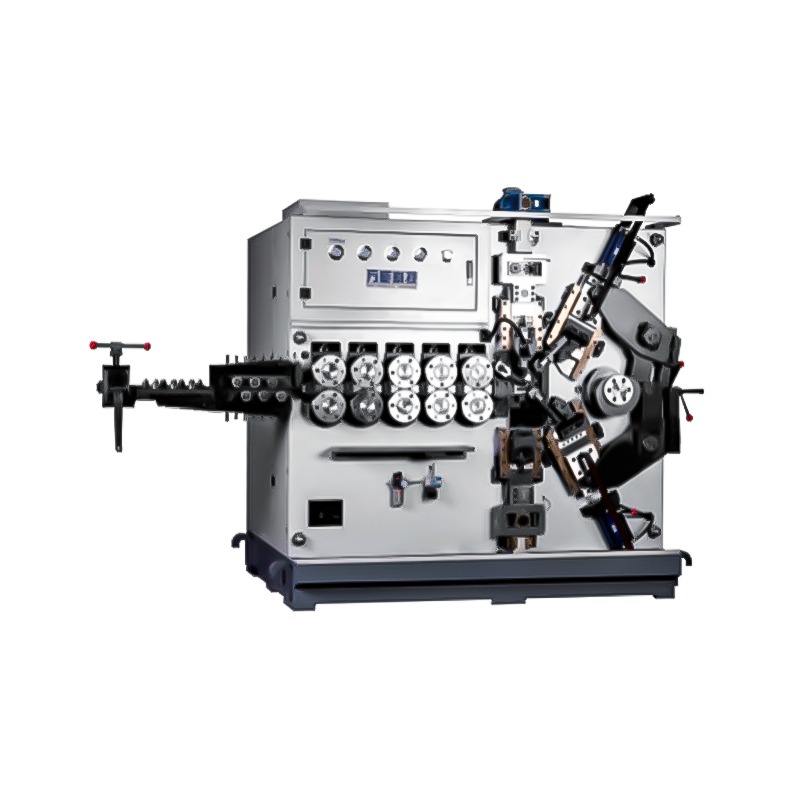
TK-5120 TK-5120 5AXES CNC SPRING COILING MACHINE...
See Details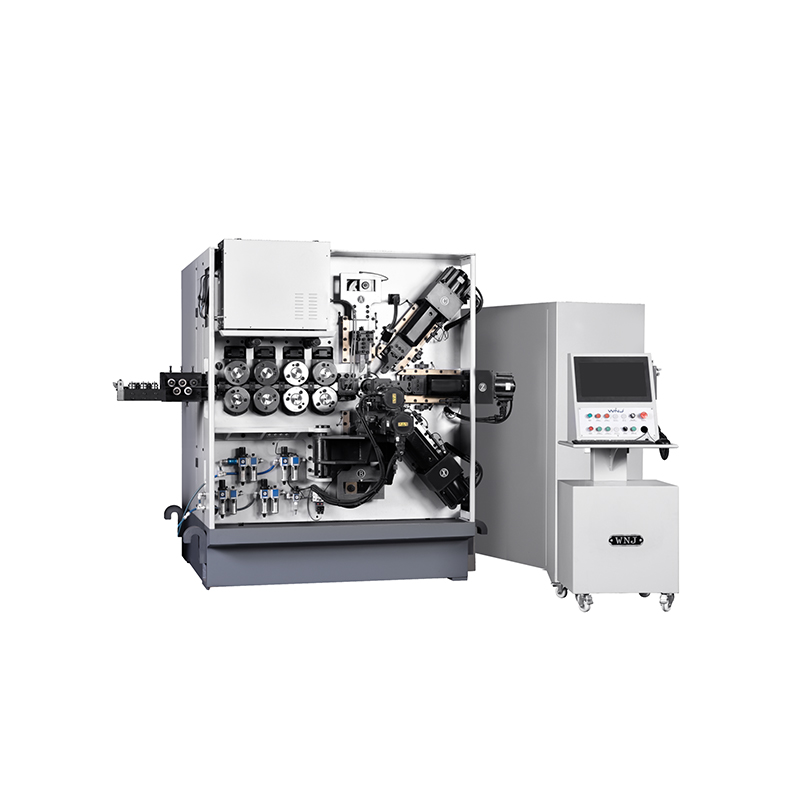
TK TK 10AXES CNC SPRING SCROLL MACHINE...
See Details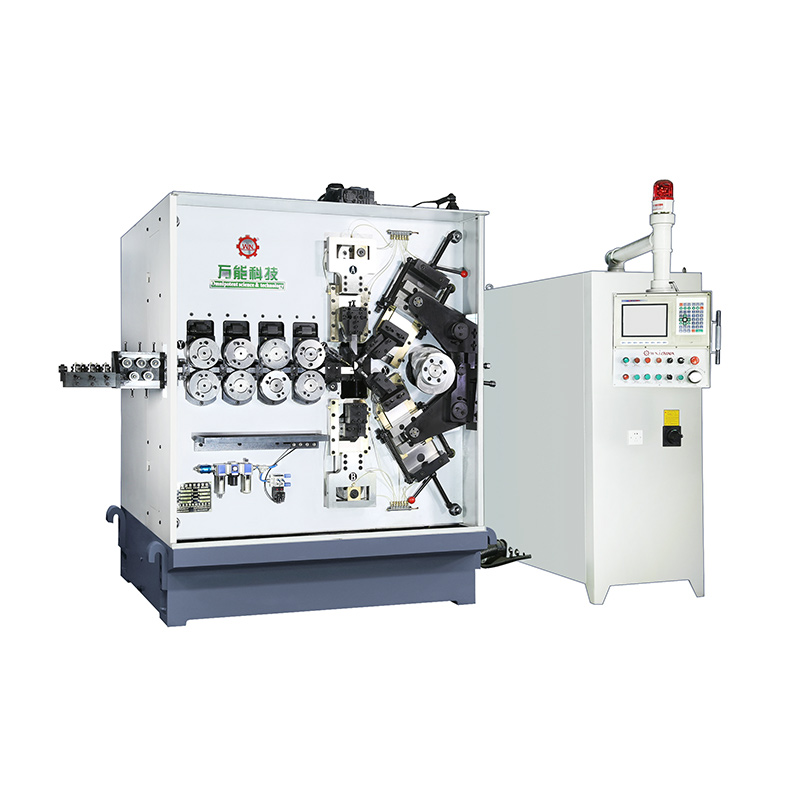
TK-580B、 TK-590 TK-580B、 TK-590 5AXES CNC SPRING COILING MACHINE...
See Details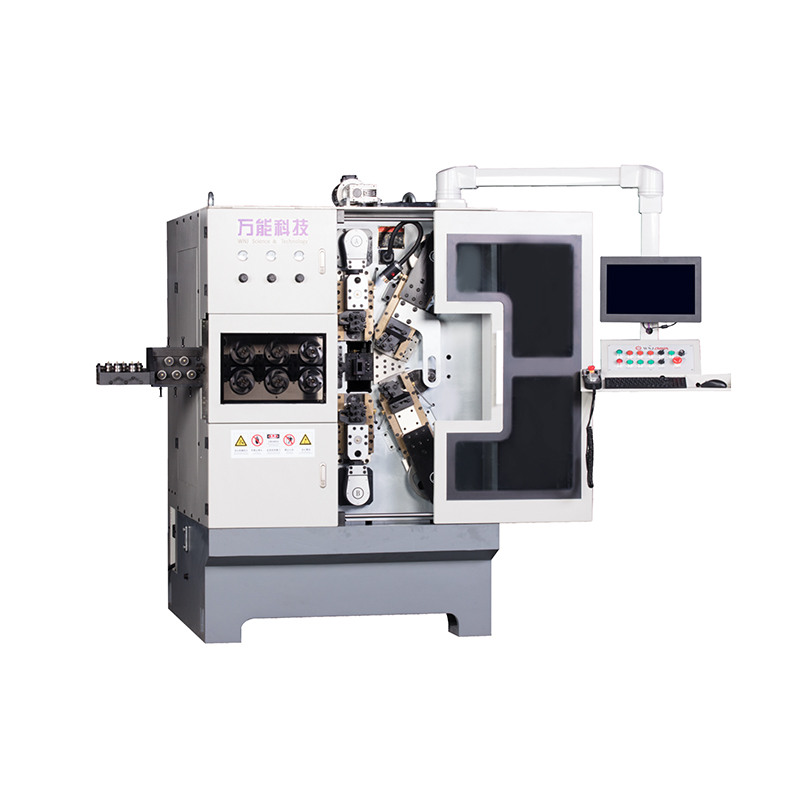
TK-760TK-760 6-7AXES CNC SPRING COILING MACHINE...
See DetailsMobile QR Code

 中文简体
中文简体 English
 русский
 Español