Language
Content
An automatic wire coiling machine winds wire, cable, rope, or similar elongated materials into uniform coils without requiring continuous manual input. The machine controls coil diameter, layer count, pitch, and winding tension through programmable settings, producing finished coils that are consistent in shape, weight, and internal stress distribution. This directly translates to fewer rejects, faster throughput, and lower labor cost per unit — which is why manufacturers across electrical, automotive, spring, and packaging sectors treat these machines as a baseline investment rather than a luxury upgrade.
The difference between manual coiling and automated coiling is not simply speed. A skilled operator winding copper wire by hand might achieve 200–400 coils per shift depending on wire gauge and target coil weight. A mid-range automatic wire coiling machine running 24-gauge copper wire can complete 1,200 to 3,000 coils per shift, with coil-to-coil weight variation held inside ±1%. That level of consistency is nearly impossible to sustain manually over an 8-hour period.
Beyond raw speed, the machine eliminates worker fatigue as a variable. Repetitive coiling injuries — particularly wrist and shoulder strain — are well-documented in facilities that rely on manual methods. Automation removes that risk entirely while simultaneously freeing personnel for tasks that genuinely require judgment.
The category "automatic wire coiling machine" covers several distinct machine architectures. Understanding these differences prevents costly mismatches between machine capability and production requirement.
The rotary coiler uses a rotating arm or flyer that wraps wire around a stationary or slowly rotating mandrel. This design handles round, flat, and rectangular wire profiles with equal reliability. Rotary coilers are common in transformer winding, motor coil production, and solenoid manufacturing. Winding speeds typically range from 200 to 2,500 RPM depending on wire diameter and coil geometry. The rotary design is especially effective for tight, close-wound coils where layer separation and cross-over precision are critical.
The traverse coiler keeps the wire feed point stationary while the mandrel rotates and moves axially. A CNC-controlled traverse mechanism lays wire in precise helical patterns, which is essential for multi-layer coils where internal tension distribution affects final coil performance. This type is frequently found in spring coiling machine lines where pre-wound wire spools feed downstream forming stations, and in cable reel winding for industrial connectors.
Toroidal coilers wind wire around a donut-shaped core rather than a cylindrical mandrel. These machines are specialized for toroidal transformers and inductors used in power electronics. Winding quality on toroidal machines directly affects inductance uniformity and electromagnetic shielding performance. A high-end toroidal coiling machine achieves winding angles within ±0.5 degrees across every layer — a tolerance that hand winding cannot approach.
Servo-driven CNC coiling machines integrate real-time feedback from encoder systems to adjust winding speed, tension, and pitch on the fly. These machines can store hundreds of coil programs and switch between them with minimal downtime. For production environments running mixed wire gauges or varying coil specifications across a single shift, the CNC coiler eliminates changeover downtime that otherwise accumulates to several hours per week. Program recall and automatic tension compensation are the defining operational advantages of this class.
Purchasing or specifying an automatic wire coiling machine requires evaluating a set of interdependent parameters. Optimizing for one often constrains another, so understanding the relationships prevents over-specification in some areas while under-specifying in others.
| Parameter | Typical Range | Impact on Production |
|---|---|---|
| Wire diameter (coiling capacity) | 0.05 mm – 8 mm | Determines motor torque requirement and guide tooling selection |
| Coiling speed | 100 – 3,000 RPM | Higher speed increases throughput but may increase wire breakage on fine gauges |
| Coil inner diameter | 10 mm – 500 mm | Fixed by mandrel size; quick-change mandrel sets reduce changeover time |
| Coil weight / length control | ±0.5% to ±2% | Tighter tolerance reduces downstream rejects; requires tension feedback loop |
| Tension control range | 0.05 N – 50 N | Critical for coil springback behavior; affects spring coiling machine feed quality |
| Number of stored programs | 10 – 999 | Higher count benefits mixed-production facilities with frequent changeovers |
| Wire material compatibility | Copper, aluminum, steel, stainless, nichrome | Guide material and tension mechanism must match wire surface hardness |
Tension control deserves particular attention. Wire that arrives at a spring coiling machine with inconsistent internal tension produces springs with variable free length and load-deflection characteristics. A well-specified automatic coiling machine feeding a spring production line should hold wire tension variation below ±3% throughout the entire coil from first to last layer. Achieving this requires a servo-controlled tension dancer rather than a passive spring-loaded dancer.
Wire coiling and spring coiling are related but distinct processes. Understanding where they overlap and where they diverge prevents incorrect machine selection and production line design errors.
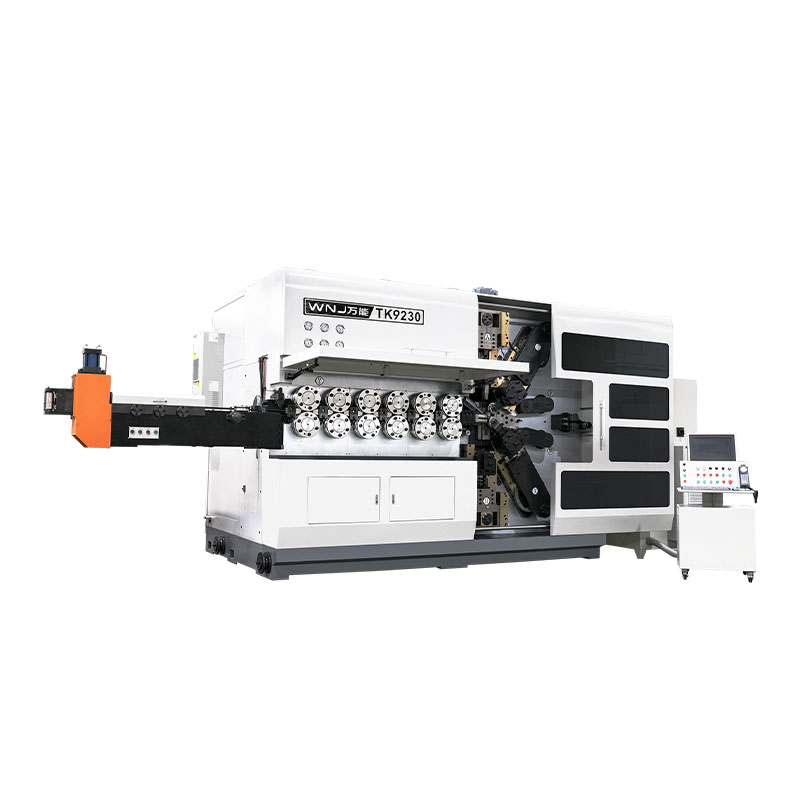
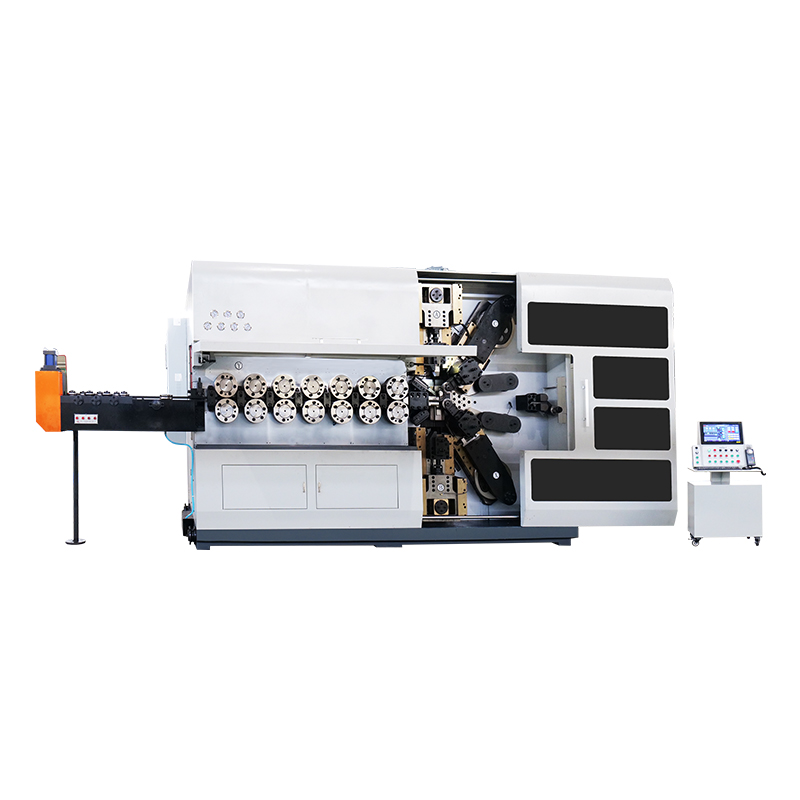
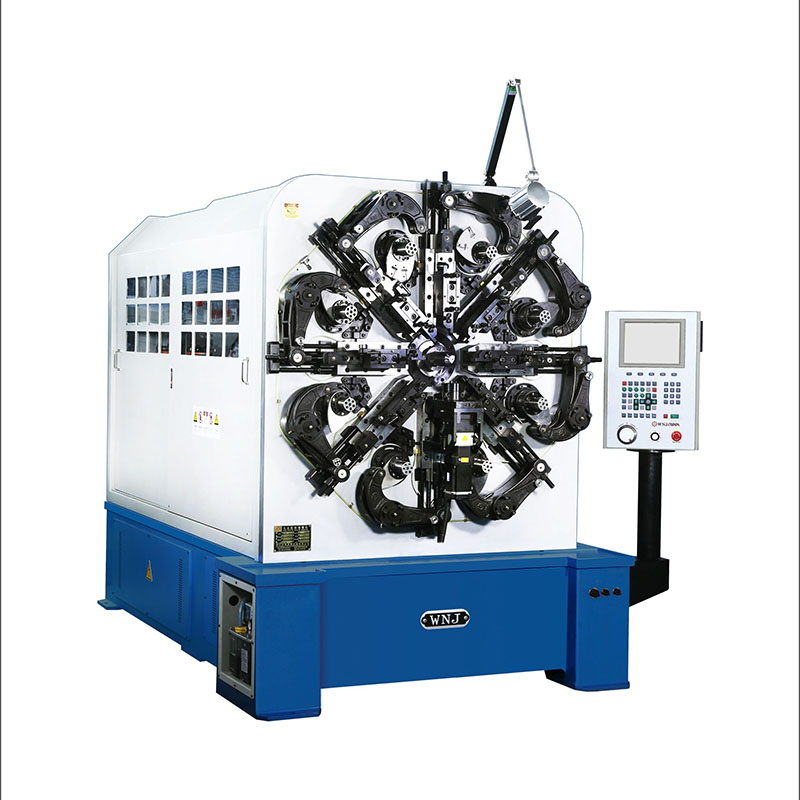
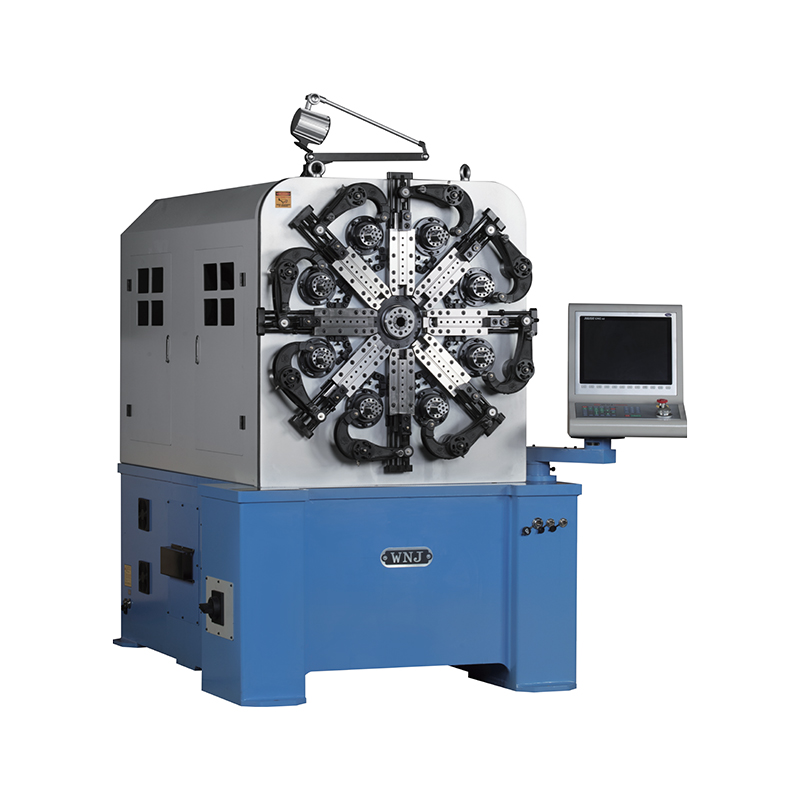
An automatic wire coiling machine produces a finished coil as the end product — the coil itself is shipped to a customer or stored as inventory. A spring coiling machine, by contrast, uses wire as input and deforms it under controlled force to produce a helical spring with defined pitch, diameter, and free length. The spring coiling machine is the forming machine; the wire coiling machine may be its upstream supplier of pre-wound wire spools.
However, some machine designs intentionally blur this distinction. CNC spring coiling machines with integrated wire straightening and tension control systems incorporate many of the same subsystems as a dedicated automatic wire coiling machine. In facilities producing small-diameter springs from fine wire (0.1 mm to 0.8 mm), the wire coiling function is often integrated directly into the spring coiling machine line to avoid the separate handling step. This integration reduces wire damage from respooling and keeps tension history consistent from the wire draw stage to the spring forming stage.
In high-volume automotive spring production — where a single line might produce 80,000 to 150,000 valve springs per shift — the distinction becomes important again. At those volumes, dedicated wire coiling machines running 24 hours ahead of the spring coiling line create buffer stock that allows the spring coiling machines to run without stopping for wire spool changes. The coiling machines become the pacing element of the entire production system.
Automatic wire coiling machines appear across a wide range of industries, each placing different demands on coil geometry, wire material, and throughput rate.
Motor manufacturers require copper wire coils with consistent turn count and layer tension for armatures, stators, and field windings. A deviation of even 2% in coil resistance — caused by inconsistent wire tension during winding — results in detectable efficiency loss in finished motors. Transformer manufacturers need coils with defined inductance values, which depend directly on turn count accuracy and interlayer insulation consistency. Automatic coiling machines in this sector typically operate with precision encoders that count revolutions to within 0.01 turns.
Spring manufacturers use automatic wire coiling machines to prepare wire spools for spring coiling machine lines. The coiling machine must deliver wire with a consistent set (the degree of permanent deformation from the previous coiling process) so that the spring coiling machine can produce springs with predictable springback. Stainless steel, music wire, and chrome-vanadium alloys each require different coiling tension profiles to achieve acceptable set levels. A spring coiling machine fed with poorly coiled wire produces springs with free length variation that requires 100% inspection — an expensive quality cost that traces directly back to upstream wire coiling quality.
Automotive wire harness producers coil finished cable assemblies into compact spools for just-in-time delivery to vehicle assembly plants. In this application, the automatic wire coiling machine must handle multi-conductor cables with outer diameters up to 20 mm, applying consistent winding tension without deforming the cable geometry or damaging connector pins pre-installed on cable ends. Some harness coiling machines include vision systems that detect connector position before winding begins, pausing the cycle if a connector is out of position.
Medical guidewires, catheter reinforcement coils, and surgical suture winding require automatic coiling machines capable of handling very fine wire — often 0.05 mm to 0.3 mm in diameter — with surface finishes that cannot tolerate guide-induced scratches. Cleanroom-compatible coiling machines with HEPA-filtered enclosures and ceramic or PTFE-coated wire guides are standard requirements in this sector. Traceability requirements mean that each coil must carry a record of winding speed, tension, and operator ID, which drives the adoption of Industry 4.0-connected coiling machines with automatic data logging.
Steel wire mills and cable producers coil finished product for shipment in coil weights ranging from 5 kg retail hanks to 2,000 kg industrial reels. At the heavy end, the automatic wire coiling machine must apply controlled back-tension to prevent coil collapse under its own weight. Orbital coiling heads that distribute wire in a figure-eight pattern are common in this segment because the overlapping pattern produces stable coils that can be handled and transported without protective cores.
Automatic wire coiling machines are available across a spectrum of automation levels. The right level depends on production volume, product mix complexity, and available capital budget.
The ROI calculation for upgrading automation level typically centers on labor cost reduction and scrap rate improvement. A fully automatic coiling machine replacing two semi-automatic stations might cost 40–60% more upfront but recover the difference within 18 months when labor savings and reduced inspection costs are factored together.
Buyers sometimes confuse these two machine types, particularly when sourcing equipment for the first time. The following comparison clarifies their roles.
| Attribute | Automatic Wire Coiling Machine | Spring Coiling Machine |
|---|---|---|
| Primary function | Wind wire into storage or delivery coils | Form wire into helical springs |
| Output | Wire coil (ring or spool shape) | Finished spring (compression, extension, torsion) |
| Wire deformation | Minimal; wire retains original properties | Intentional permanent deformation to achieve spring geometry |
| Key quality metric | Coil weight/length consistency, layer uniformity | Free length, load rate, coil diameter, pitch |
| Typical wire range | 0.05 mm – 30 mm (broad) | 0.1 mm – 20 mm (narrower per machine model) |
| Downstream use of output | Shipping, storage, or feed into spring coiling machine | Assembly into products (automotive, industrial, consumer) |
| Setup time per product change | 5 – 30 minutes (mandrel, guide, program) | 30 – 120 minutes (tooling, pitch cam, cutoff) |
Before approaching a supplier, completing the following specification checklist reduces the risk of purchasing a machine that is either under-spec for your production demands or over-spec with features you will never use.
Even well-specified automatic wire coiling machines produce defects when process parameters drift or consumable components wear. Recognizing the defect-to-cause relationship reduces diagnostic time.
Birdcaging occurs when winding tension is insufficient to press each turn against the previous one. Primary causes include dancer tension set point too low, worn tension brake pads, or wire diameter at the lower end of the guide bore tolerance. Increasing tension by 10–15% and replacing worn guide components typically resolves this defect within one coil cycle.
Layer crossing happens when the traverse reversal timing is slightly off, allowing wire to cross the intended boundary point. CNC machines resolve this through software parameter adjustment. On older mechanically timed machines, cam timing must be physically adjusted — a process that takes 30 to 90 minutes and requires an experienced technician.
When coil weight varies more than the acceptable tolerance between consecutive coils of the same program, the most common cause is inconsistent wire take-off from the supply spool — particularly when the supply spool is nearly empty and back-tension changes. Installing an active pay-off reel that maintains constant back-tension regardless of spool diameter eliminates this source of variation. Coil weight variation above ±2% typically triggers rejection by customers using the coiled wire as a spring coiling machine feedstock, since variable wire set directly affects spring free length.
Wire surface scratches visible to the eye indicate guide bore wear. Ceramic guides used with steel wire typically last 800 to 1,200 hours before scratch-inducing wear occurs. Tungsten carbide guides last 3,000 to 5,000 hours under the same conditions but cost 4–6 times more per unit. For copper and aluminum wire — which are soft and scratch easily — guide bore inspection should be part of the daily pre-shift checklist.
Automatic wire coiling machines in continuous production environments accumulate 6,000 to 8,000 operating hours per year. Without systematic maintenance, bearing wear, guide erosion, and drive system degradation compress this to 3,000–4,000 hours before the first major failure. The cost of unplanned downtime on a high-speed coiling machine typically runs $500–$2,000 per hour when lost production is included.
Predictive maintenance using vibration sensors on spindle bearings and temperature monitoring on servo drives identifies failures 2–4 weeks before they cause unplanned stops. For machines running critical production, this investment in condition monitoring pays for itself within the first avoided failure event.
Yes, but tooling changes are required. Steel wire needs harder guide materials (tungsten carbide instead of ceramic) and higher tension force capacity. If both materials are in regular production, specify a machine with tension range and guide system that covers both, and build the guide changeover into the standard product changeover procedure.
In facilities producing more than 500 coils per shift, payback periods of 12 to 24 months are typical when machine cost, installation, and training are set against labor cost savings and scrap reduction. Facilities with higher labor costs or significant inspection overhead see payback at the shorter end of that range.
On fully automatic models, one operator can supervise two to four machines simultaneously. The operator's role shifts from active winding to spool loading, quality sampling, and exception management. Semi-automatic machines require more operator attention — typically one operator per machine — but still eliminate the most physically demanding aspects of manual coiling.
The terms are often used interchangeably in industry. Technically, "coiling" refers to forming a loose ring or hank of wire, while "winding" refers to wrapping wire onto a spool, bobbin, or core. In practice, both terms appear in supplier catalogs for the same category of equipment. When evaluating suppliers, focus on the machine's technical specification rather than the terminology used in the product name.
Yes, provided the machine is configured correctly. Enameled wire requires polished guide bores and tension settings at the lower end of the acceptable range to avoid abrasion. Pre-tinned wire is more forgiving but should be handled with clean guides free of iron contamination to prevent galvanic surface reactions during storage. Many transformer winding operations run enameled wire on automatic coiling machines at speeds of 800–1,500 RPM without detectable coating damage.
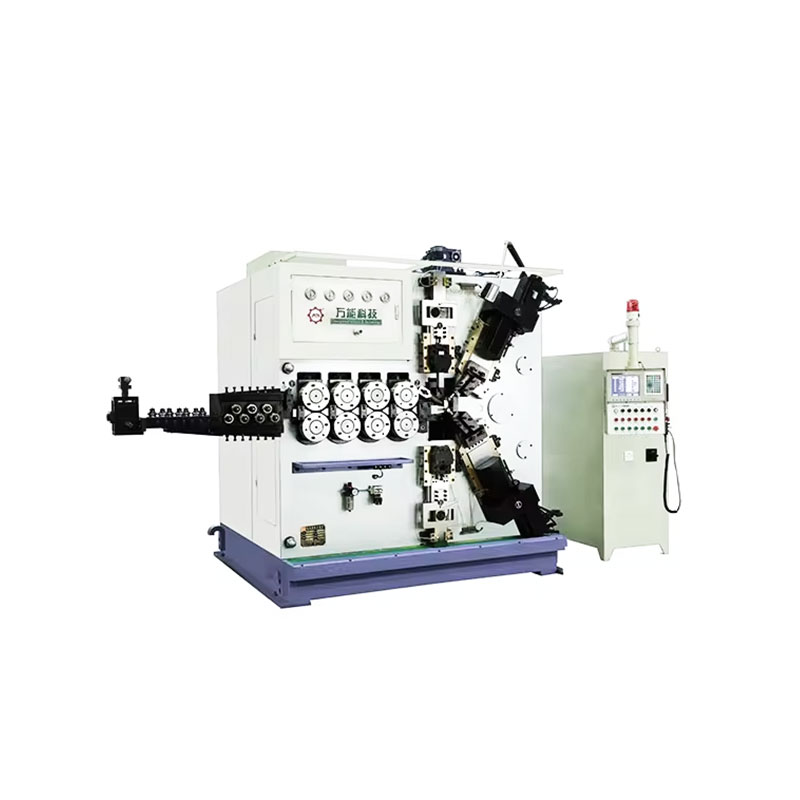
TK-6160 TK-6160 CNC SPRING ROLLING MACHINE...
See Details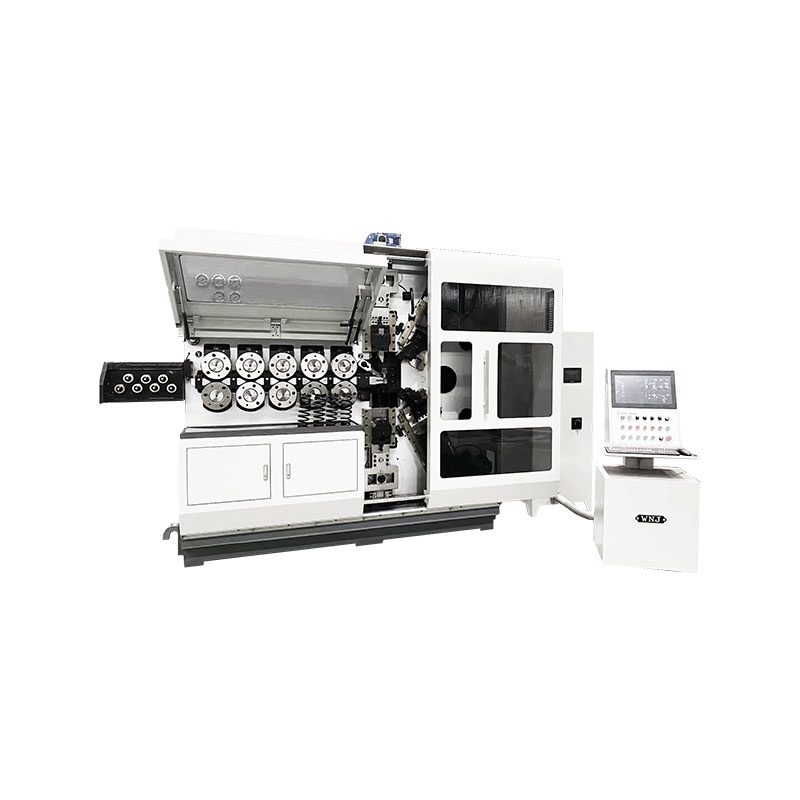
TK-6120 TK-6120 CNC SPRING ROLLING MACHINE...
See Details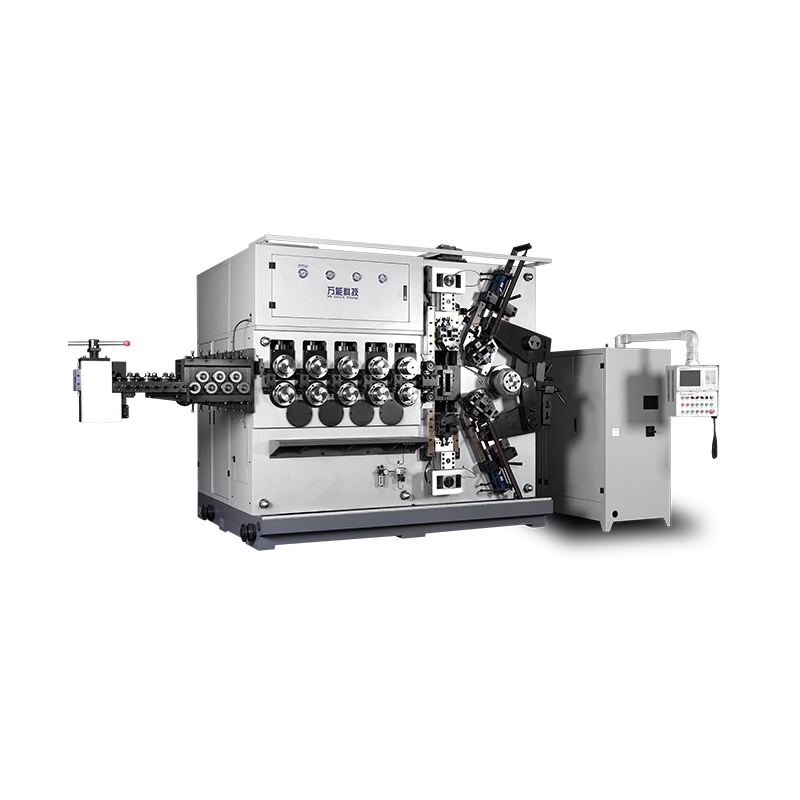
TK-5200 TK-5200 5AXES CNC SPRING COILING MACHINE...
See Details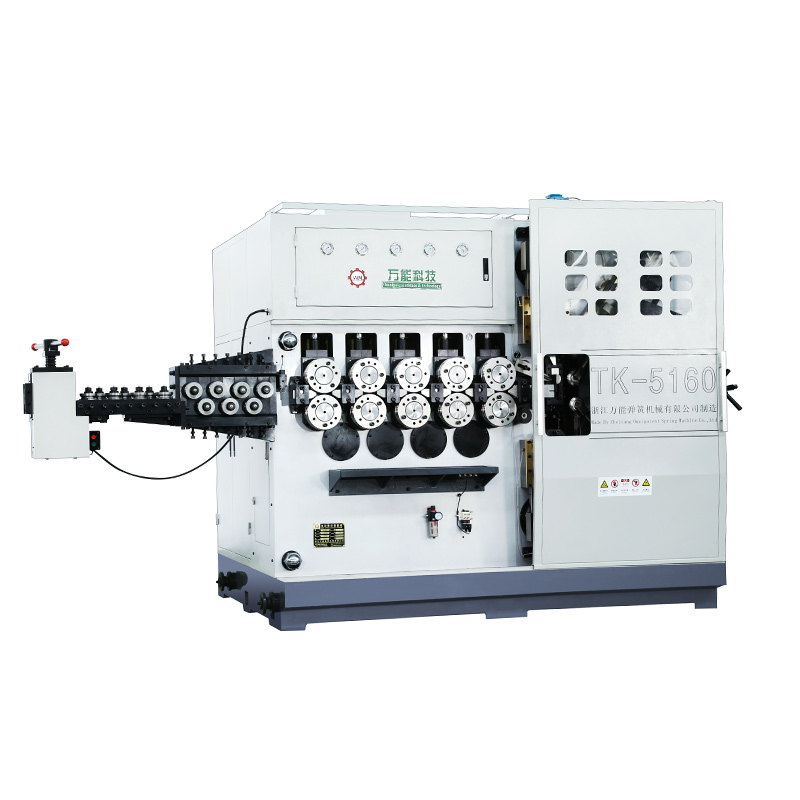
TK-5160 TK-5160 5AXES CNC SPRING COILING MACHINE...
See Details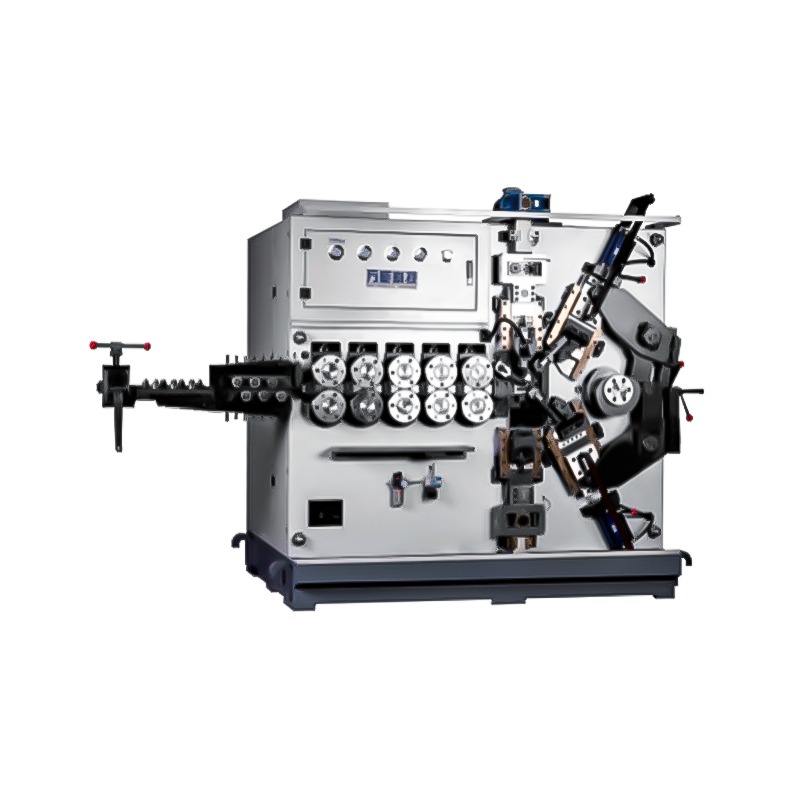
TK-5120 TK-5120 5AXES CNC SPRING COILING MACHINE...
See Details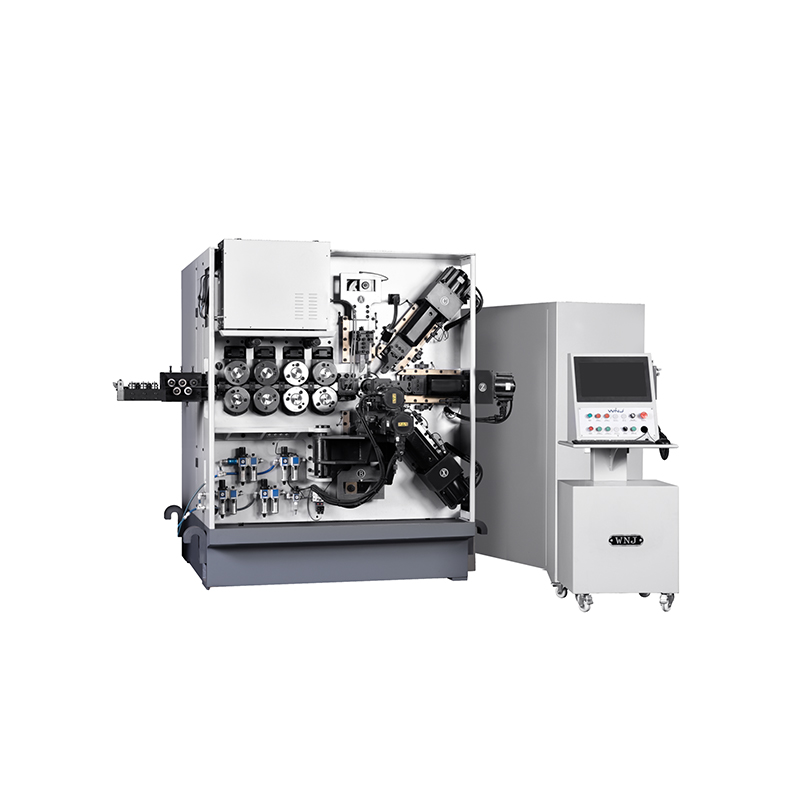
TK TK 10AXES CNC SPRING SCROLL MACHINE...
See Details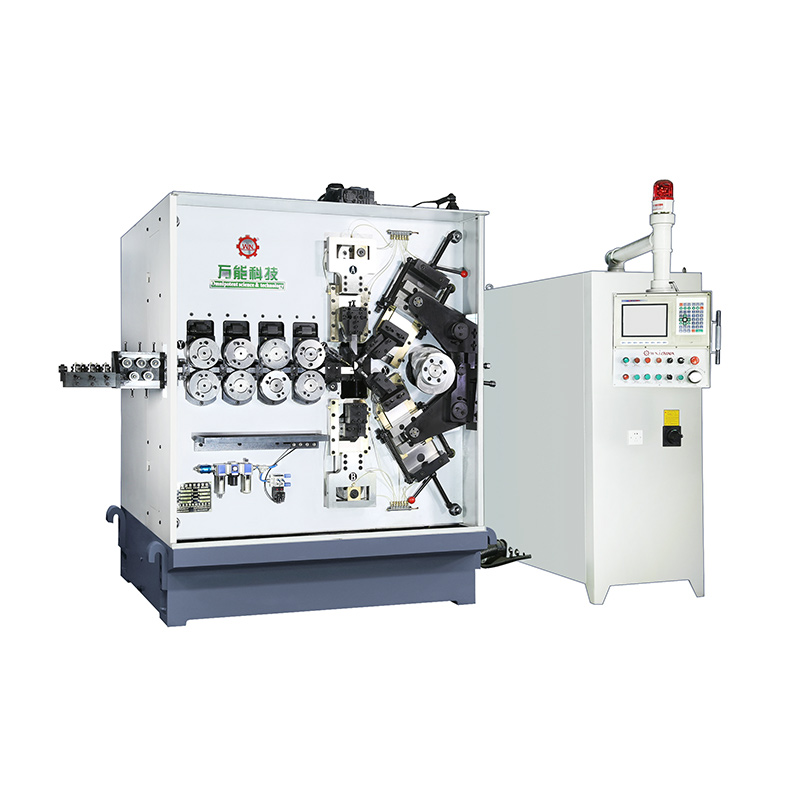
TK-580B、 TK-590 TK-580B、 TK-590 5AXES CNC SPRING COILING MACHINE...
See Details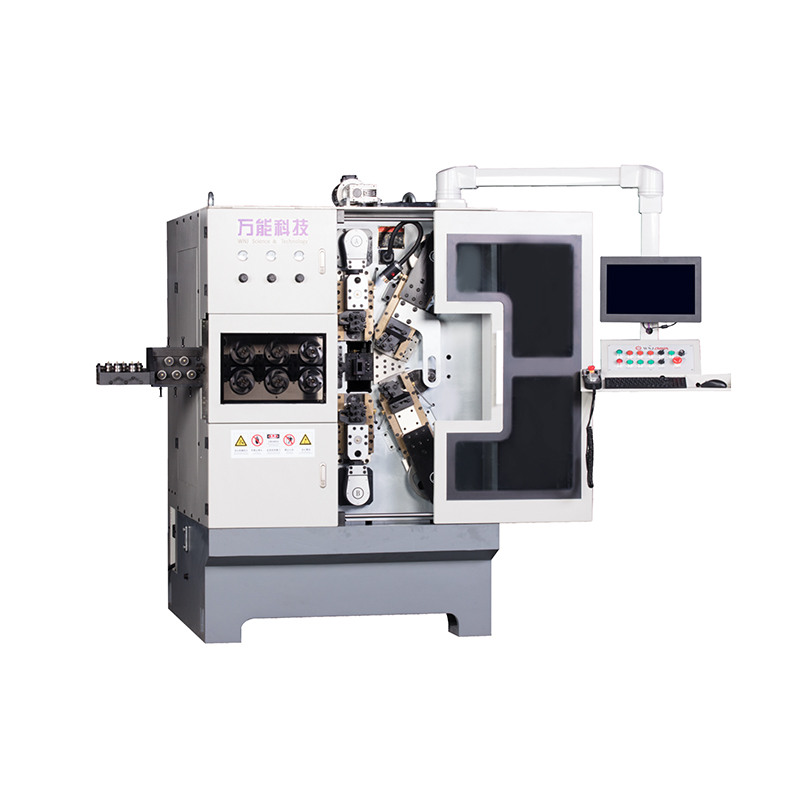
TK-760TK-760 6-7AXES CNC SPRING COILING MACHINE...
See DetailsMobile QR Code

 中文简体
中文简体 English
 русский
 Español