Language
Content
An automatic wire coiling machine winds, measures, and binds wire or cable into consistent coils without operator intervention between cycles. The machine pulls wire from a supply reel, counts length or weight to a preset value, winds the coil at controlled tension, ties or tapes the bundle, then ejects it and starts the next cycle — all in a continuous loop. Depending on the model, cycle time per coil ranges from 8 to 45 seconds, which means a single machine can produce 80 to 450 finished coils per hour. That output level is physically impossible by hand and is the central reason manufacturers invest in automation.
The category covers a range of sub-types. A basic winding unit handles soft wire in fixed diameters. High-speed variants add servo-driven traversing arms for layered winding. Combination lines include inline cutting, stripping, or labeling. A spring coiling machine shares some mechanical DNA — it also bends wire into a repetitive helical shape — but is engineered for much tighter dimensional tolerances and higher spring-back forces, usually operating on harder alloy wire between 0.1 mm and 20 mm in diameter. Understanding these distinctions helps buyers match the right machine to their actual production need.
Every automatic wire coiling machine is built around a small set of subsystems. How well each subsystem is engineered determines throughput, coil quality, and long-term reliability.
Wire enters the machine through a straightening unit and a set of drive rollers. The tension control system — typically a dancer arm linked to a servo or pneumatic cylinder — keeps wire feed rate and back-tension constant regardless of the speed at which the supply reel unwinds. Inconsistent tension causes coil diameter variation, loose wraps, or kinking. Premium machines maintain tension within ±2% across the full reel from first wrap to last. Budget models often skip closed-loop tension feedback, which becomes visible as diameter drift when the supply reel drops below 20% capacity.
The winding arm revolves around a mandrel of fixed or adjustable diameter. On a single-arm machine, one arm lays wire in a single pass; on a dual-arm or rotating-arm unit, two opposing arms alternate to halve cycle time. Mandrel diameter sets the inner diameter (ID) of the finished coil. Adjustable mandrels — usually actuated pneumatically — allow quick changeover between coil sizes without tooling changes, which is critical for contract manufacturers running multiple SKUs per shift. Typical ID range on a mid-range automatic wire coiling machine is 80 mm to 500 mm, though specialty machines go as small as 30 mm for instrument cable.
Coil length is measured by a rotary encoder on the drive roller or by a laser sensor counting wire displacement. Weight-based measurement — using an inline load cell — is preferred for applications where coil weight, not length, determines sell price (common in retail packaged wire). Encoder-based length measurement achieves accuracy of ±0.1% to ±0.5% depending on encoder resolution and drive roller slip. For high-value cable such as fiber optic or coaxial, ±0.1% or better is the acceptable threshold.
Once winding is complete, the coil must be secured. The three common binding methods are: heat-seal tape wrapping, twist-tie application, and velcro or plastic strap banding. Heat-seal systems are fast (under 2 seconds per coil) and produce a clean retail appearance. Twist-tie units are slower but require no consumable tape. Strap banders are standard for heavy industrial coils above 5 kg. The binding unit is the most frequent maintenance point on high-production lines — binding heads on tape units typically need preventive maintenance every 500,000 to 800,000 cycles.
The two machine types are often confused because both wind wire into helical shapes. In practice, their design intent, wire specifications, and output tolerances differ substantially.
| Parameter | Automatic Wire Coiling Machine | Spring Coiling Machine |
|---|---|---|
| Primary output | Packaged wire / cable coil | Compression, extension, or torsion spring |
| Wire diameter range | 0.5 mm – 50 mm | 0.1 mm – 20 mm |
| Wire material | Copper, aluminum, coated cable | Spring steel, stainless, titanium alloy |
| Dimensional tolerance | ±2 – 5 mm on coil OD | ±0.05 – 0.1 mm on coil OD |
| Typical output rate | 80 – 450 coils/hour | 20 – 200 springs/minute |
| Key control axes | Length/weight, winding speed, tension | Pitch, OD, free length, end-type forming |
| Post-process | Binding / labeling | Heat treatment / shot peening |
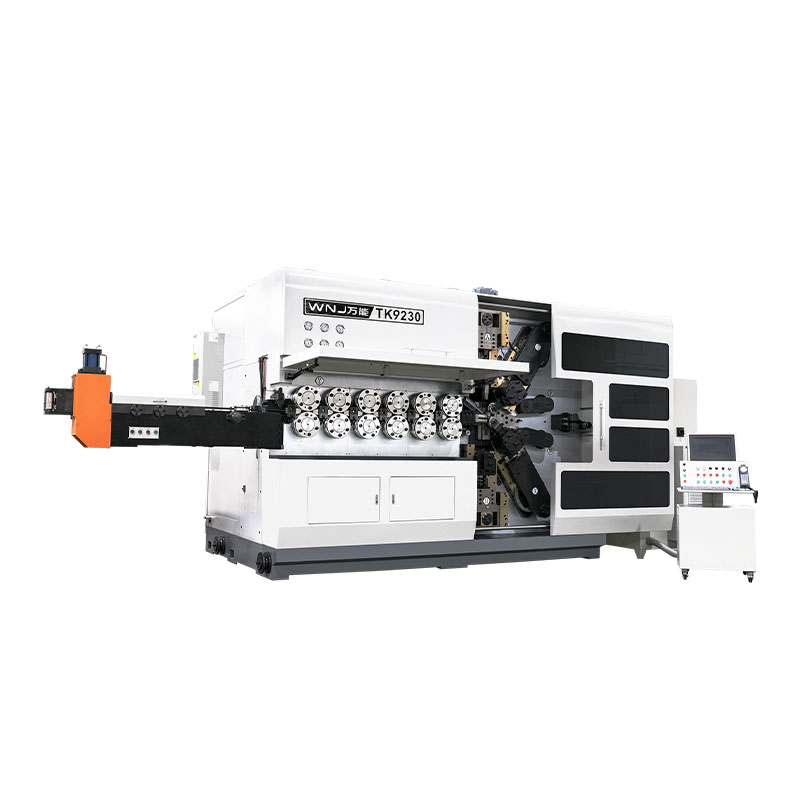
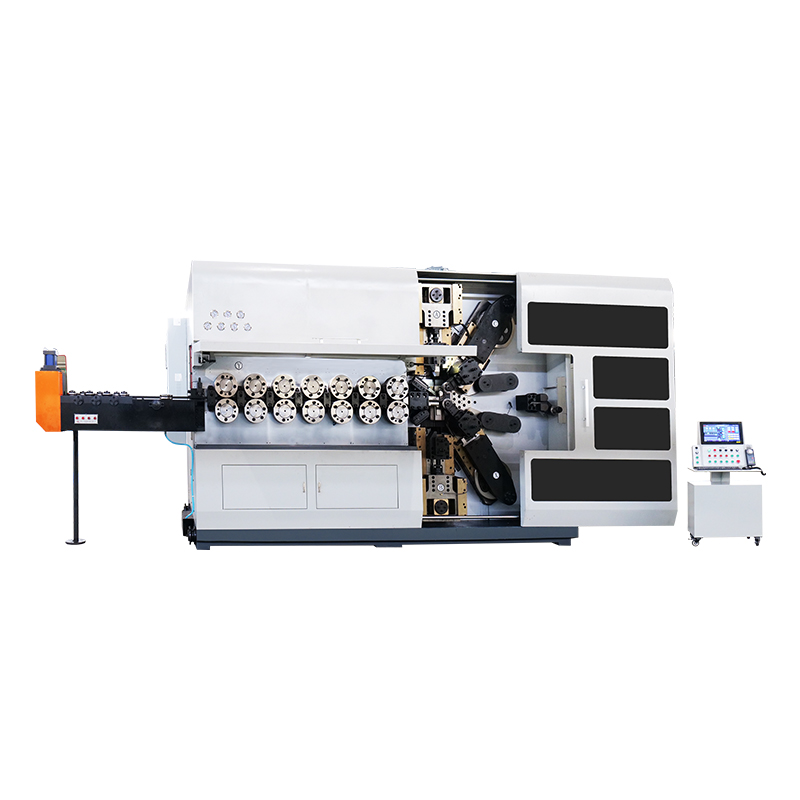
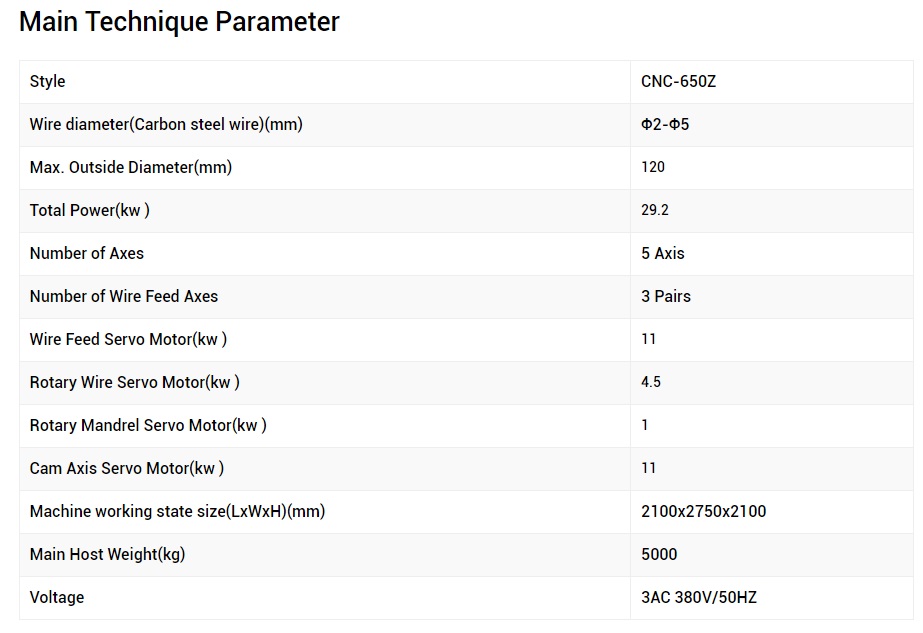
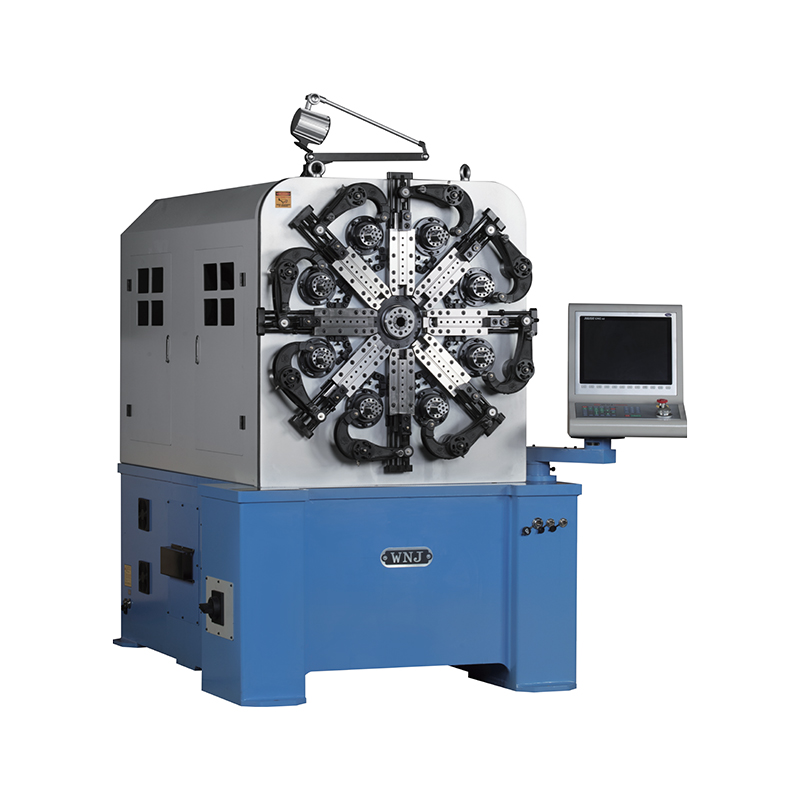
A spring coiling machine uses a set of forming tools — a coiling point, a pitch tool, and end-forming cutters — to produce parts with precise mechanical spring characteristics. The machine must compensate for spring-back, which varies with wire hardness and diameter. CNC spring coiling machines do this automatically via closed-loop feedback. An automatic wire coiling machine has no equivalent challenge: it winds soft, ductile wire that holds its shape without spring-back compensation. The tooling complexity and unit cost of a spring coiling machine are therefore significantly higher — a CNC spring coiler for fine wire starts at roughly $40,000 USD, while an entry-level automatic wire coiling machine for electrical cable starts around $8,000 to $15,000 USD.
Speed specifications in machine catalogs can be misleading without context. Manufacturers quote maximum winding speed in meters per minute (m/min) — but finished coil output per hour depends heavily on coil size, binding method, and whether cutting is inline or offline.
Consider a typical scenario: a manufacturer needs 50-meter coils of 2.5 mm² electrical wire, bound with tape, with an automatic labeler inline. At a winding speed of 80 m/min, each 50-meter coil takes approximately 37.5 seconds of winding time. Add 2 seconds for tape binding and 1.5 seconds for label application, and total cycle time is roughly 41 seconds — yielding approximately 88 coils per hour. Shift that to 100-meter coils: winding takes 75 seconds, binding and labeling remain 3.5 seconds, total cycle is 78.5 seconds — now output is 46 coils per hour.
This illustrates why coil size matters as much as machine speed when calculating ROI. A second machine on the same production line doubles output at roughly 60–70% of the first machine's cost (no need to duplicate the straightener, supply reel stand, or control cabinet infrastructure).
Manual wire coiling by an experienced worker produces roughly 40 to 60 coils per hour for small coils (under 25 m) and 20 to 35 coils per hour for larger coils (50–100 m), with fatigue reducing output by 15–25% over an 8-hour shift. An automatic wire coiling machine sustains its rated speed across the full shift without fatigue-related variation. At a labor rate of $18/hour and an automation cycle that replaces 1.5 FTE positions per machine, a mid-range machine costing $25,000 reaches payback in under 14 months at a two-shift operation — a figure consistent with ROI studies published by several wire and cable industry associations.
The machine appears across a surprisingly wide range of industries, each with specific performance requirements.
Buyers frequently over-specify or under-specify machines by focusing on a single parameter — usually winding speed — while ignoring compatibility issues that create real problems after installation. A structured evaluation using the following criteria avoids the most common procurement mistakes.
Define the full range of wire diameters and materials the machine must handle — not just your current primary product. A machine sized for 1.5–6 mm² copper conductor handles the job today, but if the product mix expands to include 10 mm² or 16 mm², the existing machine may lack the torque or mandrel clearance required. Confirm that the machine's tension system can handle both the stiffest and most flexible wire in the planned range without reconfiguration.
Inner diameter, outer diameter, and coil width must all fall within the machine's mechanical envelope. For heavy coils — above 8 kg — confirm the machine's ejection system and the conveyor (if included) are rated for that load. Coils dropped from an under-rated ejector develop loose wraps on impact, which is a common quality complaint that traces back to mechanical under-specification, not operator error.
Choose between length-based (encoder) and weight-based (load cell) measurement based on how your customers specify product. Selling by the meter: use encoder. Selling by the kilogram or pound: use load cell. Some machines offer both in a hybrid configuration — useful for facilities that serve retail (weight) and trade (length) customers from the same line.
Match the binding system to your packaging standard and consumable supply chain. Heat-seal tape units use proprietary tape rolls — verify that the machine accepts standard commercially available tape widths (typically 12 mm or 19 mm) or that your supplier stocks the proprietary size at a competitive price. Twist-tie units require no special consumables but add 1–3 seconds per cycle compared to tape binding.
Modern automatic wire coiling machines use PLC-based controls (Siemens S7 and Mitsubishi FX series are most common in Chinese-manufactured equipment; Allen-Bradley in North American-assembled machines). Confirm the HMI language matches your operators' language — a surprising number of machines arrive with Chinese-only interfaces that require expensive reprogramming. For Industry 4.0 integration, verify whether the machine supports OPC-UA or Modbus TCP for production data export to MES systems.
A wire coiling machine running two shifts produces over 300,000 coils per year. Binding head wear, encoder calibration, and drive belt replacement are routine — not exceptional — maintenance events. Before purchase, confirm parts availability lead time, the supplier's remote diagnostic capability, and whether local service technicians are available within your region. Machines from suppliers without regional support can sit idle for 2–6 weeks waiting for parts, which erases months of labor savings.
Understanding the failure modes of automatic wire coiling machines helps both buyers evaluate equipment and production managers diagnose problems without unnecessary downtime.
Automatic wire coiling machine pricing spans a wide range. The following tiers reflect market pricing as of 2024 for machines targeted at mid-volume electrical wire packaging.
| Price Range (USD) | Machine Type | Typical Max Speed | Control System | Typical Wire Range |
|---|---|---|---|---|
| $8,000 – $15,000 | Entry-level semi-auto | 40 – 60 m/min | Basic PLC, touchscreen | 0.5 – 6 mm² |
| $18,000 – $35,000 | Fully automatic, single-arm | 80 – 120 m/min | Servo drives, Siemens PLC | 0.5 – 16 mm² |
| $40,000 – $80,000 | High-speed dual-arm or dual-spindle | 150 – 250 m/min | Full servo, MES-ready | 0.5 – 35 mm² |
| $90,000+ | Complete inline system with labeling | 200 m/min+ | Industry 4.0 integration | Custom to spec |
Chinese-manufactured machines dominate the $8,000–$35,000 segment and offer competitive specifications. European and Japanese machines — notably from manufacturers in Germany, Italy, and Japan — concentrate in the $40,000+ tier and typically offer tighter tolerances, better documentation, and stronger regional service networks. For buyers in North America or Europe procuring from Chinese suppliers, factoring in freight, import duties (currently 7.5–25% depending on HS code and trade agreement status), and installation costs is essential for accurate total cost comparison.
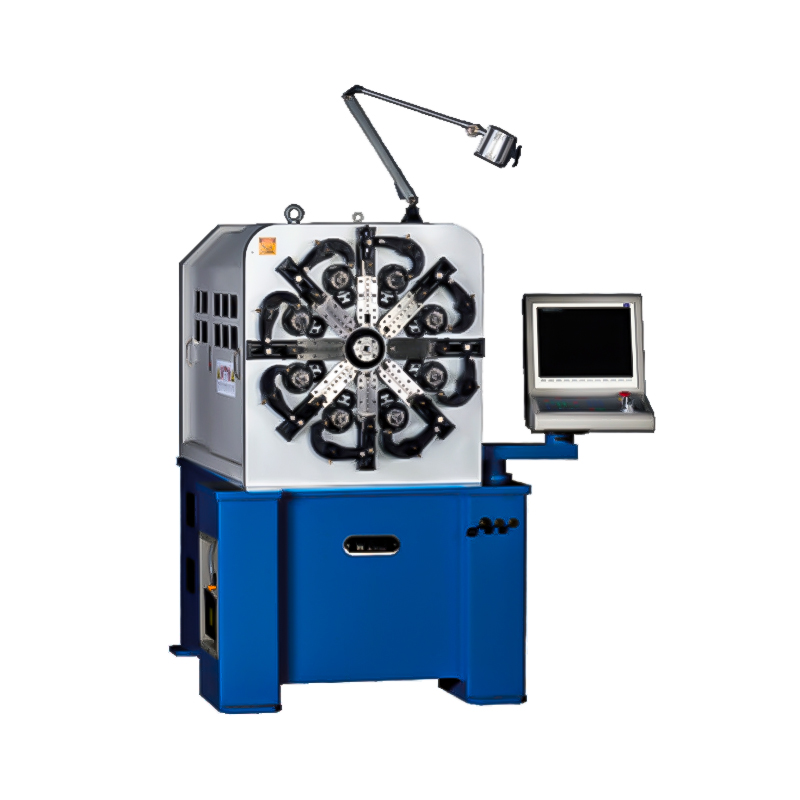
If your application involves producing springs — compression, extension, torsion, or flat — rather than packaging electrical wire, a spring coiling machine is the correct equipment category. The selection criteria and performance benchmarks differ entirely from those for an automatic wire coiling machine.
A CNC spring coiling machine produces springs by feeding hard-drawn or pre-tempered wire through a set of forming tools under computer control. The machine adjusts pitch, outer diameter, and end configuration in real time based on the part program. High-end CNC spring coiling machines — such as those from Wafios (Germany), Itaya (Japan), or Simco (Taiwan) — achieve dimensional repeatability of ±0.02 mm on outer diameter and ±0.1 mm on free length, making them suitable for automotive valve springs, medical device components, and aerospace actuator springs.
A key shared challenge for both automatic wire coiling machines and spring coiling machines is wire feed consistency. Both rely on precise wire feeding to produce consistent output. In a spring coiling machine, feed inconsistency produces length or pitch variation that fails dimensional inspection. In a wire coiling machine, it produces coil-to-coil length variation that triggers customer complaints. The engineering solution is the same — closed-loop servo-controlled feed rollers — which explains why technology transfer between the two machine categories has accelerated over the past decade.
Facilities that manufacture both springs and coiled wire products (such as OEM automotive component suppliers who also manage their own wire sub-component supply) should budget for two separate machine lines. Attempting to use a spring coiling machine for soft wire packaging or an automatic wire coiling machine for spring production results in poor quality, excessive tooling wear, and operator frustration.
Planned maintenance on an automatic wire coiling machine is straightforward. The following schedule reflects manufacturer recommendations and field experience from high-production electrical wire factories.
Annual consumable costs for a machine running two shifts include approximately $1,200–$2,500 in binding tape (assuming 18 mm tape at 180,000–200,000 coils per year), $300–$600 in drive roller replacements, and $150–$400 in pneumatic seals and fittings. Total annual maintenance cost for a properly maintained machine in this operating profile runs $2,000–$4,000 USD, or roughly 8–16% of the original machine purchase price per year — a manageable cost relative to the labor savings generated.
Yes, provided the machine's tension system and mandrel are sized for the stiffer cable. Armored cable has a significantly higher minimum bend radius than standard conductor wire — always verify against the machine's specified minimum wire stiffness, not just diameter. Some machines designed for flexible cable cannot generate enough winding torque to coil armored cable without motor overload. Confirm motor power ratings (typically 2.2–7.5 kW for mid-range machines) against the cable's required winding force.
A coiling machine produces finished retail or distribution coils from bulk supply. A rewinding machine transfers wire from one large drum or reel to another, usually to change spool format or combine or split batch sizes. Some machines perform both functions with a mode change in the PLC settings. For most packaging applications, a dedicated automatic wire coiling machine is more appropriate because its binding and ejection systems are optimized for finished coil output.
On machines with recipe storage in the PLC, switching between coil sizes is a matter of selecting the correct recipe and adjusting the mandrel diameter if needed. Recipe recall takes under 60 seconds; mandrel adjustment on pneumatic systems takes 2–5 minutes. Machines without recipe storage require manual re-entry of all parameters, which takes 10–20 minutes and introduces operator entry error risk. For facilities running more than two or three coil sizes per shift, recipe storage is a non-negotiable feature.
CE marking is required for machines sold into the European Economic Area and verifies compliance with the Machinery Directive (2006/42/EC). For North American buyers, look for UL or CSA certification on the electrical panel. Chinese manufacturers increasingly supply CE-marked machines for export — verify that the certification was issued by an accredited notified body, not self-declared. Request the Declaration of Conformity and technical construction file as part of the purchase contract. For industries with specific safety requirements (food-adjacent wire, medical device assembly wire), additional certifications may apply.
In plants that produce both springs and packaged wire products, a spring coiling machine and an automatic wire coiling machine coexist as entirely separate lines. They share the common input material — wire — but serve completely different downstream processes. The spring coiling machine feeds the spring assembly or heat treatment line; the automatic wire coiling machine feeds the finished goods warehouse or dispatch area. Cross-training operators on both machine types is possible but requires dedicated training time, as the adjustment logic, quality checkpoints, and maintenance priorities differ substantially between the two.
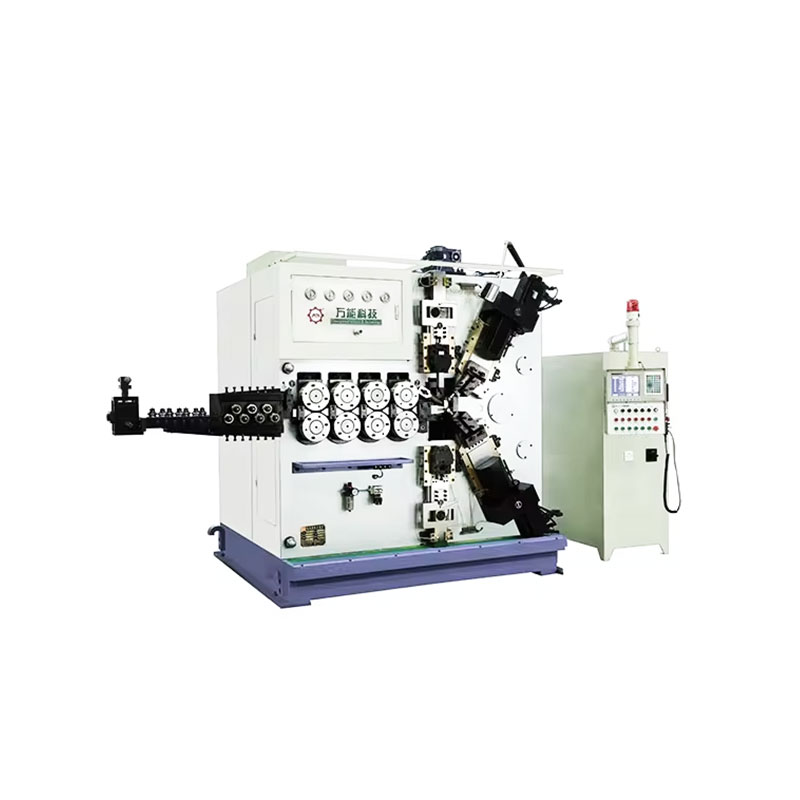
TK-6160 TK-6160 CNC SPRING ROLLING MACHINE...
See Details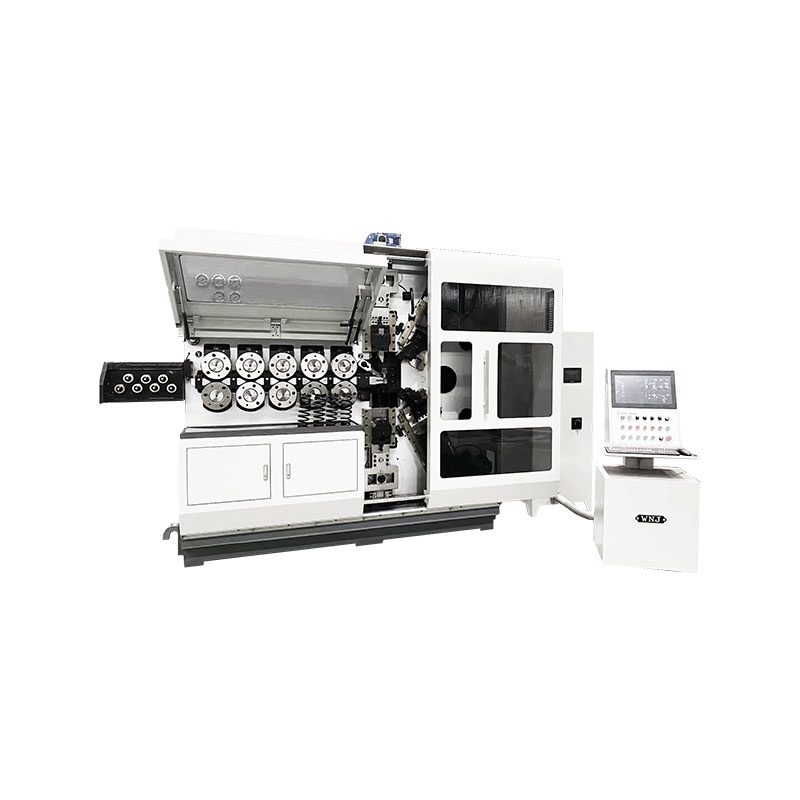
TK-6120 TK-6120 CNC SPRING ROLLING MACHINE...
See Details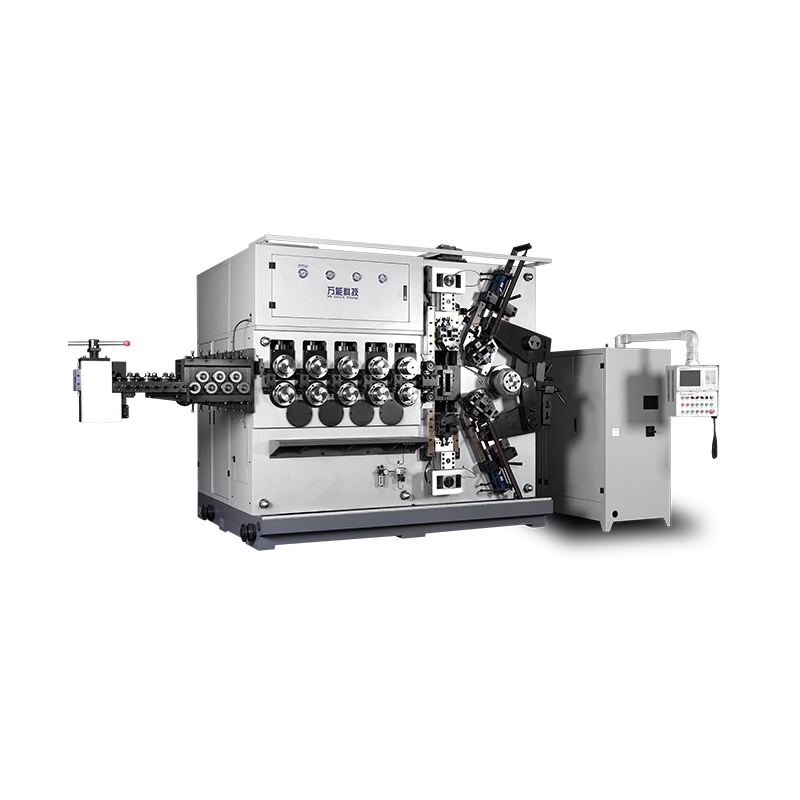
TK-5200 TK-5200 5AXES CNC SPRING COILING MACHINE...
See Details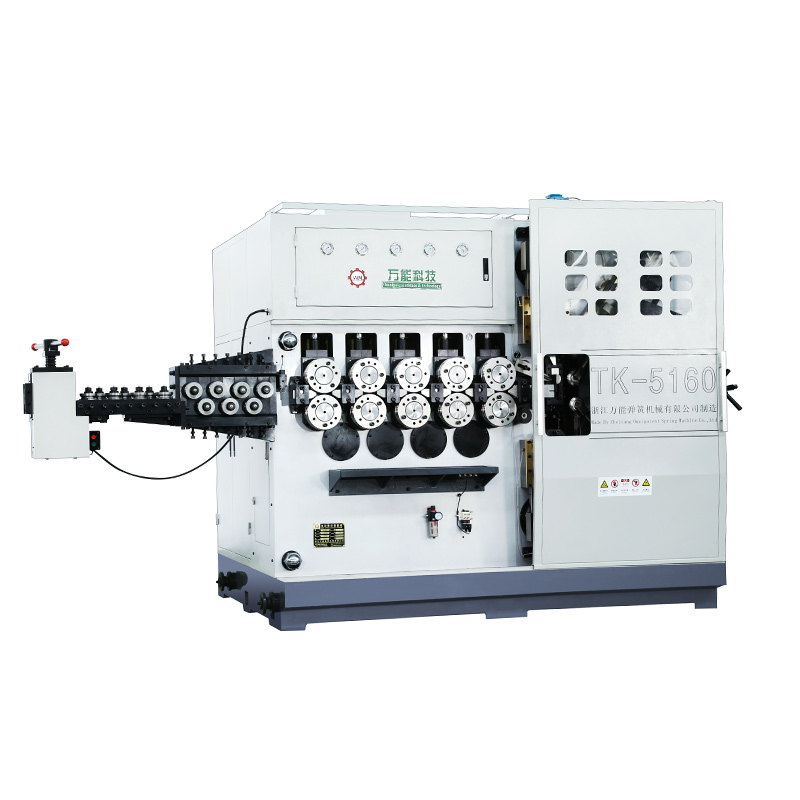
TK-5160 TK-5160 5AXES CNC SPRING COILING MACHINE...
See Details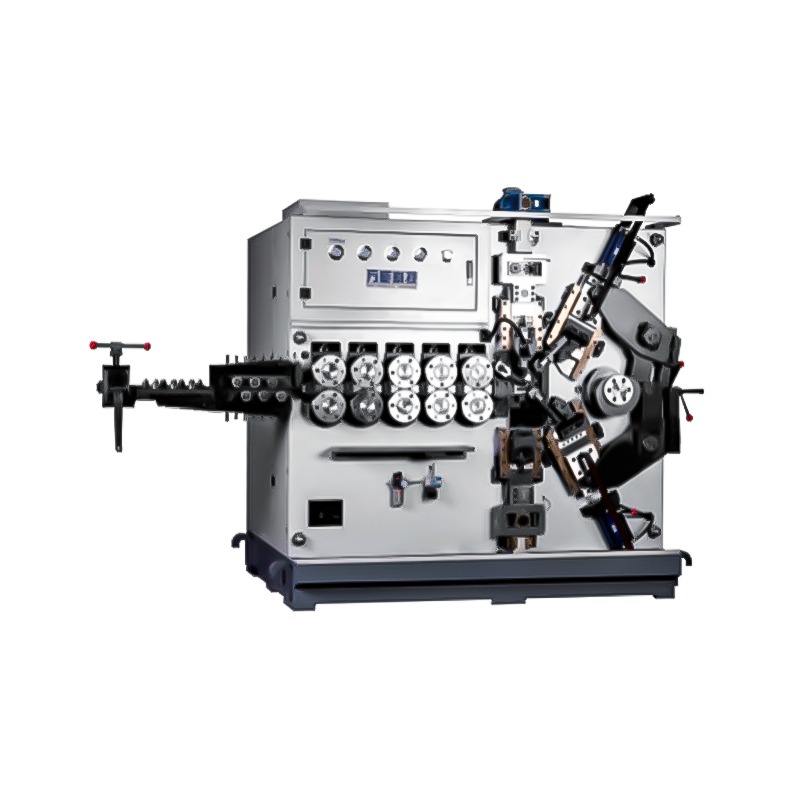
TK-5120 TK-5120 5AXES CNC SPRING COILING MACHINE...
See Details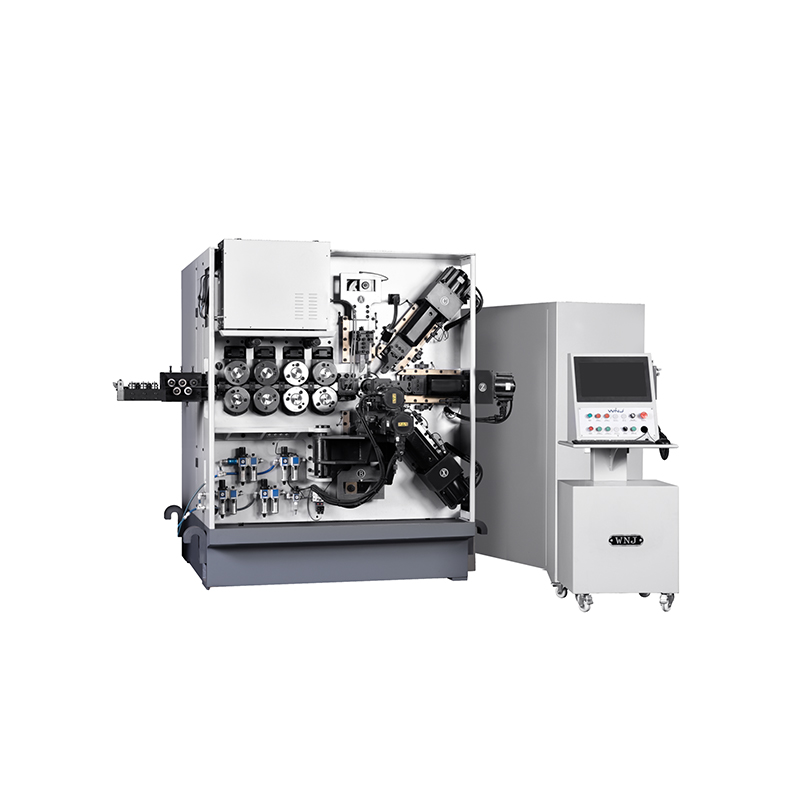
TK TK 10AXES CNC SPRING SCROLL MACHINE...
See Details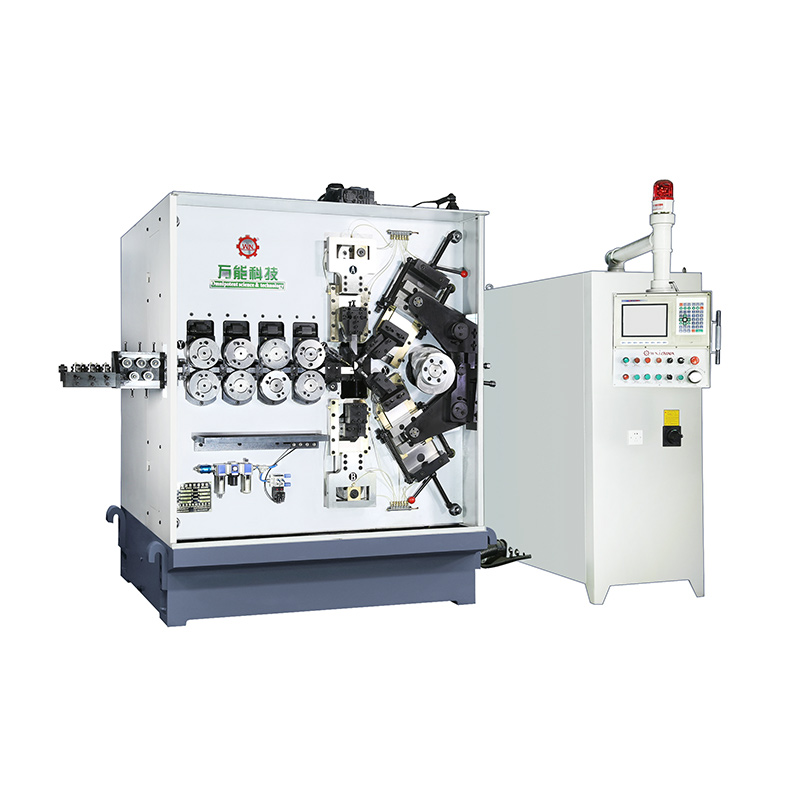
TK-580B、 TK-590 TK-580B、 TK-590 5AXES CNC SPRING COILING MACHINE...
See Details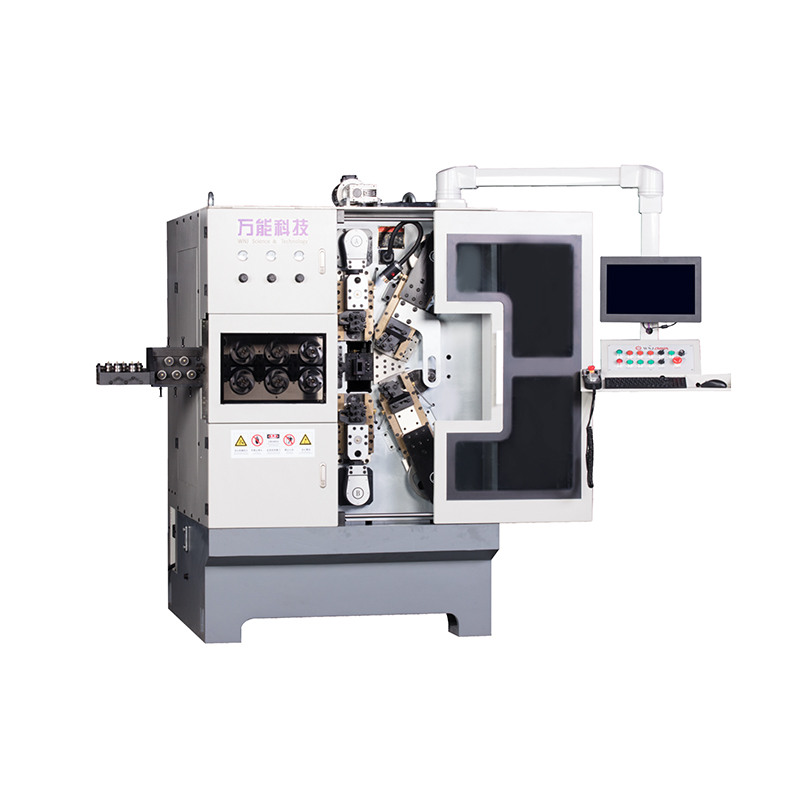
TK-760TK-760 6-7AXES CNC SPRING COILING MACHINE...
See DetailsMobile QR Code

 中文简体
中文简体 English
 русский
 Español