Language
Description:
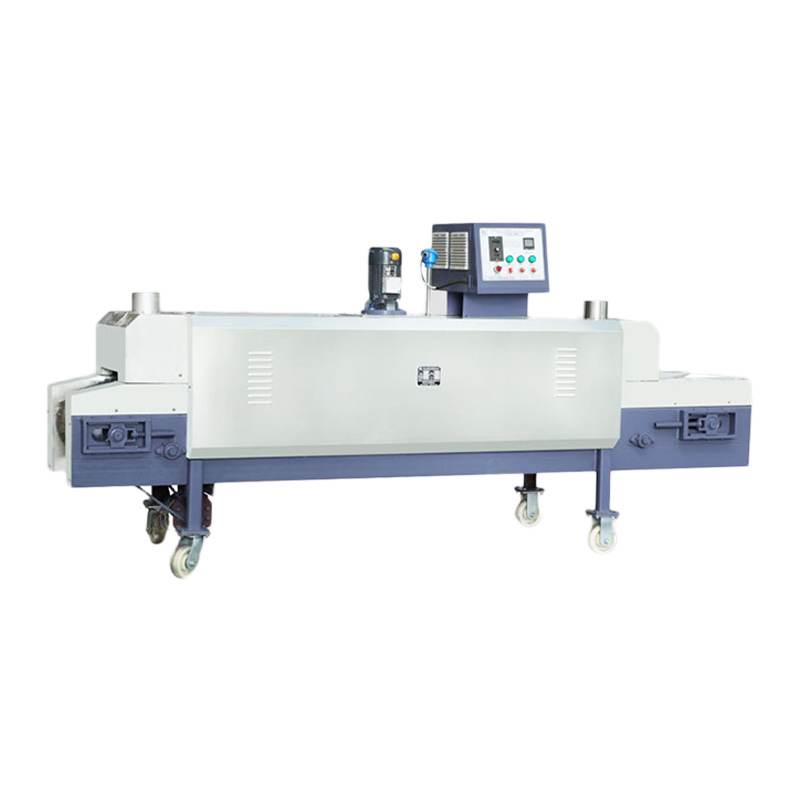
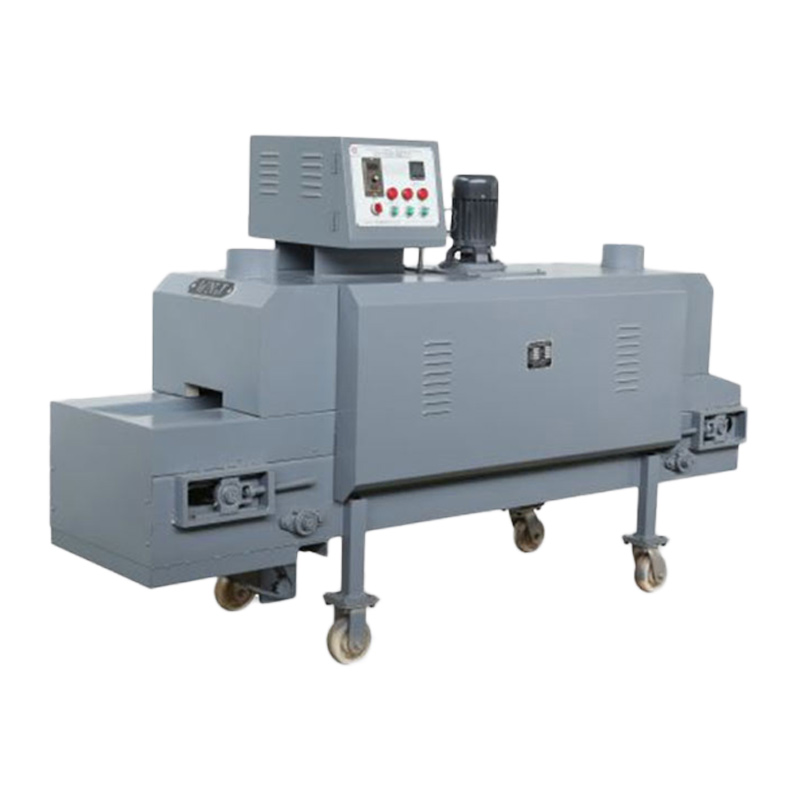
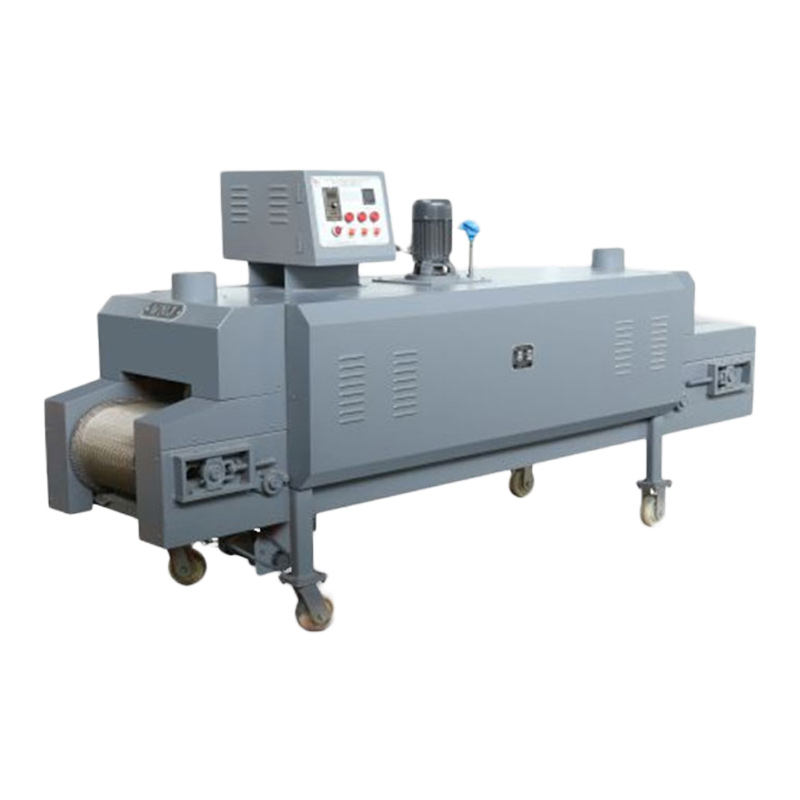
These continuous temper furnaces are a kind of heat treatment equipment for the mechanical spring industry and food industry that are deeply popular among customers. They adopt imported electrical components, stepless speeder, and have advantages such as energy saving(30% off compared with similar products), rapid temperature raising(it can reach the required temperature within 20 minutes), uniform and stable temperature in furnace chest, high precision in automatic control, convenient for continuous working, good reliability, etc.
Zhejiang Omnipoten Spring Machine Co., Ltd (WNJ) is a leading Spring Temper Furnace Manufacturers in China, specializing in the production of Spring temper furnace and other related equipment for more than 30 years. WNJ is a global enterprise specializing in spring machinery, with sales in Europe, Turkey, There are international agents in India, South Korea, Argentina, etc. At the same time, to ensure the availability of spare parts for old machines, we provide you with maintenance services for mechanical and electronic components. We also provide repair replacements and consumables for a large number of parts so that we can replace damaged parts for you in a timely manner. As a Temper furnace Supplier, We have a complete production line from design, forming, finishing, tooling, inspection, testing, debugging and packaging, and we have established a customer-oriented quality management system to strengthen lasting innovation and improve after-sales service, WNJ has established one of the world's leading centers of advanced spring machinery technology. Global wire forming and spring manufacturing technology, dedicated to providing customers with better CNC spring coiling machine products and solutions.

Building world class intelligent equipment brand in spring machine industry.
--12th Oct 2026
Press brake sheet metal bending delivers accurate, repeatable bends when you apply four proven rules: set the V-die opening to roughly eight times the material thickness, use air bending as the default process, calculate tonnage ...
Read more >--05th Oct 2026
A bending machine is a production tool that reshapes wire, rod, tube, or flat metal into predetermined angles and curves using mechanical force, CNC servo control, or a combination of both. In spring and wire-component manufactur...
Read more >--28th Sep 2026
A torsional spring is a coiled mechanical element that stores and releases rotational energy through angular deflection. You will find it inside car door latches, garage door hinges, camera shutters, and electrical switchgear. Th...
Read more >--21th Sep 2026
What Exactly Are Helical Springs? A helical spring is a wire wound into a continuous spiral coil that stores and releases mechanical energy. When you compress, stretch, or twist it, the spring deflects and stores energy. When the...
Read more >--14th Sep 2026
A compression spring design only works when the load, deflection, and fatigue requirements are balanced with the capabilities of the machinery that forms it. Start with the spring rate, then check stress and solid height, and fin...
Read more >What role does the spring tempering furnace play in the R&D system of WNJ?
A: It is considered the final "invisible process" connecting forming and service performance. When designing the spring machine, the company's mold workshop incorporates the furnace's hot zone layout, airflow direction, and fixture interfaces as part of the overall solution, ensuring that any irregularly shaped spring from OEM/ODM customers can complete the entire closed-loop process from winding to tempering on the same production line.
Why does WNJ insist on "integrated furnace and machine" instead of purchasing standard furnaces?
A: Because the temperature control curve of the tempering furnace is closely coupled with the cycle time, wire diameter, and material changes of the spring machine. The in-house mold workshop can design the furnace support fixture, conveyor cycle wheel, anti-deformation chuck, and winding spindle coaxially, avoiding the redistribution of residual stress caused by secondary clamping, which is especially crucial for high-precision orders.
How does the temperature uniformity of the tempering furnace amplify the mutual enhancement of WNJ's mold precision?
A: When processing the positioning blocks, the mold workshop allows for micron-level thermal expansion compensation; the furnace engineers, in turn, control the temperature difference in the hot zones within a corresponding range. When combined, the same set of springs exhibits consistency in length, load attenuation, and anti-relaxation performance, reducing the frequency of spot checks for customers undertaking large-scale OEM production.
How does WNJ help customers shorten the trial production cycle for new products through tempering furnaces?
A: The mold workshop can complete rapid fixture iteration within 24 hours; the temperature control system of the tempering furnace shares the same bus with the servo drive of the winding machine. Engineers only need to program once when debugging new springs, and the coupled parameters of temperature, speed, and tension can be simultaneously issued, eliminating the need for repeated fixture disassembly and reassembly or production line transfers during the trial production stage.
How is the energy-saving concept of the tempering furnace integrated into WNJ's green manufacturing strategy?
A: The furnace body insulation module and the winding machine's cooling circuit share a heat recovery channel. The mold workshop prioritizes lightweight, low-heat-capacity materials when designing fixtures, reducing energy waste during furnace temperature rise and fall, allowing OEM/ODM customers to pursue high performance while considering carbon emission standards.
How does the tempering furnace respond when customers request special alloys or extremely small wire diameters?
A: WNJ's mold workshop first manufactures miniature clamping fixtures and low-inertia conveyor rollers. Tempering furnace engineers then adjust the hot zone length and airflow speed to ensure that the delicate springs do not deform due to their own weight or airflow disturbances during tempering, ultimately allowing for stable output even at extreme specifications within mass production.
How does the tempering furnace's remote maintenance function connect with WNJ's global service network?
A: The furnace control system and winding machine servo data share the same cloud channel. Overseas customers' on-site engineers can simultaneously view furnace temperature curves and winding parameters by logging into a unified interface. The mold workshop's spare parts warehouse pre-disassembles easily damaged fixtures into quick-change modules, allowing for replacement within 48 hours of air transport, reducing downtime anxiety.
How does WNJ use tempering furnace data to reverse-engineer mold design?
A: The residual stress distribution after each tempering is recorded by the system. After comparing the deformation trends of the same batch of springs, mold engineers fine-tune the support points and clamping force of the next version of the fixture. This closed-loop system allows OEM orders to reduce the post-tempering shaping process during the second round of production, directly improving the first-pass yield.
How does the safety interlock logic of the tempering furnace align with the production line safety level of WNJ?
A: The triggering conditions for furnace door lifting, atmosphere replacement, and quench spraying share the same safety PLC as the winding machine's emergency stop, access control, and light curtain. The mold workshop also reserves escape clearances and explosion-proof pressure relief channels when designing fixtures, ensuring that any single-point failure will not amplify into a cross-equipment risk.
What is WNJ's iterative approach to tempering furnaces for the future?
A: The mold workshop is experimenting with a reconfigurable hot zone structure, enabling the same furnace body to switch between long and short spring production lines within ten minutes; the tempering furnace team is exploring real-time mapping of three-dimensional data of temperature, atmosphere, and stress fields into a digital twin model, allowing remote engineers from OEM/ODM customers to "drag" the tempering curve like debugging software, verifying new product performance in a WYSIWYG manner.
Mobile QR Code

 中文简体
中文简体 English
 русский
 Español